Why High Blood Sugar Can Slowly Damage the Nerves
Why High Blood Sugar Can Slowly Damage the Nerves
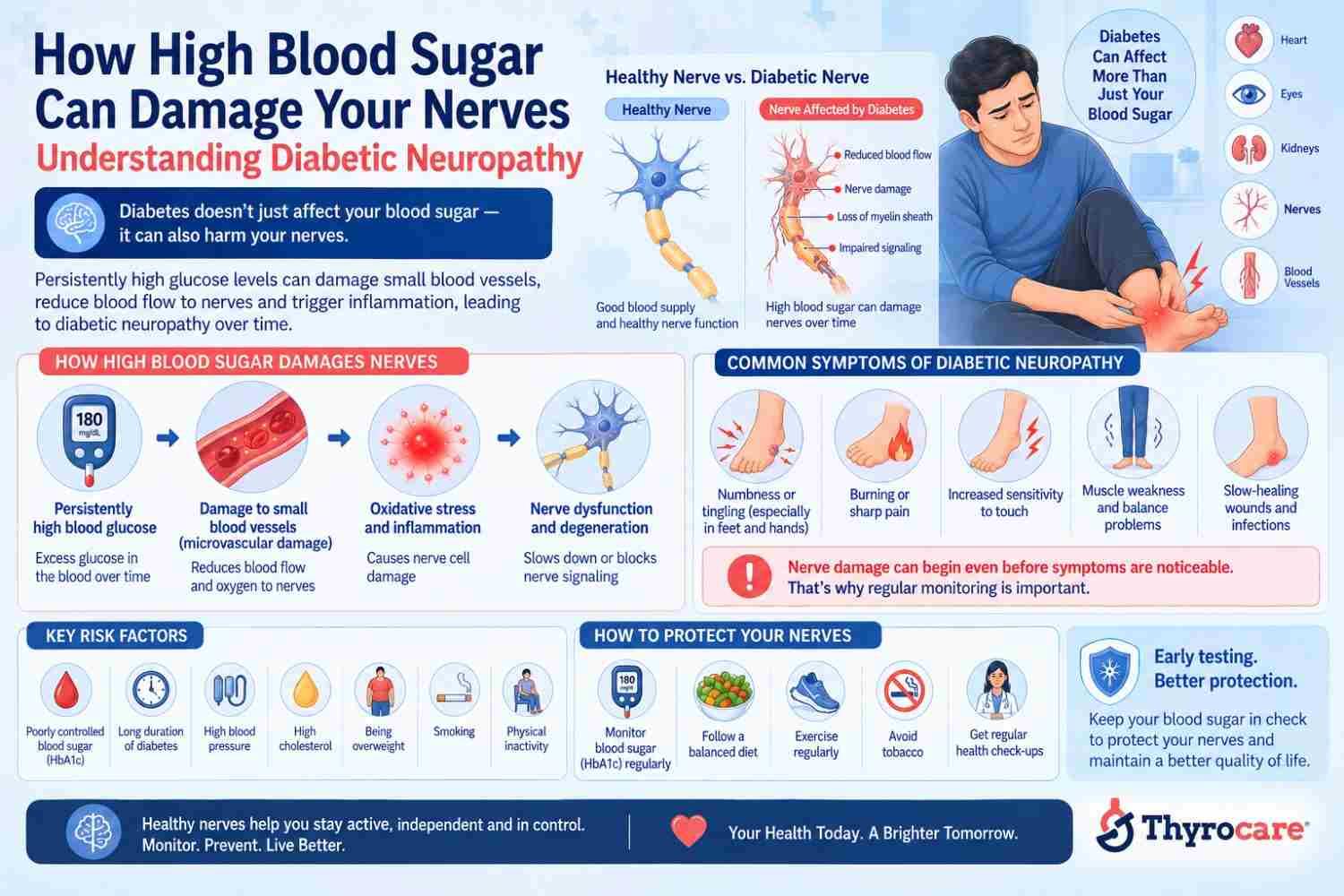
High blood sugar is commonly associated with diabetes, but its effects extend far beyond glucose levels. When blood sugar remains elevated for a long time, it can gradually damage nerves throughout the body. This complication is known as diabetic neuropathy.The process often develops slowly. In the early stages, nerve changes may occur before noticeable symptoms such as numbness, tingling, burning, or pain appear.
How High Blood Sugar Affects Nerves
Persistently elevated glucose can interfere with normal nerve function. Over time, excess glucose contributes to metabolic changes and oxidative stress that may damage nerve cells.The longer blood sugar remains poorly controlled, the greater the potential for nerve-related complications.
Damage to Small Blood Vessels
Nerves depend on tiny blood vessels for oxygen and nutrients. Diabetes can damage these small vessels, reducing the support available to nerve tissue.This combination of metabolic stress and impaired circulation can gradually affect the ability of nerves to transmit signals effectively.
What Is Diabetic Peripheral Neuropathy?
Diabetic peripheral neuropathy is one of the most common forms of diabetes-related nerve damage. It usually affects the feet and legs first and may later involve the hands.Symptoms can include numbness, tingling, burning sensations, increased sensitivity, pain, or reduced ability to feel temperature and injuries.
Why Early Changes Can Be Easy to Miss
Nerve damage does not always cause immediate symptoms. Mild changes may develop gradually, making them easy to overlook.Reduced sensation in the feet can be particularly important because cuts, blisters, or pressure injuries may go unnoticed. Regular foot care and diabetes management therefore play an important preventive role.
Blood Sugar Monitoring and Nerve Health
Blood tests cannot directly diagnose diabetic neuropathy, but glucose-related tests can help assess an important underlying risk factor. Fasting blood glucose provides information about current glucose levels, while HbA1c reflects average blood glucose over roughly the previous two to three months.
Preventive Monitoring with Thyrocare
Thyrocare offers glucose, HbA1c, and other metabolic health tests that can support routine diabetes monitoring. Thyrocare blood tests can be booked through BookMyTest with convenient home sample collection.
Conclusion
High blood sugar can gradually affect both nerves and the blood vessels supporting them.
Nerve damage may begin before obvious symptoms become noticeable.
Diabetic peripheral neuropathy commonly affects the feet and legs.
Regular glucose and HbA1c monitoring can help track long-term blood sugar control.
Persistent numbness, tingling, burning, pain, or loss of sensation requires medical evaluation.
FAQs
1. How does diabetes damage the nerves?
Long-term high blood sugar can contribute to metabolic stress, blood vessel damage, and changes that interfere with normal nerve function.
2. What are the early signs of diabetic neuropathy?
Possible symptoms include tingling, numbness, burning, unusual sensitivity, or pain, particularly in the feet.
3. Can nerve damage happen without symptoms?
Yes. Early nerve changes may sometimes develop before a person notices clear symptoms.
4. Can HbA1c diagnose nerve damage?
No. HbA1c does not diagnose neuropathy. It measures long-term blood glucose control and helps assess diabetes management.
5. Why is regular blood sugar monitoring important?
Monitoring helps identify how well blood glucose is being controlled, which is important for reducing the risk of long-term diabetes-related complications.