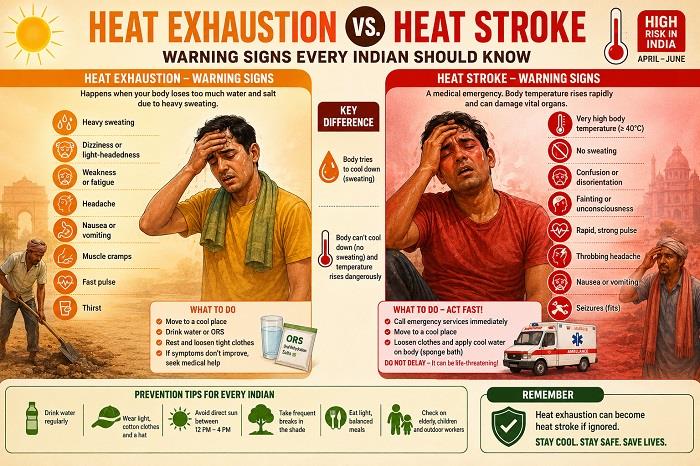
Heat Exhaustion Vs Heat Stroke India Guide
India’s summer heat can be extreme, with rising temperatures and humidity increasing the risk of heat-related illnesses. While many people think of heat exhaustion and Heat Stroke as the same, they are actually very different in severity and risk. Knowing how to identify each condition can help you take timely action and prevent serious complications.
What is Heat Exhaustion?
Heat Exhaustion occurs when the body loses excessive fluids and salts due to prolonged exposure to high temperatures. It is commonly seen in people who spend long hours outdoors, travel in hot weather, or do physical work without proper hydration.
Symptoms usually develop gradually and may include heavy sweating, fatigue, dizziness, headache, nausea, and muscle cramps. The skin may feel cool, pale, and moist, while the pulse becomes fast and weak. Although it is not immediately life-threatening, heat exhaustion should not be ignored, as it can progress to a more serious condition if untreated.
What Is Heat Stroke?
Heat Stroke is a medical emergency that occurs when the body’s temperature rises above 40°C and the cooling system fails. Unlike heat exhaustion, the body may stop sweating, and the skin becomes hot and dry.
Symptoms include confusion, disorientation, rapid heartbeat, high body temperature, seizures, and even loss of consciousness. Heat stroke can lead to organ damage and can be fatal if immediate medical care is not provided.
Key Differences Between Heat Exhaustion and Heat Stroke
The major difference between Heat Exhaustion and Heat Stroke lies in how the body responds to heat. In heat exhaustion, the body is still trying to cool itself through sweating. In heat stroke, this mechanism fails completely, causing a rapid increase in body temperature.
Heat exhaustion usually develops slowly and can be reversed with rest and hydration. Heat stroke develops quickly and requires emergency medical intervention.
Warning Signs You Should Never Ignore
Early warning signs like excessive sweating, weakness, and dizziness often indicate heat exhaustion. If these symptoms are ignored, they may escalate into heat stroke. Red flags such as confusion, fainting, lack of sweating, and extremely high body temperature should never be overlooked.
In Indian conditions, where heat waves are common, these symptoms can appear quickly, especially in crowded areas, poorly ventilated spaces, or during long commutes.
Who Is at Risk?
Certain groups are more vulnerable to heat-related illnesses. Elderly individuals, children, outdoor workers, athletes, and people with chronic health conditions are at higher risk. Urban populations exposed to pollution and heat islands are also more susceptible.
People who do not drink enough water or wear tight, non-breathable clothing are more likely to develop heat exhaustion, which can worsen if not managed properly.
What to Do in Case of Heat Exhaustion
If someone shows signs of Heat Exhaustion, move them to a cool or shaded area immediately. Encourage them to drink water or oral rehydration solutions, loosen clothing, and use cool compresses to bring down body temperature. Rest is essential until symptoms improve.
What to Do in Case of Heat Stroke
Heat Stroke requires urgent medical attention. Call emergency services right away. While waiting, move the person to a cooler place, remove excess clothing, and try to cool the body using cold water or ice packs. Quick action can save lives.
Prevention Tips for Indian Summers
Preventing heat-related illness is simple but requires consistency. Stay hydrated throughout the day, avoid stepping out during peak afternoon hours, and wear light, loose-fitting clothes. Taking frequent breaks and consuming electrolyte-rich fluids can help maintain body balance.
Understanding the difference between Heat Exhaustion and Heat Stroke is crucial for staying safe during India’s intense summers. While heat exhaustion is manageable, ignoring it can lead to life-threatening heat stroke.