Vitamin B12 Deficiency and the Nervous System: Why Neurological Symptoms Can Come First
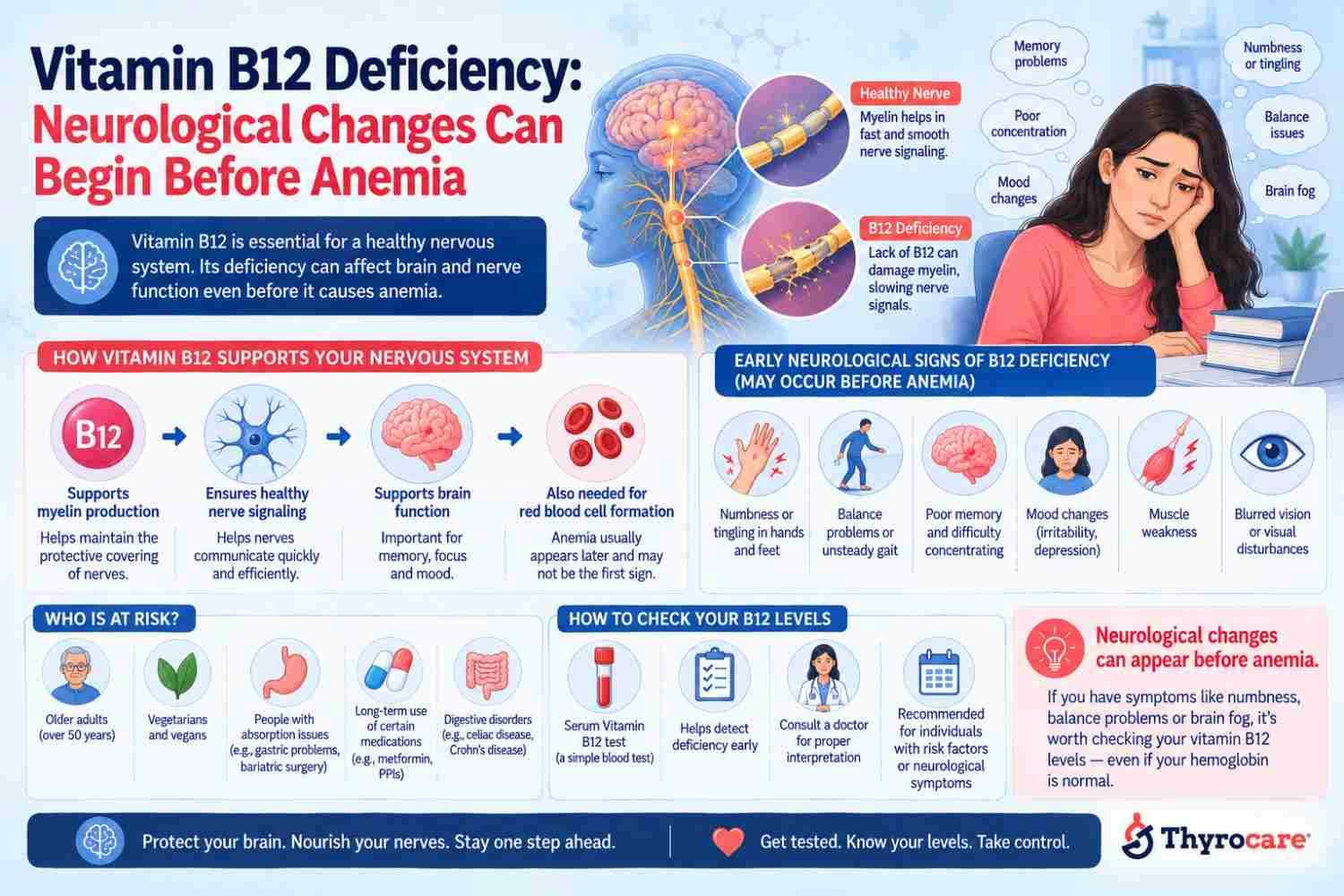
Vitamin B12 is commonly associated with red blood cell production and anemia, but its role extends much further. It is essential for maintaining healthy nerves, normal brain function, and DNA production. When vitamin B12 levels become too low, neurological changes may sometimes develop even before obvious signs of anemia appear.
Understanding this connection is important because persistent B12 deficiency can affect the nervous system if it is not identified and treated appropriately.
Why Vitamin B12 Is Important for Nerves
Vitamin B12 contributes to maintaining myelin, the protective covering surrounding many nerve fibers. Myelin helps electrical signals travel efficiently through the nervous system.
When B12 is deficient, normal myelin maintenance and nerve function can be disrupted, potentially leading to neurological symptoms.
Why Neurological Symptoms May Appear First
Vitamin B12 deficiency does not affect everyone in exactly the same way. Some people develop changes in their blood cells, while others may experience neurological symptoms without prominent anemia.
This means a normal-looking hemoglobin result alone does not necessarily exclude vitamin B12 deficiency.
Early Neurological Signs to Recognize
B12-related nerve problems may cause numbness, tingling, pins-and-needles sensations, muscle weakness, or altered sensation, particularly in the hands and feet.
Some individuals may also experience difficulty with balance, memory, concentration, or mental clarity. These symptoms can have many other causes, so proper medical evaluation is important.
What Causes Vitamin B12 Deficiency?
Low B12 does not always mean someone simply consumes too little of the vitamin. Deficiency can result from a diet low in B12, impaired absorption, pernicious anemia, certain gastrointestinal conditions, or some medications.
Identifying the underlying cause can therefore be as important as identifying the deficiency itself.
How Blood Testing Helps
A serum vitamin B12 test can help assess B12 status. Depending on the clinical situation, doctors may also consider a Complete Blood Count (CBC) and additional investigations when results or symptoms require clarification.
Blood testing should be interpreted alongside symptoms and medical history.
Preventive Monitoring with Thyrocare
Thyrocare offers vitamin B12 and other nutritional blood tests that can help identify deficiencies. Booking a Thyrocare blood test through BookMyTest provides convenient home sample collection for routine health monitoring.
Conclusion
Vitamin B12 is essential for maintaining healthy nerve function.
Deficiency may sometimes cause neurological symptoms before obvious anemia develops.
Tingling, numbness, weakness, balance problems, or cognitive changes should not be ignored.
Blood testing can help identify vitamin B12 deficiency and guide further evaluation.
Persistent neurological symptoms should always be discussed with a healthcare professional.
FAQs
1. Can vitamin B12 deficiency cause nerve damage?
Yes. Significant or prolonged B12 deficiency can affect myelin and normal nerve function, potentially causing neurological problems.
2. Can B12 deficiency occur without anemia?
Yes. Neurological manifestations of vitamin B12 deficiency can occur even when obvious anemia is absent.
3. What neurological symptoms can low B12 cause?
Possible symptoms include numbness, tingling, weakness, balance difficulties, memory problems, and changes in concentration.
4. How is vitamin B12 deficiency detected?
A vitamin B12 blood test is commonly used, often alongside CBC and other investigations depending on symptoms and clinical findings.
5. Can I book a vitamin B12 test through BookMyTest?
Yes. Vitamin B12 and related Thyrocare blood tests can be booked through BookMyTest with home sample collection where available.