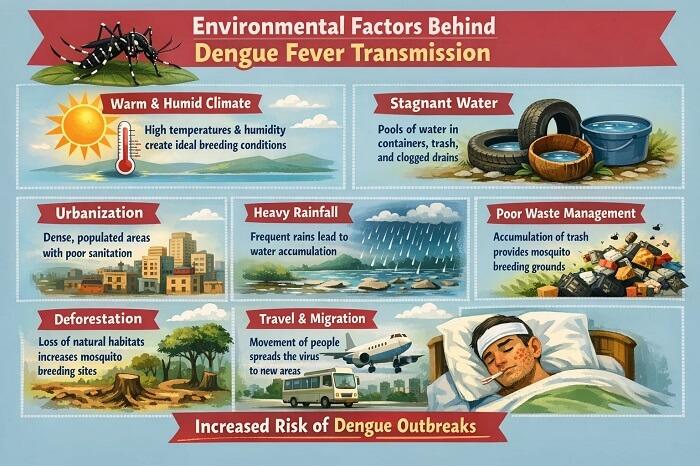
Environmental Factors Behind Dengue Fever Transmission
Dengue fever is one of the fastest-growing mosquito-borne viral infections worldwide, particularly affecting tropical and subtropical regions. While the dengue virus is transmitted through the bite of infected Aedes mosquitoes, the environment plays a decisive role in determining how easily and widely the disease spreads. Factors such as temperature, rainfall, humidity, urbanisation, and water management directly influence mosquito breeding, survival, and virus transmission. Understanding these environmental drivers is essential for effective dengue prevention and public health planning.
Temperature and Its Role in Dengue Transmission
Temperature is one of the most critical environmental factors affecting dengue transmission. Aedes aegypti mosquitoes thrive in warm climates, typically between 20°C and 35°C. Higher temperatures accelerate the mosquito life cycle, allowing larvae to develop into adults more quickly and increasing the mosquito population in a shorter period.
Warm conditions also affect the dengue virus itself. At higher temperatures, the virus replicates faster inside the mosquito, shortening the time required for the mosquito to become infectious after feeding on an infected person. This increases the likelihood of transmission within communities. Prolonged heat waves and rising average temperatures, often linked to climate change, have therefore expanded dengue risk into new regions that were previously unsuitable for mosquito survival.
Rainfall, Water Stagnation, and Breeding Sites
Rainfall patterns strongly influence dengue outbreaks. Moderate to heavy rainfall creates ideal breeding sites for mosquitoes by allowing water to collect in open containers, discarded tyres, flower pots, rooftop tanks, and construction sites. Aedes mosquitoes prefer clean, stagnant water for laying eggs, making urban and semi-urban environments especially vulnerable.
Seasonal monsoons are often followed by a sharp rise in dengue cases. While rainfall is essential for mosquito breeding, irregular or excessive rainfall can worsen the problem by overwhelming drainage systems and causing water stagnation. Conversely, even periods of water scarcity can increase dengue risk, as people store water in containers that may become breeding grounds if left uncovered.
Humidity and Mosquito Survival\
Humidity directly affects mosquito longevity and activity. High humidity levels increase mosquito survival rates, allowing them to live longer and bite more frequently. This extended lifespan raises the chances of mosquitoes acquiring and transmitting the dengue virus.
In humid conditions, mosquitoes are also more active during daylight hours, which aligns with the biting behaviour of Aedes mosquitoes. Regions experiencing prolonged humid weather therefore tend to see more sustained dengue transmission, especially when combined with warm temperatures and poor water management.
Urbanisation and Population Density
Rapid urbanisation is a major environmental contributor to dengue fever transmission. Unplanned urban growth often leads to overcrowding, inadequate housing, and poor sanitation, all of which create favourable conditions for mosquito breeding. Construction sites with exposed water, clogged drains, and improperly managed waste provide abundant breeding habitats.
High population density further amplifies transmission. In densely populated urban areas, mosquitoes have easy access to multiple human hosts within a small radius. Since Aedes aegypti mosquitoes typically bite multiple people during a single feeding cycle, urban settings significantly increase the efficiency of dengue spread.
Waste Management and Environmental Hygiene
Poor waste disposal practices are closely linked to dengue outbreaks. Discarded plastic containers, cans, bottles, and tyres can collect rainwater and become mosquito breeding sites. Inadequate solid waste management creates countless micro-habitats for mosquitoes, especially in residential and slum areas.
Environmental hygiene plays a preventive role. Communities with regular waste collection, proper disposal systems, and awareness about eliminating stagnant water tend to have lower dengue incidence. Simple environmental measures, such as covering water containers and clearing blocked drains, can significantly reduce mosquito breeding.
Climate Change and Expanding Dengue Risk
Climate change has intensified many environmental factors associated with dengue transmission. Rising global temperatures, altered rainfall patterns, and increased frequency of extreme weather events have expanded the geographic range of dengue-carrying mosquitoes. Areas that were once too cool now experience seasonal dengue outbreaks.
Climate variability also makes dengue patterns less predictable. Sudden temperature spikes, unseasonal rains, and prolonged humid periods can trigger unexpected outbreaks, challenging public health preparedness. As climate change continues, environmental control and disease surveillance will become even more critical in dengue prevention strategies.
Environmental Control as a Key Prevention Strategy
Since dengue has no specific antiviral treatment, environmental management remains one of the most effective ways to control transmission. Reducing mosquito breeding sites through proper water storage, improved drainage, waste management, and community participation is essential.
Public health initiatives that focus on environmental awareness, regular inspections, and vector control measures can significantly reduce dengue risk. Early detection through timely testing and monitoring further helps in managing outbreaks and preventing severe complications.
Environmental factors play a central role in dengue fever transmission by shaping mosquito breeding, survival, and virus spread. Temperature, rainfall, humidity, urbanisation, waste management, and climate change collectively determine the intensity and frequency of dengue outbreaks. Addressing these environmental drivers through preventive planning, community awareness, and sustainable urban development is vital for long-term dengue control. By understanding and managing environmental risks, communities can reduce dengue transmission and protect public health more effectively.