Cortisol: When the Stress Hormone Stops Helping and Starts Affecting Health
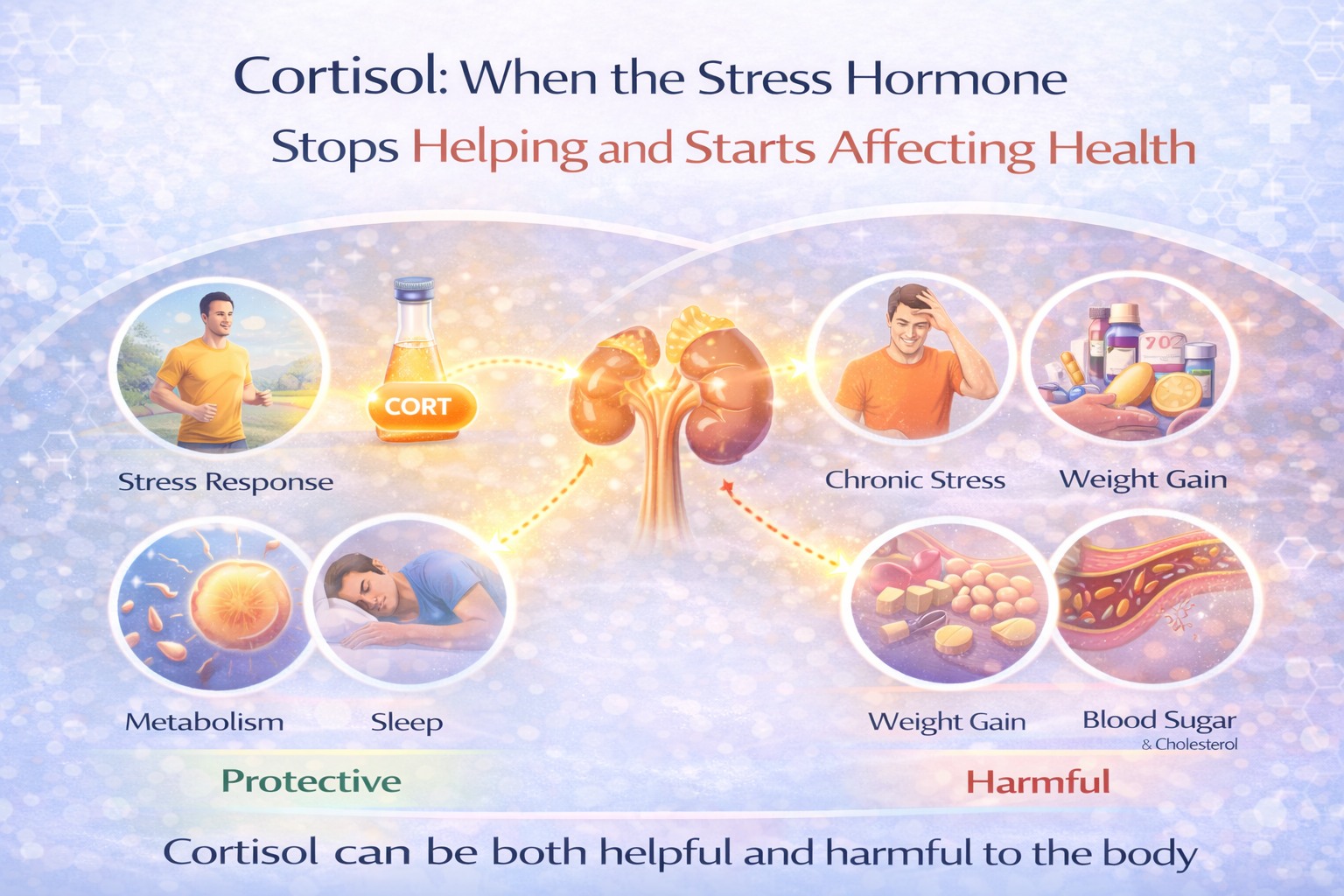
Cortisol is often referred to as the “stress hormone,” but its role in the body goes far beyond stress. It helps regulate metabolism, energy levels, and the body’s response to daily challenges. In normal situations, cortisol is essential for maintaining balance. However, when its levels remain elevated for prolonged periods, its effects can shift from helpful to disruptive.
Understanding this transition helps explain how chronic stress influences overall health.
The Role of Cortisol in the Body
Cortisol is produced by the adrenal glands and is released in response to stress and daily activity. It helps regulate blood sugar, supports metabolism, and maintains energy balance.
In short bursts, cortisol plays a protective and adaptive role.
When Cortisol Remains Elevated
Problems arise when cortisol levels stay consistently high. Instead of supporting balance, prolonged elevation may influence metabolic processes and internal regulation.
This can affect how the body manages energy and recovery.
Cortisol and Sleep-Wake Cycle
Cortisol follows a natural daily rhythm—it is typically higher in the morning and lower at night. Disruptions in this rhythm may affect sleep patterns and overall energy levels.
Impact on Metabolism
Cortisol influences how the body processes glucose and stores energy. Changes in cortisol levels may affect metabolic balance over time.
Why Monitoring Cortisol Matters
Since cortisol interacts with multiple systems, evaluating its levels helps provide insight into stress response and metabolic health.
Preventive Monitoring with Thyrocare
Thyrocare offers hormone testing that evaluates cortisol and related metabolic markers. Booking a Thyrocare blood test through BookMyTest ensures convenient home sample collection and fast reporting.
Conclusion
Cortisol is essential for managing stress and maintaining balance, but prolonged elevation can influence multiple systems in the body. Understanding its role highlights the importance of monitoring hormonal health.
FAQs
What does cortisol do in the body?
Cortisol regulates stress response, metabolism, and energy balance.
Can cortisol affect sleep?
Yes. It follows a daily rhythm that influences sleep-wake cycles.
How can cortisol levels be tested?
A Thyrocare blood test can measure cortisol levels.
Is Thyrocare home sample collection available?
Yes. Thyrocare home sample collection ensures convenient testing.
How soon are Thyrocare reports delivered?
Most Thyrocare blood test reports are delivered within 24–48 hours.