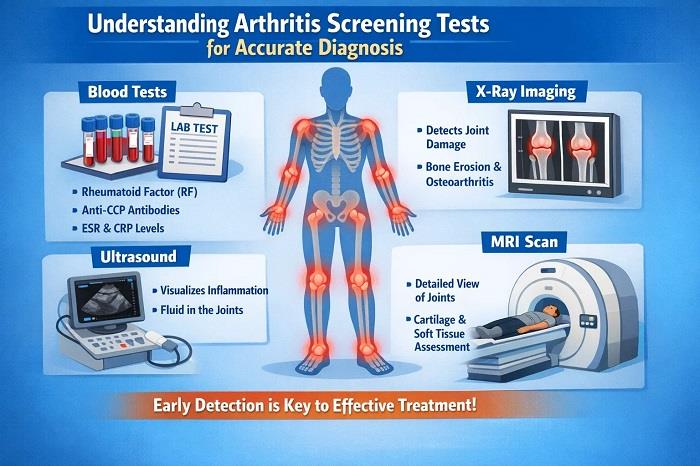
Understanding Arthritis Screening Tests for Accurate Diagnosis
Joint pain has a way of creeping into everyday life. At first it might just be a little stiffness in the morning… maybe your knees feel tight after a long walk, or your fingers ache when you wake up. Many people ignore these early signs, assuming it’s just age or temporary fatigue. But sometimes those subtle symptoms can point toward something deeper—like arthritis.
Arthritis isn’t a single disease. It’s a group of conditions that affect joints, causing pain, swelling, stiffness, and reduced mobility. Because symptoms can overlap with other health issues, doctors often rely on
arthritis screening tests to identify the exact cause and confirm the diagnosis. These tests play an important role in detecting inflammation, immune activity, and joint damage at an early stage.
Why Arthritis Screening Is Important
Arthritis can progress gradually, and without proper diagnosis, joint damage may worsen over time. Early screening allows doctors to identify the condition before severe joint degeneration occurs. This early detection helps begin treatment sooner and improves the chances of managing symptoms effectively.
Screening tests also help differentiate between various types of arthritis. Conditions such as rheumatoid arthritis, osteoarthritis, and gout may share similar symptoms but require different treatment approaches. Laboratory testing helps physicians understand the underlying cause of inflammation and determine the most appropriate care plan. Another important benefit of screening is monitoring disease progression. For individuals already diagnosed with arthritis, regular testing helps track inflammation levels and assess how well treatment is working.
Common Arthritis Screening Tests
Doctors may recommend several laboratory tests to evaluate joint health and detect inflammatory markers in the body. These tests provide valuable insights into immune activity, infection, and metabolic conditions that may contribute to arthritis.
Rheumatoid Factor (RF) Test: The Rheumatoid Factor test measures the presence of specific antibodies that are often found in individuals with rheumatoid arthritis, an autoimmune condition where the immune system attacks joint tissues. Elevated RF levels can indicate autoimmune activity, although further tests may be required for confirmation.
Anti-CCP Antibody Test: The Anti-Cyclic Citrullinated Peptide (Anti-CCP) test is considered one of the most specific markers for rheumatoid arthritis. It helps detect the disease in its early stages, sometimes even before noticeable symptoms appear.
C-Reactive Protein (CRP): CRP is a marker of inflammation in the body. Elevated CRP levels may indicate active inflammation caused by infections, autoimmune disorders, or inflammatory arthritis. Doctors often use this test to monitor disease activity.
Erythrocyte Sedimentation Rate (ESR): The ESR test measures how quickly red blood cells settle at the bottom of a test tube. Faster sedimentation can indicate inflammation within the body. Although ESR does not identify the exact cause, it helps detect inflammatory conditions including arthritis.
Uric Acid Test: High uric acid levels can lead to the formation of urate crystals in joints, which is the primary cause of gout, a painful form of arthritis that often affects the big toe and other joints.
These tests are often combined with imaging studies such as X-rays, ultrasound, or MRI to provide a more complete evaluation of joint health.
Who Should Consider Arthritis Screening?
Arthritis screening may be recommended for individuals who experience persistent joint pain, stiffness, or swelling. Symptoms that last more than a few weeks should not be ignored.
People who have a family history of arthritis or autoimmune disorders may also benefit from early testing. Genetic factors can increase susceptibility to certain types of arthritis. Other individuals who may consider screening include those with frequent joint inflammation, unexplained fatigue, or difficulty performing daily movements. Early testing can help clarify the cause of these symptoms and guide proper treatment.
Benefits of Early Diagnosis
Identifying arthritis in its early stages allows doctors to begin treatment before permanent joint damage occurs. Early management may include medication, lifestyle changes, physiotherapy, and dietary adjustments to reduce inflammation.
Timely diagnosis can significantly improve mobility, reduce pain, and slow disease progression. It also helps individuals maintain a better quality of life by preventing long-term disability and joint deformities.
Regular monitoring through laboratory tests ensures that treatment plans remain effective and adjusted according to the patient’s condition.
The Role of Preventive Health Screening
Arthritis screening tests are often included in specialized health packages that evaluate inflammatory markers and joint-related indicators. These preventive screenings help detect early signs of autoimmune or metabolic disorders that may affect joint health.
By combining multiple tests in a single panel, healthcare providers can gain a comprehensive understanding of inflammation levels and immune system activity. This approach improves diagnostic accuracy and supports proactive health management.
Arthritis can significantly affect daily life if left undiagnosed or untreated. Screening tests provide essential information that helps doctors identify the type and severity of the condition. From detecting autoimmune antibodies to measuring inflammation markers, these tests play a critical role in accurate diagnosis. Early detection through arthritis screening allows timely treatment, better symptom management, and improved long-term joint health. For individuals experiencing persistent joint discomfort or those at higher risk, regular screening can be an important step toward maintaining mobility and overall well-being