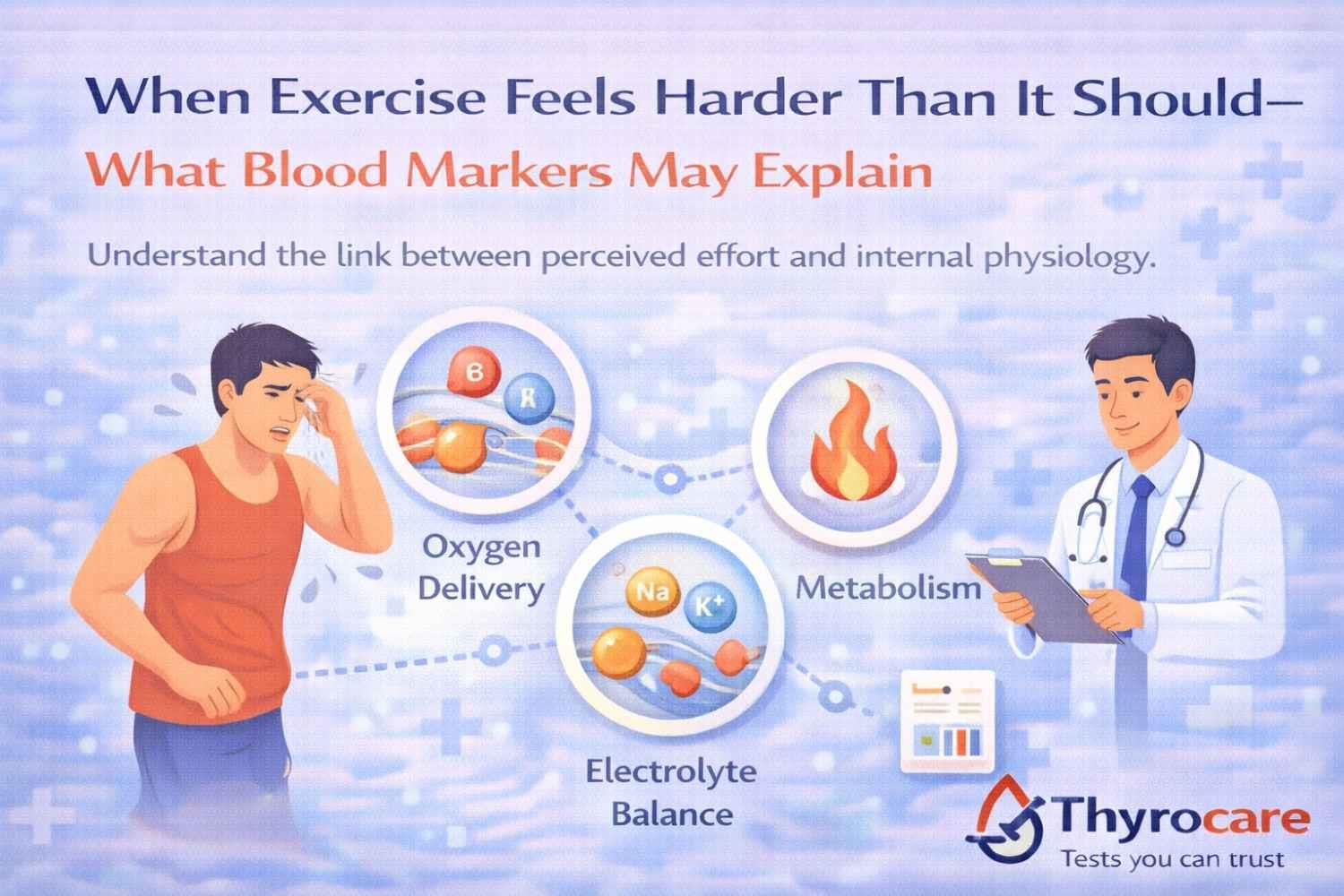
When Exercise Feels Harder Than It Should—What Blood Markers May Explain
There are days when exercise feels unusually difficult, even though your routine hasn’t changed. Movements feel heavier, breathing becomes laboured sooner, and endurance drops without warning. This experience is often dismissed as lack of sleep, ageing, or “just a bad day.” However, when effort consistently feels higher than expected, the explanation often lies inside the body rather than in motivation or training discipline.
Perceived Effort vs Physical Ability
Perceived exertion refers to how hard an activity feels, not how demanding it actually is. Two workouts may be identical in intensity, yet one feels significantly more taxing. This disconnect happens when internal systems that support physical activity—oxygen delivery, fluid balance, and energy production—are under subtle strain.
Oxygen Delivery Shapes Exercise Experience
Muscles rely on oxygen to sustain movement. When oxygen delivery becomes less efficient, muscles fatigue faster, and breathing effort increases. This can occur even when strength remains intact. Reduced oxygen transport doesn’t immediately limit performance, but it increases how hard the body must work to maintain the same output.
Electrolyte Balance and Muscle Function
Electrolytes help regulate muscle contraction, nerve signals, and fluid balance. Even minor shifts can alter how muscles respond during activity. When electrolyte balance is slightly off, muscles may fatigue early or feel weaker, increasing perceived effort without visible changes in strength.
Metabolism Determines Energy Availability
Exercise depends on efficient energy conversion. If metabolic processes slow or become less efficient, the body reaches its energy limits sooner. This doesn’t always affect short bursts of activity but becomes noticeable during sustained exercise, where effort feels disproportionately high.
Why These Changes Often Go Unnoticed
Because outward fitness may appear unchanged, people often push through increased effort without questioning it. Over time, they may reduce intensity or avoid activity altogether, assuming the change is normal. Internal shifts, however, often precede visible performance decline.
How Blood Markers Add Context
Blood markers related to oxygen transport, electrolyte balance, and metabolic efficiency help explain why exercise suddenly feels harder. These markers offer insight into internal readiness for activity and help differentiate between temporary fatigue and underlying physiological strain.
Understanding Exercise Effort with Thyrocare
Thyrocare offers blood tests that assess parameters linked to oxygen delivery, electrolyte balance, and metabolism. When you book a Thyrocare blood test through BookMyTest, samples are collected at home and digital reports are delivered within 24 to 48 hours, supporting early clarity when physical effort feels unexpectedly high.
Conclusion
When exercise feels harder than it should, the body may be signalling internal inefficiencies rather than reduced fitness. Oxygen transport, electrolyte balance, and metabolic readiness all shape how effort is perceived. Understanding these internal factors shifts the focus from pushing harder to interpreting what the body is communicating.
FAQs
Why does exercise suddenly feel harder even when my routine hasn’t changed?
Because perceived effort is influenced by oxygen delivery, electrolyte balance, and metabolic efficiency—not just physical strength.
Can blood tests explain increased exercise fatigue?
Yes. A Thyrocare blood test can reveal markers related to oxygen transport, electrolytes, and metabolism that affect effort levels.
Is Thyrocare home sample collection suitable for exercise-related testing?
Yes. Thyrocare home sample collection is available when booked through BookMyTest.
Does higher perceived effort always mean poor fitness?
Not necessarily. Internal physiological changes can increase effort without visible fitness decline.
How soon will I receive my Thyrocare blood test reports?
Most Thyrocare blood test reports are delivered digitally within 24 to 48 hours.