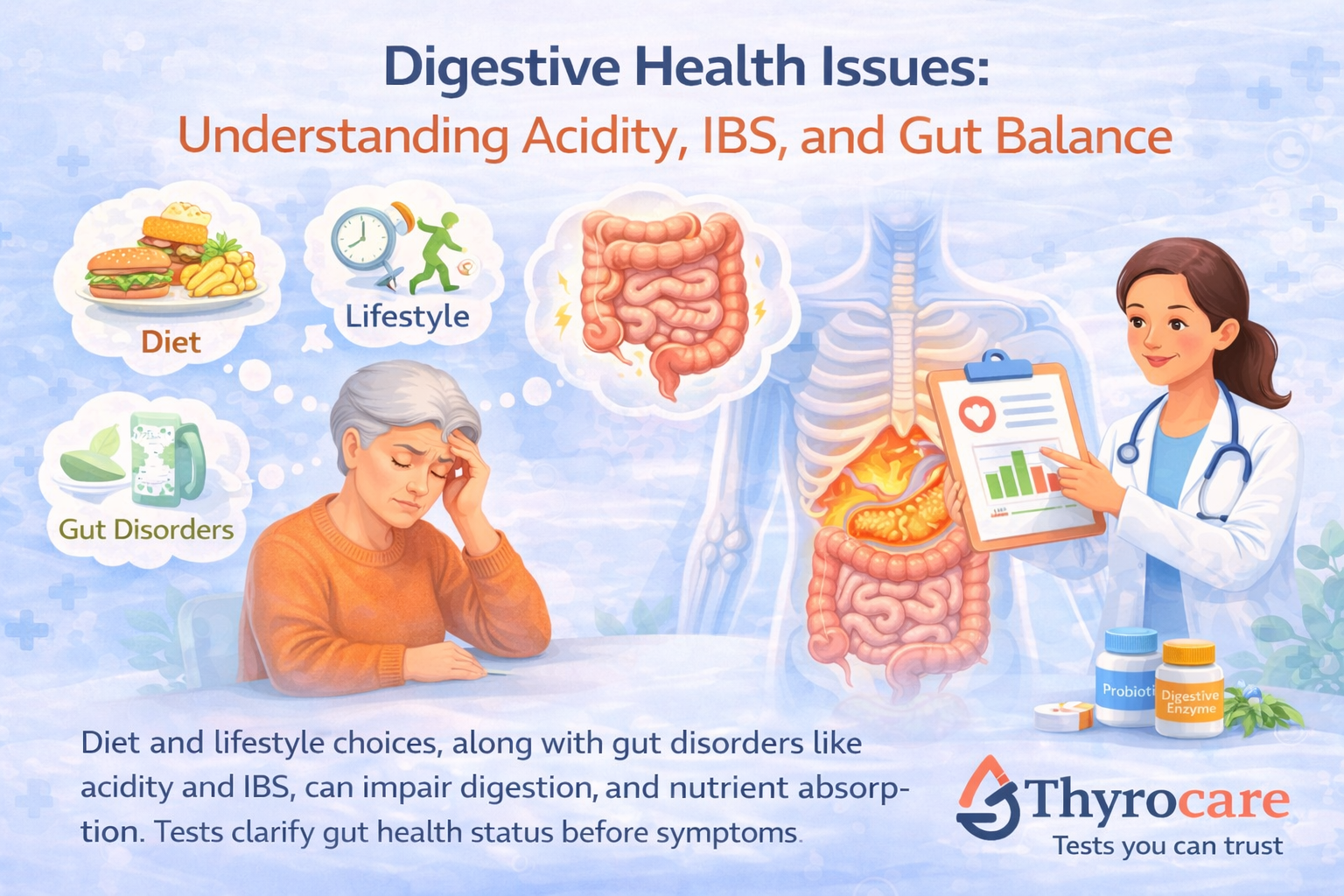
Digestive Health Issues: Understanding Acidity, IBS, and Gut Balance
Introduction
Digestive health plays a central role in how the body absorbs nutrients and maintains overall balance. Conditions like acidity, irritable bowel syndrome (IBS), and gut imbalance are common, yet their causes and effects are often misunderstood.
Many digestive issues develop gradually and may not always show clear warning signs. Understanding how the gut functions helps explain why symptoms vary and why testing can provide useful clarity.
What Happens During Digestive Imbalance?
The digestive system breaks down food, absorbs nutrients, and supports immune function. Acidity occurs when excess stomach acid irritates the digestive lining. IBS affects bowel movement patterns and gut sensitivity without visible structural damage.
Gut imbalance, often linked to altered gut bacteria, can influence digestion, absorption, and inflammation. These changes may occur silently, even when symptoms appear mild or occasional.
Why Digestive Issues Are Often Overlooked
Digestive discomfort is frequently dismissed as temporary or food-related. However, recurring acidity, bloating, irregular bowel habits, or abdominal discomfort may reflect underlying digestive imbalance.
Because these conditions do not always cause visible changes or constant pain, they can remain unnoticed for long periods. This delay may affect nutrient absorption and overall metabolic balance.
The Role of Gut Health and Nutrient Absorption
A balanced gut supports efficient absorption of vitamins, minerals, and other nutrients. Poor gut health may interfere with absorption of nutrients such as vitamin B12, iron, and calcium.
Over time, reduced absorption can contribute to fatigue, weakness, or metabolic disturbances. Understanding gut-related factors helps explain why digestive health is closely linked to overall wellbeing.
Who Should Pay Attention to Digestive Health?
Digestive issues may be more common in individuals with long-term dietary irregularities, high stress levels, or hormonal changes. Adults experiencing persistent acidity, bowel irregularities, or unexplained digestive discomfort may benefit from closer monitoring.
Age-related changes and long-standing gut sensitivity can also influence digestive balance over time.
Why Testing Helps in Digestive Health Awareness
Diagnostic testing offers insight into digestive markers, nutrient absorption, and gut-related imbalances. Blood tests help identify deficiencies or patterns that may be associated with ongoing digestive concerns.
Testing does not diagnose digestive disorders but provides useful information that supports better understanding and monitoring.
Making Digestive Health Monitoring Simple
Thyrocare offers blood tests that can be done at home with free home sample collection. Samples are processed in certified laboratories, and reports are typically available within 24–48 hours, helping individuals track digestive-related health markers conveniently.
Conclusion
Digestive health issues like acidity, IBS, and gut imbalance often progress quietly. Understanding gut function and monitoring key health markers can support early awareness and long-term digestive balance.
FAQs
1. Can Thyrocare tests help assess digestive health?
Thyrocare blood tests help evaluate nutrient levels and markers related to digestive absorption and gut balance.
2. Is Thyrocare blood test at home available for digestive health monitoring?
Yes, Thyrocare blood test at home is available with free home sample collection.
3. Do I need to visit a clinic for digestive-related tests?
No, free home sample collection allows testing without clinic visits.
4. Is fasting required for Thyrocare digestive-related tests?
Fasting requirements depend on the specific test and are clearly mentioned during booking.
5. How soon are Thyrocare test reports available?
Reports are generally available within 24–48 hours.