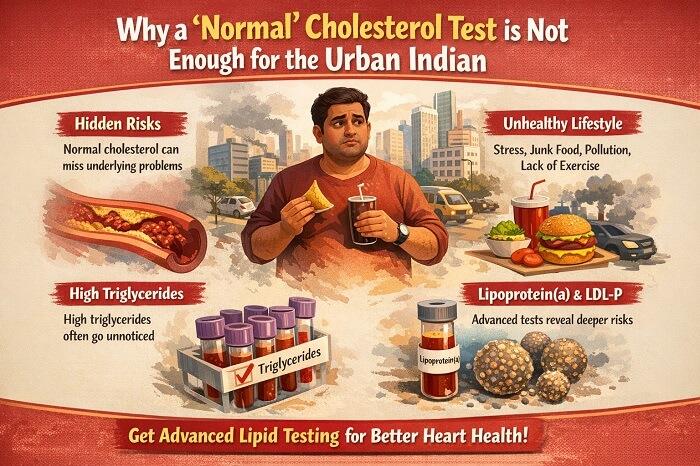
Normal Cholesterol Test Not Enough Urban Indians
You live in a busy city. Traffic fumes are unavoidable, stress is constant, and the air quality index rarely stays in the “safe” zone. You get your routine blood tests done, your lipid profile looks normal, and yet you don’t feel quite right. Fatigue lingers. Shortness of breath appears during simple activities. The question naturally follows—if cholesterol is normal, why doesn’t my body feel healthy? The answer lies in what routine cholesterol tests don’t measure.
Understanding What a Standard Cholesterol Test Really Shows
A basic lipid profile focuses on measuring fat levels in the blood. It includes total cholesterol, LDL cholesterol, HDL cholesterol, and triglycerides. These markers are important, but they tell only part of the story.
What they don’t reveal is the condition of your blood vessels. Cholesterol numbers show quantity, not impact. They do not explain whether your arteries are inflamed, under oxidative stress, or developing unstable plaque. For urban Indians exposed to pollution and lifestyle stress, this distinction is critical.
How Urban Living Changes Heart Risk
Air Pollution and Chronic Inflammation
Air pollution doesn’t stop at your lungs. Microscopic particulate matter enters the bloodstream and triggers low-grade, long-term inflammation. This inflammatory response damages the inner lining of blood vessels, making them less flexible and more prone to plaque buildup.
Over time, arteries become irritated and “sticky,” allowing cholesterol and immune cells to adhere more easily—even when LDL levels appear normal. This means cardiovascular risk can increase without showing up on a routine lipid report.
Stress, Sedentary Lifestyle, and Metabolic Strain
Urban lifestyles often involve prolonged sitting, irregular meals, poor sleep, and high stress. These factors disrupt metabolic balance and accelerate arterial ageing. Together with pollution exposure, they create a perfect environment for silent cardiovascular damage.
This explains why heart disease is increasingly seen in Indians in their 30s and 40s, even among those with seemingly healthy cholesterol levels.
Why Inflammation Matters More Than You Think
HsCRP: The Hidden Risk Marker
High-sensitivity C-reactive protein (HsCRP) measures inflammation within blood vessels. Elevated levels indicate ongoing arterial injury and a higher risk of cardiovascular events. Importantly, inflammation can exist long before symptoms appear or cholesterol levels rise.Routine lipid profiles do not include HsCRP, leaving a major risk factor undetected.
Lp-PLA2: Understanding Plaque Stability
Another overlooked marker is Lp-PLA2, which helps assess plaque activity and stability. Heart attacks often occur when unstable plaques rupture—not simply when cholesterol is high. Lp-PLA2 provides insight into whether existing plaque is vulnerable, helping clinicians evaluate real cardiovascular risk.
Why “Normal” Cholesterol Can Be Misleading
Cholesterol itself isn’t always the problem. Inflammation, oxidative stress, and arterial damage play a larger role in determining whether plaque remains stable or becomes dangerous. Two individuals can have identical cholesterol numbers, yet vastly different heart risks depending on inflammation levels and plaque behavior.
The Role of Advanced Cardiac Screening
Why TRUHEALTH Heart Advance Makes a Difference
TRUHEALTH Heart Advance is designed to bridge this diagnostic gap. Instead of focusing only on cholesterol, it evaluates cardiovascular health from multiple angles—lipid balance, inflammation, plaque activity, and metabolic stress.
By including advanced markers like HsCRP and Lp-PLA2, the package provides a deeper understanding of how pollution and lifestyle factors are affecting your arteries. This allows for early intervention, personalized lifestyle guidance, and timely medical follow-up.This is why relying solely on a standard lipid profile may offer false reassurance, especially for people living in polluted urban environments.
Who Should Consider Going Beyond Routine Tests?
Advanced heart screening is particularly relevant if you:
- Live in a high-pollution urban area
- Experience unexplained fatigue or breathlessness
- Have a family history of heart disease
- Are above 35 with a sedentary or high-stress lifestyle
- Want proactive prevention rather than reactive treatment
For these individuals, a deeper evaluation can uncover risks that routine tests may miss.
In today’s urban environment, heart health is no longer just about cholesterol numbers. It’s about understanding inflammation, arterial health, and the cumulative impact of pollution and lifestyle stress.
A normal lipid profile can be comforting—but it shouldn’t be the final word. Advanced screening through options like TRUHEALTH Heart Advance helps reveal the silent changes happening beneath the surface, empowering you to take informed, preventive action.
Because when it comes to heart health, knowing more—earlier—can make all the difference.