How Insulin Resistance Affects the Body Before Diabetes Is Diagnosed
Diabetes starts long before blood sugar looks abnormal.
For many people, diabetes seems to appear suddenly—one abnormal report, one unexpected diagnosis. But long before fasting glucose rises into the diabetic range, the body may already be struggling with a hidden metabolic imbalance known as insulin resistance.
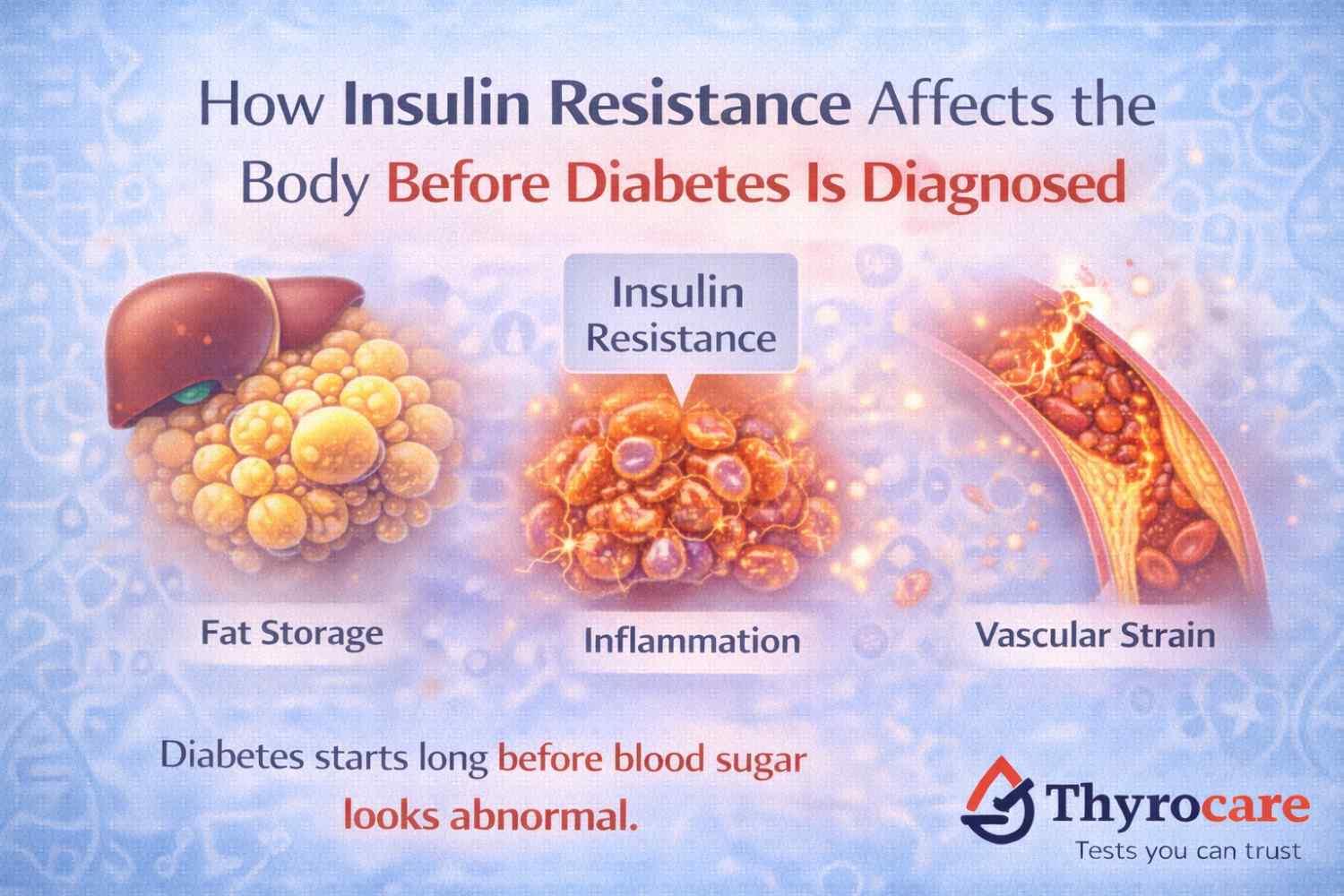
This silent phase can last for years, quietly affecting fat storage, inflammation levels, and blood vessel health—without obvious symptoms.
What Is Insulin Resistance?
Insulin is the hormone that helps glucose move from the bloodstream into cells, where it is used for energy. In insulin resistance, cells become less responsive to insulin’s signal.
To compensate, the pancreas produces more insulin to keep blood sugar within normal limits. During this stage, glucose levels may still appear “acceptable,” but the metabolic strain is already underway.
Fat Storage Begins to Shift
Insulin is not only involved in glucose regulation—it also influences fat metabolism. Elevated insulin levels encourage fat storage, particularly around the abdomen.
Over time:
- Fat accumulation increases
- Muscle efficiency declines
- Metabolic flexibility reduces
These changes may occur even when body weight appears stable.
Inflammation Quietly Rises
Chronic insulin resistance is often associated with low-grade systemic inflammation. This inflammatory activity affects tissues throughout the body, including blood vessels.
Persistent inflammation increases metabolic stress and contributes to long-term cardiovascular risk, even before diabetes is formally diagnosed.
Vascular Strain Develops Early
Healthy blood vessels rely on balanced glucose and insulin signaling. When insulin resistance persists, endothelial function may begin to decline. The endothelium—the inner lining of arteries—plays a crucial role in regulating blood flow and preventing clot formation.
Early endothelial dysfunction can occur silently, gradually increasing vascular vulnerability.
Why Blood Sugar May Look Normal at First
In early insulin resistance, the body compensates effectively by producing more insulin. As long as this compensation continues, fasting glucose and HbA1c may remain within near-normal ranges.
However, elevated insulin levels themselves reflect metabolic stress. Over time, this compensation weakens, and blood sugar begins to rise more noticeably.
The Hidden Phase Before Diagnosis
Insulin resistance often precedes type 2 diabetes by several years. During this period:
- Fat metabolism is altered
- Inflammation increases
- Cardiovascular risk begins to climb
Because symptoms are minimal or absent, many individuals remain unaware until routine blood testing reveals abnormal glucose patterns.
How Blood Tests Provide Early Insight
Comprehensive testing that evaluates fasting glucose, HbA1c, and metabolic indicators helps identify early imbalance. Monitoring trends over time provides a clearer picture than relying on a single value.
Early awareness allows preventive action before glucose levels cross into diabetic range.
Preventive Monitoring with Thyrocare
Thyrocare offers comprehensive metabolic testing that evaluates glucose markers and related risk indicators. When you book a Thyrocare blood test through BookMyTest, professional home sample collection ensures convenience, and digital reports are delivered within 24 to 48 hours, supporting early detection of insulin resistance-related changes.
Identifying metabolic strain early helps prevent long-term complications.
Conclusion
Insulin resistance does not begin with high blood sugar—it begins with subtle internal dysfunction. Fat storage shifts, inflammation rises, and vascular strain develops long before diabetes is diagnosed. Recognizing this hidden phase highlights the importance of preventive testing and early metabolic awareness.
FAQs
Can insulin resistance exist before diabetes is diagnosed?
Yes. Insulin resistance often develops years before blood sugar reaches diabetic levels.
What tests help detect early insulin resistance?
A Thyrocare blood test can assess fasting glucose, HbA1c, and related metabolic indicators.
Is Thyrocare home sample collection available for metabolic testing?
Yes. Thyrocare home sample collection is available when booking preventive diabetes screening through BookMyTest.
Does normal blood sugar mean insulin function is normal?
Not always. Elevated insulin levels can compensate for resistance before glucose rises.
How soon are Thyrocare blood test reports delivered?
Most Thyrocare blood test reports are delivered digitally within 24 to 48 hours.