Balanced Weight Loss Diet Plan for Men and Women
Weight loss doesn’t have to mean extreme dieting, skipping meals, or cutting out entire food groups. In fact, the most sustainable weight loss comes from balance. A balanced diet plan focuses on nourishing the body while creating a calorie deficit gently, so weight loss feels manageable rather than exhausting. And while men and women have different metabolic needs, the core principles of healthy weight loss remain largely the same.
Understanding What “Balanced” Really Means
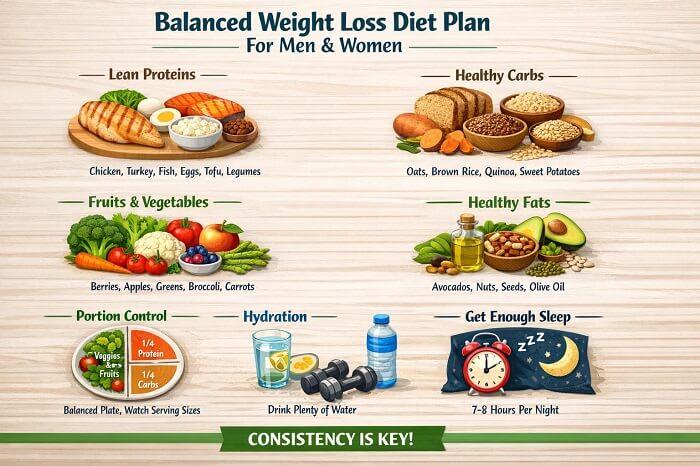
A balanced weight loss diet includes the right mix of carbohydrates, proteins, healthy fats, vitamins, and minerals. Carbohydrates often get a bad reputation, but the truth is your body needs them for energy. The key is choosing complex carbs like whole grains, fruits, vegetables, and legumes instead of refined sugars and processed foods. Proteins support muscle maintenance and keep you full for longer, while healthy fats help regulate hormones and improve nutrient absorption.
Rather than focusing on eating less, a balanced plan focuses on eating better. Portion control, food quality, and meal timing matter far more than drastic calorie cuts.
Key Differences in Weight Loss Needs for Men and Women
Men generally have higher muscle mass and a faster resting metabolism, which means they may lose weight more quickly when they adjust their diet and activity levels. Women, on the other hand, experience hormonal fluctuations that can influence appetite, fat storage, and energy levels. This doesn’t mean weight loss is harder for women—it just means consistency and balance are even more important.
For both men and women, protein intake is crucial. Including adequate protein in every meal helps preserve muscle mass during weight loss and reduces cravings. Fiber-rich foods also play a major role by improving digestion and promoting fullness.
What a Balanced Weight Loss Diet Looks Like
A healthy day of eating doesn’t need to be complicated. Breakfast should include protein and fiber, such as eggs with vegetables or oats with nuts and seeds. Lunch can focus on whole grains, lean protein, and plenty of vegetables. Dinner should be lighter but still satisfying, combining protein with vegetables and healthy fats. Snacks, if needed, should come from fruits, yogurt, nuts, or seeds rather than packaged foods.
Hydration is often overlooked but essential. Drinking enough water supports metabolism, reduces unnecessary snacking, and improves overall energy levels.
The Role of Lifestyle Alongside Diet
Diet alone isn’t enough for long-term weight loss. Regular physical activity, quality sleep, and stress management all influence how the body burns fat and regulates hunger hormones. Even simple habits like daily walking, consistent sleep schedules, and mindful eating can significantly improve results.
It’s also important to understand that underlying health conditions—such as thyroid disorders, insulin resistance, or hormonal imbalances—can affect weight. In such cases, diet changes should be supported by appropriate health screening.
Why Health Monitoring Matters During Weight Loss
Weight loss isn’t just about the number on the scale. Monitoring blood sugar levels, lipid profiles, liver function, and hormonal health helps ensure that weight loss is happening in a healthy way. Preventive health checkups offered by trusted diagnostic providers like Metropolis Healthcare and Thyrocare can identify hidden issues that may slow progress or impact overall wellness. Platforms like Bookmytest make these tests more accessible with affordable packages and home sample collection.
A balanced weight loss diet is not a short-term fix—it’s a lifestyle shift. When men and women focus on nourishing their bodies with the right foods, maintaining consistency, and supporting their efforts with healthy habits and regular health monitoring, weight loss becomes sustainable and empowering. The goal isn’t just to lose weight, but to feel stronger, healthier, and more in control of your well-being.