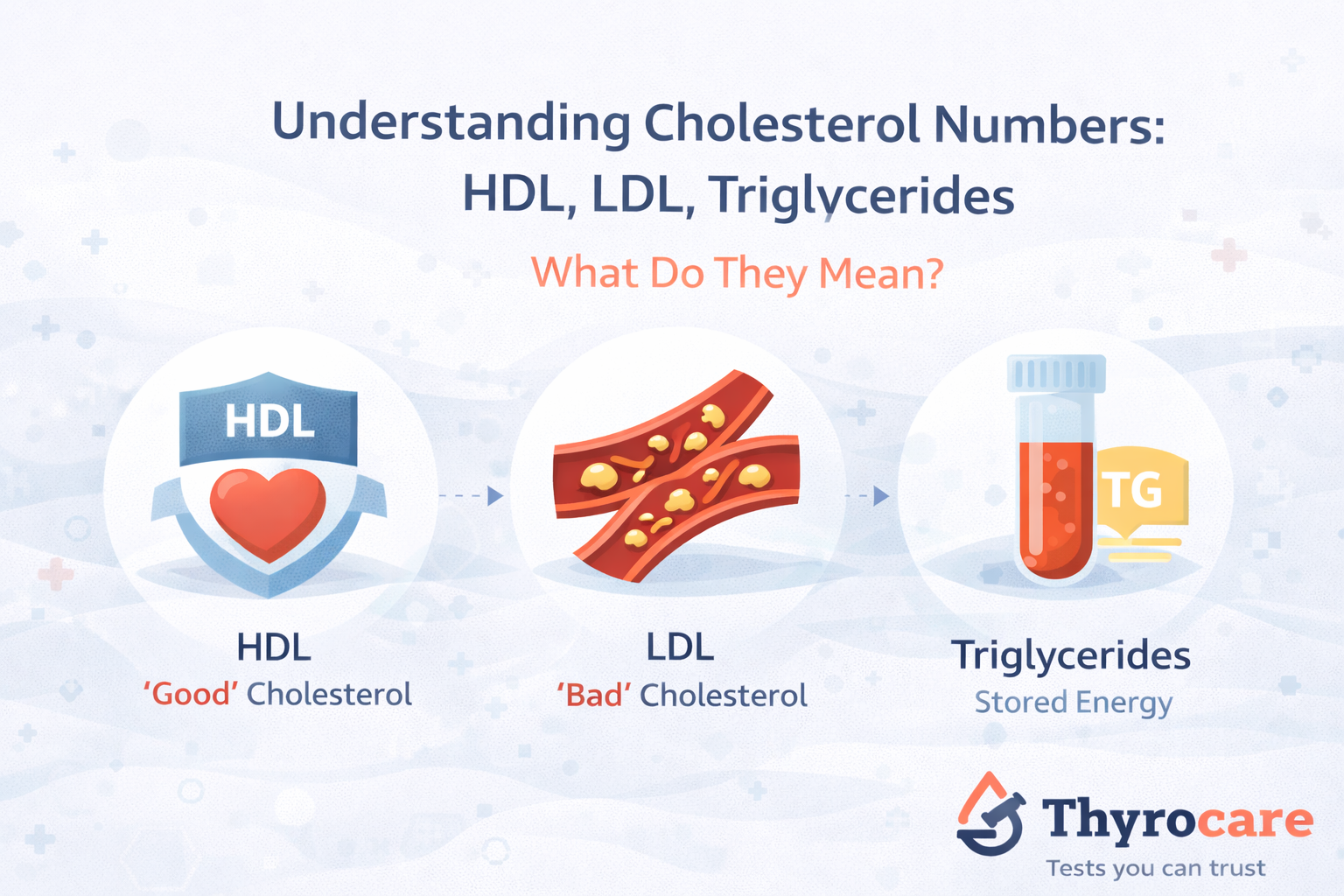
Understanding Cholesterol Numbers: HDL, LDL, Triglycerides
Cholesterol numbers often appear on blood reports as abbreviations—HDL, LDL, triglycerides—leaving many people unsure of what they actually mean. While cholesterol is commonly linked to heart health, it’s not just one number. Understanding the different components helps make sense of reports and reduces unnecessary worry.
What Cholesterol Really Is
Cholesterol is a type of fat that the body needs to function properly. It plays a role in hormone production, cell structure, and digestion. Problems arise not from cholesterol itself, but from how it is transported and balanced in the blood.
That’s why cholesterol is measured in parts, not as a single value.
HDL: The “Good” Cholesterol
HDL (High-Density Lipoprotein) is often called good cholesterol. It helps carry excess cholesterol away from the bloodstream to the liver, where it can be processed and removed.
Higher HDL levels are generally considered supportive of heart health. HDL works like a clean-up system, helping maintain balance in the blood.
LDL: The “Bad” Cholesterol
LDL (Low-Density Lipoprotein) is known as bad cholesterol because high levels can lead to cholesterol buildup in blood vessels. Over time, this buildup may affect blood flow.
LDL usually doesn’t cause symptoms, which is why regular testing is important. Understanding LDL levels helps assess long-term cardiovascular risk rather than short-term discomfort.
Triglycerides: Stored Energy
Triglycerides are another type of fat in the blood. They store unused calories and provide energy when needed. However, consistently high triglyceride levels can add strain to the heart and blood vessels.
Triglyceride levels are often influenced by diet, metabolism, and lifestyle patterns.
Why All Three Numbers Matter Together
Looking at one cholesterol value alone doesn’t give the full picture. HDL, LDL, and triglycerides together help create a clearer understanding of fat balance and heart-related health trends.
That’s why lipid profile tests measure all these values together.
Making Cholesterol Testing Simple
Cholesterol testing through Thyrocare blood tests helps assess these values clearly. With Thyrocare blood test at home, sample collection is convenient, and reports are shared digitally within 24 to 48 hours, making routine monitoring easier.
Conclusion
Cholesterol numbers are not just figures on a report. They reflect how fats are managed inside the body. Understanding HDL, LDL, and triglycerides helps replace confusion with clarity and supports informed health decisions.
FAQs
What is included in a Thyrocare cholesterol test?
A Thyrocare lipid profile test usually includes HDL, LDL, triglycerides, and total cholesterol values.
Is fasting required for Thyrocare cholesterol test booking?
Yes. Lipid profile tests usually require fasting (8–12 hours) for accurate results. Fasting details are shared during Thyrocare test booking.
Is free home sample collection available for Thyrocare cholesterol tests?
Yes. With BookMyTest Thyrocare booking, free home sample collection is included.
Who collects the sample during Thyrocare blood test at home?
An experienced Thyrocare phlebotomist collects the sample at your home following proper hygiene practices.
When will I receive my Thyrocare cholesterol test reports?
Most Thyrocare reports are delivered within 24 to 48 hours as a soft copy to your registered email ID.