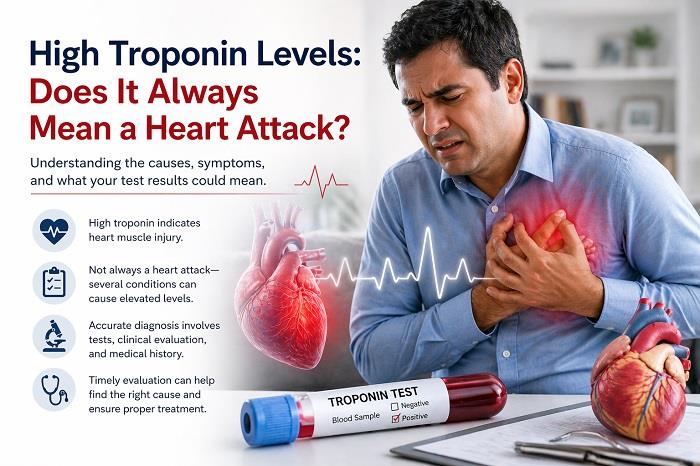
high troponin levels heart attack risk
Troponin is one of the most important biomarkers used to detect heart damage, especially in suspected cases of a heart attack. When patients experience chest pain or other cardiac symptoms, doctors often recommend a troponin test to assess whether the heart muscle has been injured.
However, many people assume that high troponin levels always indicate a heart attack. While elevated troponin is a serious finding, it does not necessarily mean that a heart attack has occurred. Understanding what troponin is and what causes its levels to rise can help you make informed decisions about your health.
What is a Troponin Test?
A troponin test is a blood test that measures the levels of troponin proteins in the bloodstream. These proteins are found in heart muscles and are released into the blood when the heart is damaged.There are two main types of troponin measured in diagnostic tests:
- Troponin I: Troponin I is highly specific to the heart and is widely used in diagnosing heart-related conditions.
- Troponin T: Troponin T is another marker that indicates heart muscle injury and is often used alongside Troponin I for better accuracy.
What is the Normal Range of Troponin?
Troponin levels are usually very low or undetectable in healthy individuals. Typical Reference Range
- Normal: Very low or undetectable
- Slightly Elevated: May indicate minor heart stress
- High Levels: Suggest significant heart muscle damage
The exact range may vary depending on the lab and type of test (standard vs high-sensitivity troponin).
Does High Troponin Always Mean a Heart Attack?
No, While high troponin levels are strongly associated with heart attacks, they are not exclusive to this condition. Elevated troponin simply indicates that there has been some form of damage or stress to the heart muscle.Doctors always interpret troponin levels along with symptoms, ECG results, and other diagnostic tests before confirming a heart attack.
Other Causes of High Troponin Levels
- Myocarditis: Inflammation of the heart muscle can cause troponin levels to rise without a heart attack.
- Heart Failure: Chronic or acute heart failure may lead to elevated troponin due to ongoing strain on the heart.
- Arrhythmias: Irregular heart rhythms can sometimes stress the heart and increase troponin levels.
- Kidney Disease: Patients with kidney dysfunction may have higher troponin levels due to reduced clearance from the body.
- Severe Infections: Conditions like sepsis can put stress on the heart, leading to increased troponin.
- Pulmonary Embolism: A blood clot in the lungs can affect heart function and elevate troponin levels.
- Intense Physical Activity:Extreme exercise or physical stress can sometimes cause temporary increases in troponin.
-