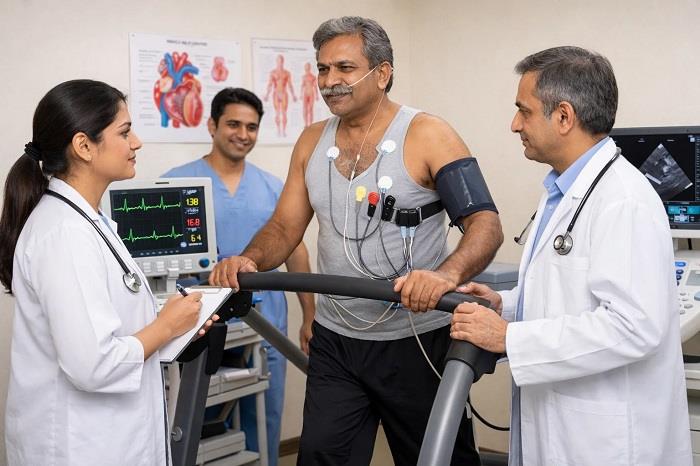
Treadmill Stress Test for Cardiac Risk Assessment: A Complete Guide
Heart disease often develops silently. Long before chest pain or a serious cardiac event occurs, the heart may already be struggling to cope with physical exertion. Resting tests can miss these early warning signs—but this is where the Treadmill Stress Test (TMT) becomes crucial. By evaluating how the heart performs under controlled physical stress, TMT helps uncover cardiac issues that may otherwise go undetected.
Whether you are experiencing symptoms or taking a proactive approach to heart health, the TMT is a valuable tool for comprehensive cardiac risk assessment.
What Is a Treadmill Stress Test (TMT)?
A Treadmill Stress Test evaluates how your heart responds to increasing levels of physical activity. During the test, you walk on a treadmill while your heart rate, blood pressure, and ECG (electrocardiogram) are continuously monitored.
As the speed and incline of the treadmill gradually increase, your heart is required to work harder—similar to everyday activities like climbing stairs or walking uphill. This controlled stress allows doctors to assess how efficiently your heart receives blood and maintains electrical stability during exertion.
Why Is a TMT Important for Cardiac Risk Assessment?
Many heart conditions become evident only when the heart is under physical load. A resting ECG may appear normal even when blood flow to the heart muscle is compromised. A TMT helps detect:
- Reduced blood supply to the heart (ischemia)
- Exercise-induced chest pain or breathlessness
- Abnormal heart rhythms triggered by exertion
- Functional capacity and endurance of the heart
- Early signs of coronary artery disease (CAD)
For individuals with risk factors, TMT can identify potential problems early—often before a major cardiac event occurs.
Who Should Consider a Treadmill Stress Test?
- People With Symptoms Suggestive of Heart Disease: If you experience chest discomfort, unexplained fatigue, dizziness, palpitations, or shortness of breath during physical activity, a TMT can help determine whether these symptoms are cardiac in origin.
- Individuals With Cardiac Risk Factors: People with diabetes, hypertension, high cholesterol, obesity, smoking history, or a family history of heart disease may benefit from periodic stress testing—even if they feel otherwise healthy.
- Post-Treatment or Recovery Monitoring: Patients who have undergone angioplasty, bypass surgery, or are on long-term cardiac medications often use TMT to assess recovery progress and treatment effectiveness.
How Is the Treadmill Stress Test Performed?
Before the Test: Electrodes are placed on your chest to record heart activity. Baseline heart rate and blood pressure are measured. You may be advised to avoid heavy meals, caffeine, or smoking before the test.
During the Test: You walk on a treadmill with gradually increasing speed and incline. The test continues until:
- A target heart rate is achieved
- Symptoms such as chest pain or breathlessness appear
- Significant ECG changes are observed
- You feel too fatigued and request to stop
After the Test
Your heart rate and blood pressure are monitored for a few minutes as they return to baseline. The entire procedure typically takes 20–30 minutes.
What Do TMT Results Indicate?
Normal Result: A normal TMT suggests that your heart is receiving adequate blood flow during exercise and can tolerate physical stress effectively.
Abnormal Result: Abnormal ECG changes, blood pressure responses, or symptoms during exertion may indicate:
- Coronary artery disease
- Reduced exercise tolerance
- Exercise-induced arrhythmias
- Need for further investigations such as echocardiography, CT coronary angiography, or angiography
TMT results are always interpreted in combination with clinical history and other diagnostic findings.
Limitations of the Treadmill Stress Test
While highly useful, TMT is not a standalone diagnostic for all heart conditions. It may not detect very early or mild coronary blockages and is less suitable for individuals who are unable to exercise adequately. In such cases, doctors may recommend imaging-based stress tests or alternative cardiac evaluations.
Why Choose a Supervised TMT at a Trusted Diagnostic Center?
Accuracy and safety are critical during a cardiac stress test. At reputed diagnostic centers such as Metropolis Healthcare, TMTs are conducted under expert supervision with emergency protocols in place.This ensures:
- Strict adherence to testing protocols
- Accurate ECG monitoring and interpretation
- Continuous patient safety during exertion
- Reliable reporting to guide clinical decisions
The
Treadmill Stress Test remains one of the most effective and accessible tools for evaluating cardiac risk. By bridging the gap between resting assessments and real-world physical demands, it provides valuable insights into heart performance under stress.
If you have symptoms, known risk factors, or simply want a proactive evaluation of your heart health, a TMT can help you take timely and informed steps toward prevention, treatment, and long-term cardiac wellness.