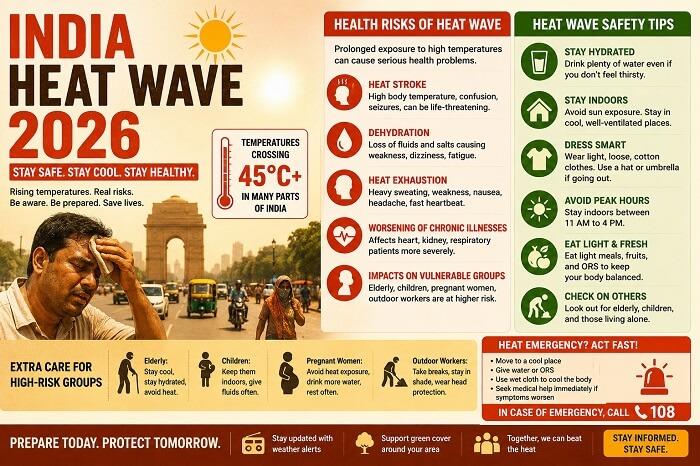
India Heat Wave 2026 Health Risks Safety Tips
India is witnessing increasingly severe heatwaves in 2026, with temperatures crossing dangerous levels in many states. Rising heat, humidity, and prolonged exposure to the sun are affecting daily life and increasing the risk of serious health complications. From dehydration and exhaustion to life-threatening Heat Stroke, extreme summer conditions can impact people of all age groups.
Understanding the health risks associated with heatwaves and taking preventive measures is essential to staying safe during the intense Indian summer.
Why Heatwaves Are Becoming More Dangerous
Climate changes, urban heat buildup, pollution, and rising global temperatures have made heatwaves more frequent and intense across India. Cities often experience higher temperatures because of concrete structures, traffic pollution, and limited green spaces.
Long exposure to extreme heat can affect the body’s ability to regulate temperature properly. If the body cannot cool itself efficiently through sweating, it may lead to dehydration, electrolyte imbalance, and overheating.
Common Health Risks During Heatwaves
Heat Exhaustion: Heat exhaustion occurs due to excessive loss of fluids and salts through sweating. Symptoms may include:
- Heavy sweating
- Weakness and fatigue
- Dizziness or headache
- Muscle cramps
- Nausea
If ignored, heat exhaustion can progress into a more serious condition.
Heat Stroke: Heat stroke is a medical emergency caused by dangerously high body temperature. Symptoms may include:
- Hot and dry skin
- Confusion or disorientation
- Rapid heartbeat
- Fainting or seizures
- Loss of consciousness
Immediate medical attention is necessary, as heat stroke can damage vital organs.
Dehydration and Electrolyte Imbalance: Continuous sweating can lead to significant fluid and mineral loss. Severe dehydration may affect kidney function, blood pressure, and energy levels, especially in elderly individuals and children.
Increased Cardiovascular Stress: Extreme heat places additional stress on the heart and blood vessels. People with existing heart conditions, diabetes, or hypertension may experience worsening symptoms during heatwaves.
Who Is Most at Risk?
While anyone can be affected by extreme heat, certain groups are more vulnerable:
- Senior citizens
- Children and infants
- Outdoor workers
- Individuals with chronic illnesses
- Pregnant women
- People living in crowded urban areas
These individuals should take extra precautions during high-temperature days.
Essential Safety Tips During Heatwaves
- Stay Hydrated: Drink water regularly throughout the day, even if you don’t feel thirsty. Coconut water, lemon water, and oral rehydration solutions can help maintain electrolyte balance. Avoid excessive caffeine, sugary drinks, and alcohol, as they may increase dehydration.
- Avoid Peak Afternoon Heat: Try to stay indoors between 12 PM and 4 PM when temperatures are highest. If outdoor travel is necessary, use umbrellas, hats, or scarves for protection.
- Wear Light and Breathable Clothing: Loose-fitting cotton clothing allows better air circulation and helps the body stay cooler.
- Eat Light and Hydrating Foods: Fresh fruits like watermelon, cucumber, oranges, and curd-based meals help maintain hydration and reduce body heat.
- Keep Indoor Spaces Cool: Use fans, coolers, or air conditioning whenever possible. Keeping curtains closed during peak sunlight hours can also reduce indoor heat.
Importance of Preventive Health Monitoring
Heatwaves can silently affect kidney function, blood pressure, blood sugar, and heart health. Preventive health checkups can help identify early complications caused by dehydration or heat stress.
Tests such as Kidney Function Test, electrolyte analysis, blood sugar screening, and Lipid Profile Test become especially important during summer months.
Diagnostic providers like Thyrocare Technologies Limited and Metropolis Healthcare offer preventive health packages that help monitor overall wellness during extreme weather conditions.
Warning Signs You Should Never Ignore
Seek medical attention immediately if you or someone around you experiences:
- Confusion or unconsciousness
- High fever with dry skin
- Persistent vomiting
- Severe dizziness
- Difficulty breathing
- Chest pain
Early treatment can prevent serious complications and save lives.
The India heat wave of 2026 highlights the growing importance of heat safety and preventive healthcare. Extreme temperatures can affect hydration, heart health, kidney function, and overall well-being if proper precautions are not taken.
Simple habits such as staying hydrated, avoiding excessive sun exposure, eating healthy, and monitoring your health can make a significant difference. Awareness and early action remain the best defenses against the dangers of heatwaves.