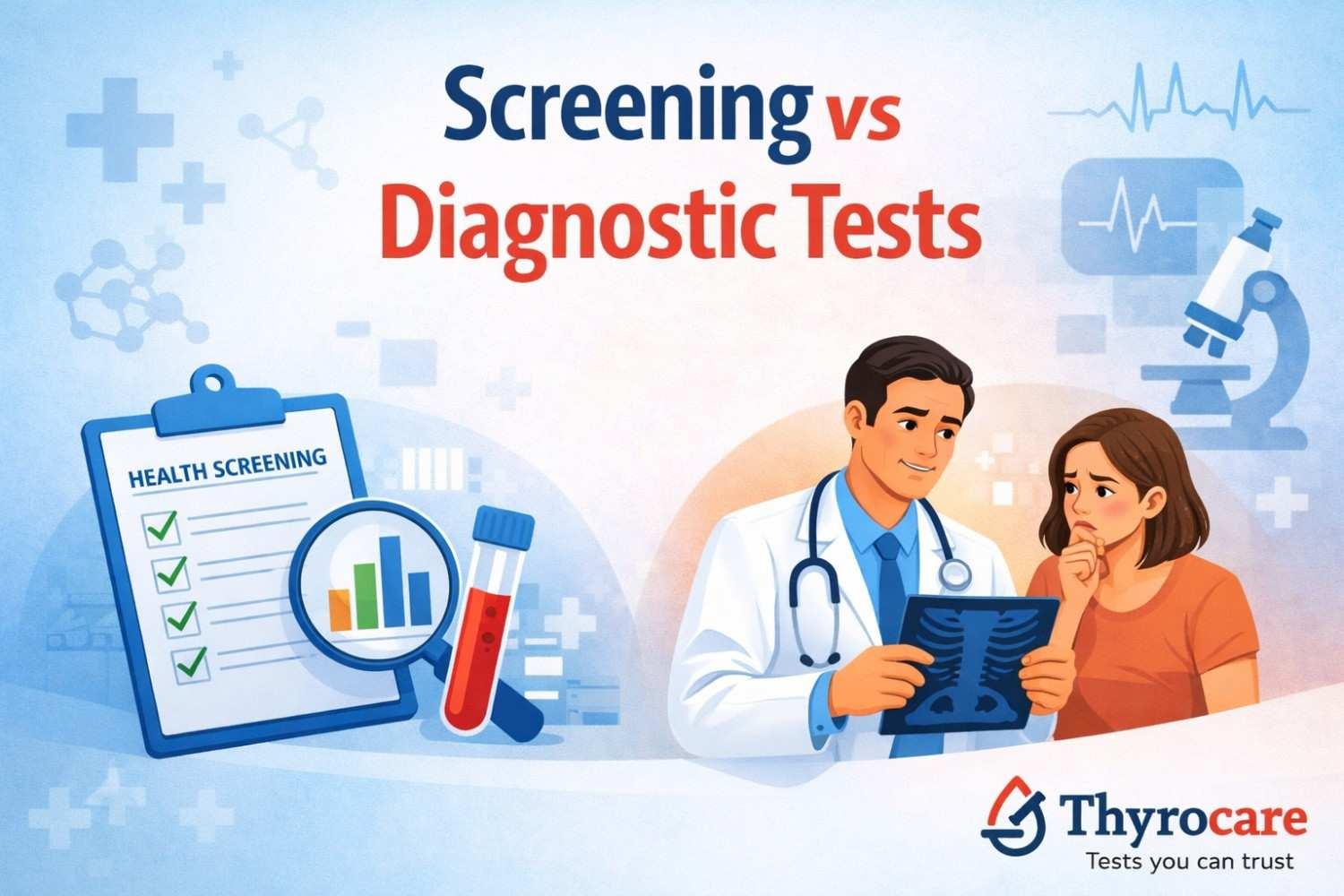
The Difference Between Screening Tests and Diagnostic Tests
The Difference Between Screening Tests and Diagnostic Tests
In healthcare, not all tests are ordered for the same reason. Some are performed when a person feels completely healthy, while others are used to confirm a suspected condition. Understanding the difference between screening tests and diagnostic tests helps remove confusion and builds confidence in how reports are interpreted.
What Is a Screening Test?
A screening test is designed to detect potential health changes before symptoms appear. It is typically recommended for individuals who feel well but may have risk factors based on age, lifestyle, or family history. The purpose is early detection—not confirmation.
Screening tests identify patterns that may require closer attention. They do not provide a final diagnosis. Instead, they act as an early alert system, highlighting areas that may need monitoring or further evaluation.
What Is a Diagnostic Test?
A diagnostic test is performed when there is a specific reason to investigate—such as symptoms, abnormal screening results, or a clinical suspicion. Unlike screening tests, diagnostic tests aim to confirm or rule out a particular condition.
These tests are more focused and are interpreted alongside medical history, examination findings, and other clinical information.
The Key Difference: Purpose
The primary distinction lies in intent.
- Screening tests are preventive and broad.
- Diagnostic tests are targeted and confirmatory.
A screening result may suggest a possibility. A diagnostic test provides clarity.
Why Interpretation Depends on Context
The same test can function as a screening tool in one situation and a diagnostic tool in another. For example, a routine blood test done during an annual health check is screening. The same test ordered after symptoms develop becomes diagnostic.
This is why interpretation always depends on why the test was ordered, not just the numbers on the report.
Why Screening Is Not Meant to Cause Panic
Because screening tests are sensitive to early changes, they may occasionally flag borderline values. This does not automatically indicate disease. It simply suggests that further evaluation or monitoring may be needed.
Understanding this prevents unnecessary anxiety over early alerts.
Why Diagnostic Testing Requires Precision
Diagnostic tests are chosen carefully based on clinical judgment. They aim to confirm a condition and guide treatment decisions. Accuracy and context are critical at this stage.
How Preventive Testing Supports Early Awareness
Comprehensive blood testing often serves as screening, helping detect subtle internal changes before symptoms appear. This approach shifts healthcare from reaction to prevention.
Preventive Testing with Thyrocare
Thyrocare offers preventive blood tests that function as screening tools for early health awareness. When you book a Thyrocare blood test through BookMyTest, samples are collected at home and digital reports are delivered within 24 to 48 hours, supporting timely and reliable interpretation.
Conclusion
Screening tests and diagnostic tests serve different purposes, even when the tests themselves may look similar. Screening is about early detection; diagnosis is about confirmation. Understanding this difference empowers individuals to interpret reports with clarity rather than confusion.
FAQs
What is the difference between screening and diagnostic blood tests?
Screening tests detect early changes in people without symptoms, while diagnostic tests confirm specific conditions.
Can a Thyrocare blood test be used for screening?
Yes. Many Thyrocare blood tests are used as preventive screening tools.
Is Thyrocare home sample collection available for screening tests?
Yes. Thyrocare home sample collection is available when booking through BookMyTest.
If a screening result is abnormal, does it mean I have a disease?
Not necessarily. Screening results may require confirmation through diagnostic evaluation.
How soon are Thyrocare blood test reports delivered?
Most Thyrocare blood test reports are delivered digitally within 24 to 48 hours.