Ultrasound USG Test Uses Procedure Benefits
Medical imaging plays a vital role in diagnosing and monitoring many health conditions. Among the safest and most commonly used imaging methods is the Ultrasound Test, also known as a USG (Ultrasonography) test. This non-invasive procedure uses sound waves to create images of internal organs, tissues, and blood flow inside the body.
Because it does not involve radiation exposure, ultrasound is widely used across multiple medical specialties, including pregnancy care, abdominal evaluation, heart assessment, and organ screening. Understanding how the test works and why it is important can help patients feel more informed and comfortable before undergoing the procedure.
What Is an Ultrasound (USG) Test?
The Ultrasound Test is an imaging technique that uses high-frequency sound waves to produce real-time images of structures inside the body. A handheld device called a transducer sends sound waves into the body, and the returning echoes are converted into images on a monitor.
Unlike X-rays or CT scans, ultrasound does not use ionizing radiation, making it a safer option for repeated use and during pregnancy.
Common Uses of Ultrasound Tests
Ultrasound imaging is used for a wide range of diagnostic purposes.
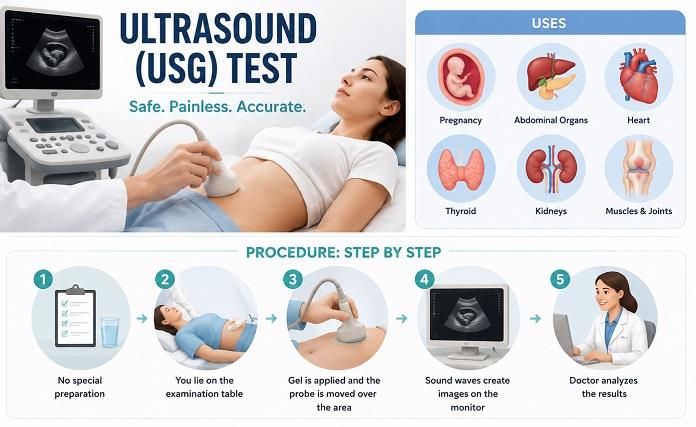
- Pregnancy Monitoring: One of the most common applications is monitoring pregnancy. Ultrasound helps assess fetal growth, heartbeat, development, placental position, and overall pregnancy health.
- Abdominal and Organ Evaluation: Doctors often recommend ultrasound to examine organs such as the liver, kidneys, gallbladder, pancreas, and spleen. It helps detect conditions like fatty liver, kidney stones, cysts, or abdominal swelling.
- Heart and Blood Flow Assessment: Specialized ultrasounds such as echocardiography help evaluate heart function and blood circulation.
- Pelvic and Reproductive Health: Ultrasound is frequently used to examine the uterus, ovaries, prostate, and urinary bladder to detect abnormalities or reproductive health concerns.
- Thyroid and Soft Tissue Imaging: The Ultrasound Test can also help evaluate thyroid nodules, swelling, or soft tissue abnormalities.
How Is the Procedure Performed?
The procedure is generally simple, painless, and quick. During the Ultrasound Test, a gel is applied to the skin over the area being examined. The transducer is then moved gently across the surface to capture images.
The gel helps improve sound wave transmission and image quality. Depending on the type of ultrasound, the patient may be asked to lie down, hold their breath briefly, or drink water beforehand. The procedure usually takes between 15 and 45 minutes, depending on the area being examined.
Is Any Preparation Required?
Preparation depends on the type of ultrasound being performed.
- For abdominal ultrasound, fasting may be recommended for several hours.
- For pelvic ultrasound, patients may need a full bladder for clearer imaging.
- Pregnancy ultrasounds may have specific instructions depending on the trimester.
The diagnostic center or doctor usually provides preparation guidelines in advance.
Benefits of Ultrasound Imaging
The Ultrasound Test offers several advantages:
- Non-Invasive and Painless: The procedure does not involve injections, surgery, or radiation exposure, making it comfortable and safe for most patients.
- Real-Time Imaging: Ultrasound provides live images, helping doctors assess organ movement, blood flow, and fetal activity instantly.
- Safe During Pregnancy: Because it uses sound waves instead of radiation, ultrasound is considered safe for both mother and baby during prenatal care.
- Early Detection of Health Issues: Ultrasound helps identify abnormalities at an early stage, supporting timely diagnosis and treatment.
Are There Any Risks?
Ultrasound is considered one of the safest imaging procedures available. Since it does not use radiation, there are very few known risks when performed by trained professionals.
However, the accuracy of results depends on factors such as the area being examined, patient preparation, and the expertise of the technician or radiologist.
Importance of Timely Diagnostic Imaging
Early diagnosis plays a major role in effective healthcare management. Diagnostic providers like Metropolis Healthcare and Thyrocare Technologies Limited support preventive healthcare through advanced diagnostic services and imaging referrals.
Timely ultrasound evaluation can help detect conditions before symptoms worsen, improving treatment outcomes and overall health monitoring.
The Ultrasound Test is a safe, reliable, and widely used imaging tool that helps doctors diagnose and monitor many medical conditions. From pregnancy care to organ assessment and heart evaluation, ultrasound plays a critical role in modern healthcare.
If your doctor recommends a USG test, understanding the procedure and its benefits can help you approach it with confidence. Early imaging and preventive screening remain essential steps toward better health and timely medical care.