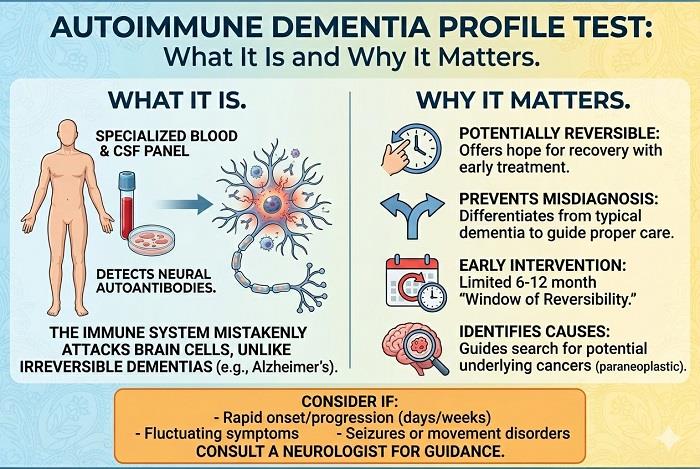
Autoimmune Dementia Profile Test
Memory loss, confusion, and behavioral changes are often associated with aging or neurodegenerative conditions. However, in some cases, these symptoms may be caused by the immune system mistakenly attacking the brain—a condition linked to Autoimmune Dementia. Unlike typical dementia, this form can sometimes be treated or even reversed if diagnosed early. This is where the Autoimmune Dementia Profile Test becomes critically important.
What Is an Autoimmune Dementia Profile Test?
The Autoimmune Dementia Profile Test is a specialized blood-based diagnostic panel designed to detect autoantibodies associated with inflammation in the brain. These autoantibodies are produced when the immune system mistakenly targets healthy brain cells, leading to cognitive decline and neurological symptoms.
This test helps differentiate autoimmune causes of dementia from other forms such as Alzheimer’s Disease or Vascular Dementia, which typically progress differently and may not be reversible.
Why Does This Test Matter?
One of the most important reasons this test matters is early and accurate diagnosis. Autoimmune dementia often progresses faster than other types of dementia and may present with unusual symptoms such as sudden memory loss, personality changes, seizures, or psychiatric issues.
Because these symptoms can mimic other neurological or psychiatric conditions, diagnosis is often delayed. The Autoimmune Dementia Profile Test helps identify the underlying immune-related cause, enabling doctors to begin targeted treatment sooner. Early intervention can significantly improve outcomes, and in some cases, cognitive function may stabilize or improve with proper treatment.
What Does the Test Detect?
The Autoimmune Dementia Profile Test detects a range of neural autoantibodies that are associated with autoimmune encephalitis and related disorders. These may include antibodies targeting neuronal surface proteins or intracellular antigens.
The presence of these antibodies suggests that the immune system is actively involved in affecting brain function. This information helps doctors determine whether immunotherapy or other treatments may be beneficial.
Who Should Consider This Test?
This test is particularly useful for individuals who show rapid or atypical cognitive decline. You may consider the Autoimmune Dementia Profile Test if you or a loved one experiences:
- Sudden or rapidly worsening memory loss
- Behavioral or personality changes
- Confusion or disorientation
- Seizures or unexplained neurological symptoms
- Psychiatric symptoms such as anxiety, depression, or hallucinations
It is especially recommended when dementia progresses faster than expected or does not fit the typical pattern of common neurodegenerative diseases.
How Is the Test Performed?
The Autoimmune Dementia Profile Test is usually performed using a blood sample. In some cases, additional testing such as cerebrospinal fluid (CSF) analysis or brain imaging may be recommended for a more comprehensive evaluation. The procedure is simple, and no major preparation is typically required. Results may take a few days, depending on the complexity of the panel.
Benefits of Early Detection
Detecting autoimmune causes of dementia early can make a significant difference in treatment outcomes. Unlike many neurodegenerative conditions, autoimmune dementia may respond to treatments such as immunotherapy, steroids, or other targeted therapies. Early diagnosis helps:
- Initiate appropriate treatment quickly
- Prevent further neurological damage
- Improve or stabilize cognitive function
- Avoid misdiagnosis and unnecessary treatments
This makes the test a valuable tool in modern neurological diagnostics.
Cognitive decline is not always irreversible. In some cases, it may be driven by immune system activity that can be treated if identified early. The Autoimmune Dementia Profile Test offers a powerful way to uncover these hidden causes and guide effective treatment.
If symptoms appear suddenly or progress unusually fast, it’s important to look beyond typical explanations. Early testing can provide clarity, open the door to targeted therapies, and significantly improve quality of life.