TSH Test Normal Range Symptoms
The thyroid gland plays a crucial role in regulating metabolism, energy levels, and overall body functions. Any imbalance in thyroid hormones can affect multiple systems in the body. One of the most important tests used to assess thyroid function is the Thyroid Stimulating Hormone (TSH) test. This simple blood test helps detect whether your thyroid is functioning normally or if there is an underlying disorder.
Understanding the TSH test, its normal range, and associated symptoms can help in early detection and better management of thyroid-related conditions.
What Is a TSH Test?
The TSH test measures the level of thyroid-stimulating hormone in your blood. This hormone is produced by the pituitary gland and controls the activity of the thyroid gland.
When thyroid hormone levels are low, the pituitary gland releases more TSH to stimulate the thyroid. Conversely, when thyroid hormone levels are high, TSH production decreases. This balance helps maintain proper metabolic function in the body. Doctors often recommend the TSH test as a primary screening tool to detect thyroid disorders.
Normal Range of TSH
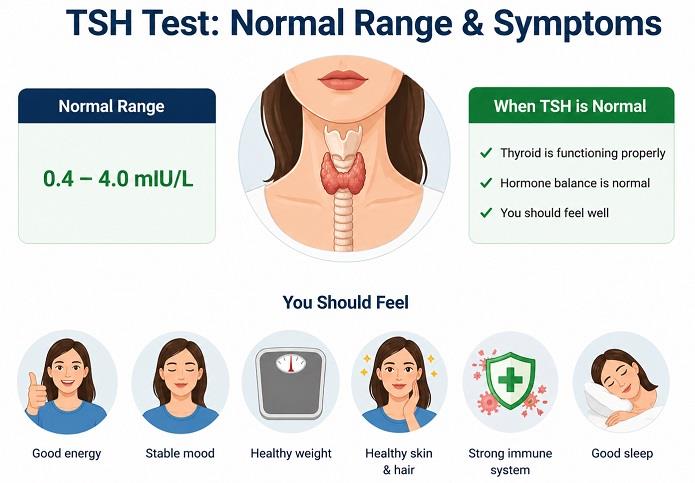
The normal range of TSH may vary slightly depending on the laboratory, but it is generally considered to be:
- Normal Range: 0.4 to 4.0 mIU/L
Values outside this range may indicate a thyroid imbalance:
- High TSH: Suggests hypothyroidism (underactive thyroid)
- Low TSH: Suggests hyperthyroidism (overactive thyroid)
Symptoms of Thyroid Imbalance
Thyroid disorders can present with a wide range of symptoms depending on whether the thyroid is underactive or overactive. Symptoms of Hypothyroidism (High TSH):
- Fatigue and weakness
- Weight gain
- Cold intolerance
- Dry skin and hair
- Depression or low mood
Symptoms of Hyperthyroidism (Low TSH):
- Weight loss
- Rapid heartbeat
- Anxiety or irritability
- Excessive sweating
- Tremors
If you experience any of these symptoms, a TSH test can help identify the underlying issue.
Why Is the TSH Test Important?
The TSH test is a vital diagnostic tool for detecting thyroid disorders at an early stage. Since symptoms of thyroid imbalance can be subtle or mistaken for other conditions, testing becomes essential.
- Early Detection: Identifies thyroid problems before complications arise
- Accurate Diagnosis: Helps differentiate between hypothyroidism and hyperthyroidism
- Monitoring Treatment: Tracks effectiveness of thyroid medications
- Preventing Complications: Reduces risk of heart issues, infertility, and metabolic disorders
Regular screening is especially important for individuals at higher risk.
Who Should Take a TSH Test?
The TSH test is recommended for:
- Individuals experiencing symptoms of thyroid imbalance
- Women, especially during pregnancy or menopause
- People with a family history of thyroid disorders
- Individuals with unexplained weight changes or fatigue
- Patients undergoing treatment for thyroid conditions
Routine thyroid screening is also beneficial as part of preventive health checkups.
How Is the Test Performed?
The TSH test is a simple blood test that requires a small sample collected from a vein. It is a quick and minimally invasive procedure. In most cases, no special preparation is required, although your doctor may provide specific instructions if needed. Results are usually available within a short time, allowing for prompt diagnosis and treatment.
Benefits of Early Thyroid Testing
Early detection of thyroid disorders can significantly improve health outcomes. Timely diagnosis allows for effective treatment and prevents complications.
- Maintains healthy metabolism
- Supports energy levels and mental well-being
- Helps manage weight effectively
- Reduces risk of long-term health issues
Regular monitoring ensures that thyroid hormone levels remain balanced.
The TSH test is an essential tool for evaluating thyroid health and detecting imbalances that can affect overall well-being. Since thyroid disorders often develop gradually, regular testing and awareness are key to early diagnosis and effective management.
If you experience symptoms such as fatigue, weight changes, or mood fluctuations, consider getting a TSH test. A simple blood test can provide valuable insights and help you take control of your health.
It is important to interpret these results in consultation with a healthcare professional, as other factors may also influence TSH levels.