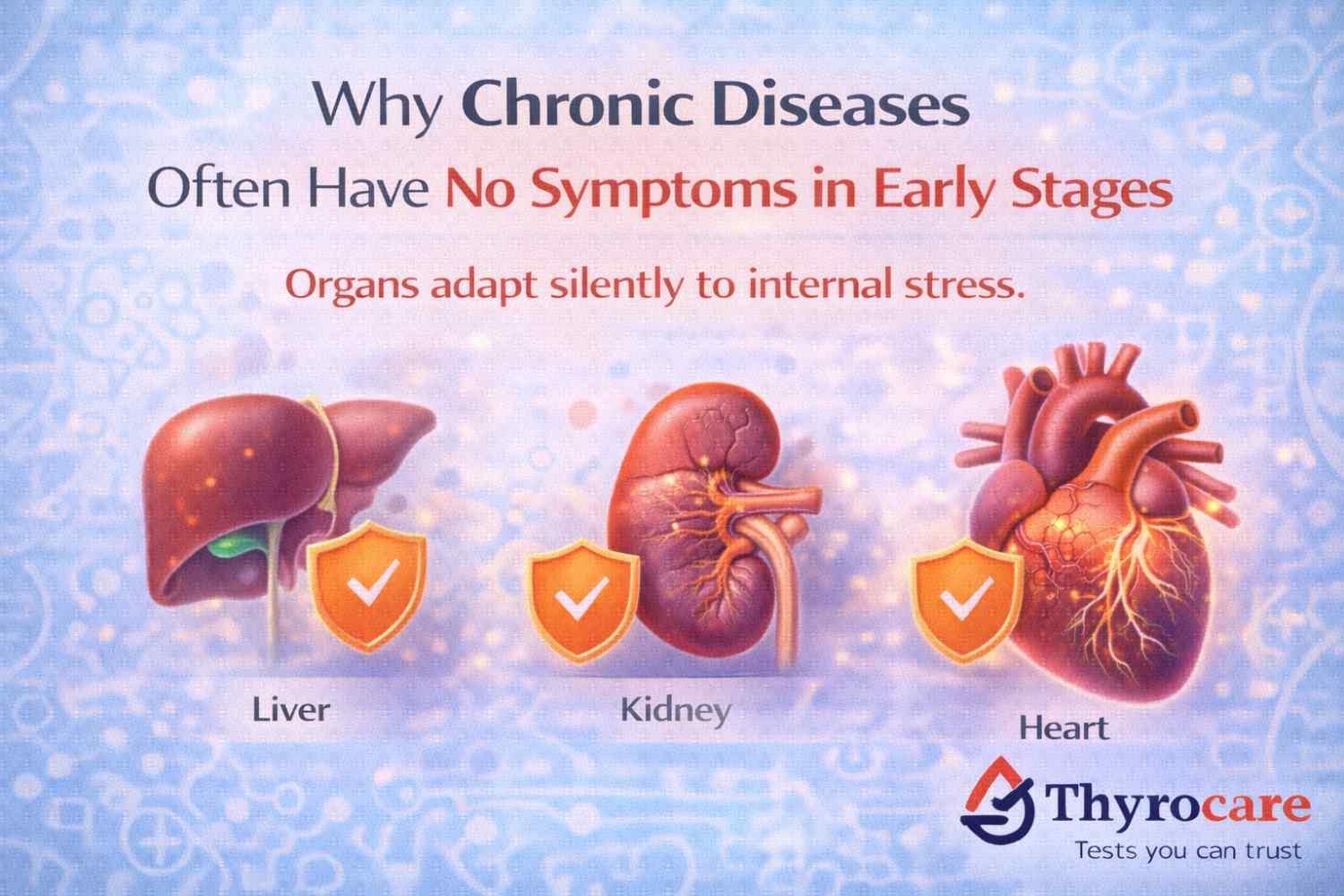
Why Chronic Diseases Often Have No Symptoms in Early Stages
One of the most dangerous misconceptions about chronic diseases is that they always cause noticeable discomfort. In reality, many long-term conditions develop quietly, without pain or obvious warning signs. By the time symptoms appear, internal changes may have been progressing for years.
The reason lies in the body’s remarkable ability to adapt.
The Body Is Designed to Compensate
Human organs are built with reserve capacity. This means they can continue functioning efficiently even when mild damage or stress begins. Instead of immediately triggering symptoms, the body adjusts its internal processes to maintain balance.
This silent compensation phase delays visible warning signs, making early detection challenging without routine testing.
The Liver: Quietly Adapting Under Strain
The liver performs hundreds of metabolic tasks daily, from processing nutrients to detoxifying substances. In early stages of liver stress—such as fat accumulation or mild inflammation—the liver continues to function effectively.
Because it lacks pain-sensitive nerve endings, early liver changes rarely cause discomfort. Subtle enzyme elevations in blood tests may be the only early indicator.
By the time fatigue, swelling, or other symptoms appear, internal progression has often advanced.
The Kidneys: Filtering Even When Under Pressure
The kidneys filter waste products from the bloodstream and regulate fluid balance. They have significant functional reserve. Even if filtering efficiency declines slightly, the remaining healthy units compensate.
This is why early kidney strain often produces no noticeable symptoms. Creatinine and eGFR values may shift gradually long before swelling or changes in urination occur.
Routine monitoring is often the first way early kidney dysfunction is identified.
The Heart: Adapting Before Warning Signs Appear
The heart is also highly adaptive. When blood vessels narrow gradually or blood pressure increases slowly over time, the heart adjusts by working harder.
Initially, this compensation maintains circulation effectively. There may be no chest pain or breathlessness. However, prolonged strain can eventually lead to structural changes and reduced efficiency.
Symptoms typically emerge only after the heart’s compensatory ability declines.
Why Symptoms Appear Late
Chronic diseases evolve gradually through inflammation, metabolic imbalance, and tissue adaptation. Because these processes develop slowly, the body has time to adjust, masking early dysfunction.
This protective adaptation, while helpful in the short term, can delay awareness of developing conditions.
The Role of Preventive Screening
Blood tests often reveal subtle shifts before symptoms arise. Changes in liver enzymes, kidney markers, lipid patterns, glucose regulation, or inflammatory indicators may signal early strain even when a person feels completely well.
Monitoring trends over time provides deeper insight than waiting for discomfort to appear.
Preventive screening shifts healthcare from reactive to proactive.
Preventive Testing with Thyrocare
Thyrocare offers comprehensive preventive blood testing that evaluates liver function, kidney markers, metabolic indicators, and cardiovascular risk parameters. When you book a Thyrocare blood test through BookMyTest, professional home sample collection ensures convenience, and digital reports are delivered within 24 to 48 hours, making routine monitoring simple and accessible.
Early insight supports timely medical guidance before symptoms develop.
Conclusion
Chronic diseases often remain silent in their early stages because organs compensate effectively under stress. The liver, kidneys, and heart can adapt for years before noticeable symptoms arise. Understanding this silent progression highlights the importance of preventive screening and regular monitoring to detect subtle internal changes early.
FAQs
Why don’t chronic diseases cause symptoms early?
Because organs compensate for mild dysfunction, delaying visible warning signs.
Can blood tests detect early organ strain?
Yes. A Thyrocare blood test can identify subtle changes in liver, kidney, and metabolic markers.
Is Thyrocare home sample collection available for preventive health screening?
Yes. Thyrocare home sample collection is available when booking routine preventive tests through BookMyTest.
Should I test even if I feel healthy?
Yes. Many chronic conditions develop silently before symptoms appear.
How quickly are Thyrocare blood test reports delivered?
Most Thyrocare blood test reports are delivered digitally within 24 to 48 hours.