Brain Fog Explained: When Poor Concentration May Have a Biological Cause
Brain Fog Explained: When Poor Concentration May Have a Biological Cause
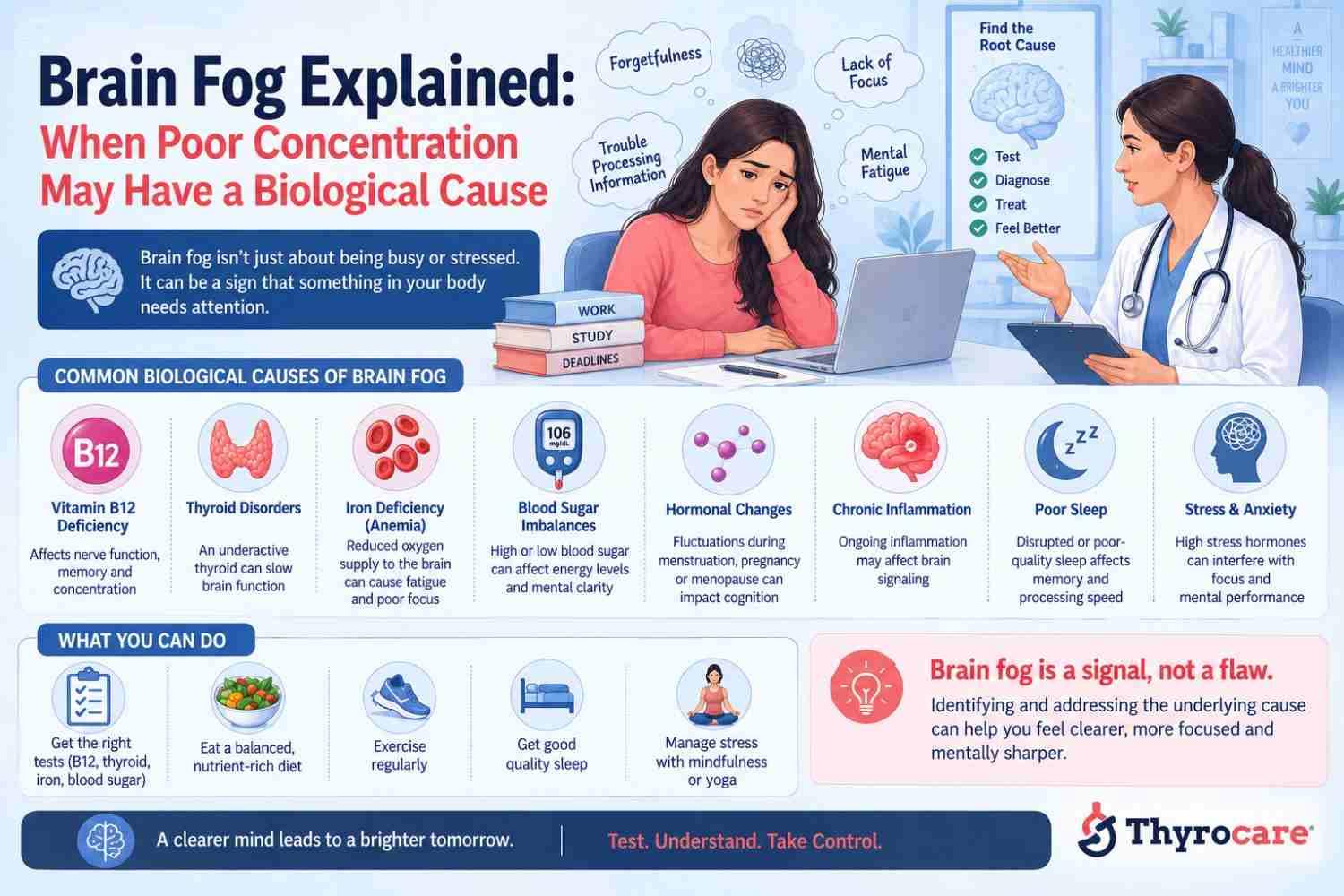
Brain fog can make everyday tasks feel unexpectedly difficult. You may struggle to concentrate, forget simple things, or feel mentally slower than usual. While stress and lack of sleep are common explanations, persistent brain fog may sometimes be associated with biological factors such as thyroid dysfunction, vitamin B12 deficiency, anemia, blood sugar fluctuations, and poor sleep quality.
Brain fog itself is not a medical diagnosis, but understanding possible underlying factors can help determine when further evaluation may be useful.
Thyroid Function and Brain Fog
Thyroid hormones help regulate metabolism throughout the body, including processes that support brain function. An underactive thyroid may be associated with fatigue, slower thinking, memory difficulties, and reduced concentration.
Blood tests such as TSH, T3, and T4 can help evaluate thyroid function.
Vitamin B12 and Mental Clarity
Vitamin B12 supports healthy nerve function and red blood cell formation. A significant deficiency may contribute to fatigue, memory difficulties, poor concentration, or neurological symptoms such as tingling and numbness.
Checking vitamin B12 levels can help identify whether deficiency may be contributing to symptoms.
Anemia and Concentration
Hemoglobin carries oxygen throughout the body. When hemoglobin is low, as occurs in anemia, reduced oxygen-carrying capacity may contribute to tiredness, weakness, dizziness, and difficulty concentrating.
A Complete Blood Count (CBC) can help evaluate hemoglobin and other blood-cell parameters.
Blood Sugar Fluctuations
The brain depends heavily on glucose for energy. Significant changes in blood glucose can affect energy, alertness, and concentration. Tests such as fasting glucose and HbA1c can help assess glucose regulation.
Sleep and Cognitive Performance
Poor-quality or insufficient sleep can affect attention, memory, reaction time, and decision-making. Persistent brain fog should therefore be considered alongside both medical factors and sleep habits.
Preventive Monitoring with Thyrocare
Thyrocare offers blood tests for several markers that may be relevant when investigating persistent fatigue or concentration difficulties, including thyroid function, vitamin B12, CBC, glucose, and HbA1c.
Booking a Thyrocare blood test through BookMyTest provides convenient home sample collection for preventive health monitoring.
Conclusion
Brain fog can have several possible biological and lifestyle causes.
Thyroid dysfunction and vitamin B12 deficiency may affect mental clarity.
Anemia and glucose abnormalities can also influence concentration and energy.
Blood testing can help identify certain underlying health factors.
Persistent or worsening brain fog should be discussed with a healthcare professional.
FAQs
1. What is brain fog?
Brain fog describes symptoms such as poor concentration, forgetfulness, mental fatigue, and difficulty thinking clearly.
2. Can thyroid problems cause brain fog?
Yes. Thyroid dysfunction, particularly hypothyroidism, may contribute to fatigue and cognitive slowing.
3. Can vitamin B12 deficiency affect concentration?
Yes. Significant B12 deficiency can affect neurological function and may contribute to cognitive symptoms.
4. Which blood tests may be useful for persistent brain fog?
Depending on the individual, a healthcare professional may consider CBC, vitamin B12, thyroid function, fasting glucose, HbA1c, and other investigations.
5. Can I book relevant blood tests through BookMyTest?
Yes. Relevant Thyrocare blood tests through BookMyTest can help assess several biological factors that may be associated with fatigue and poor concentration.