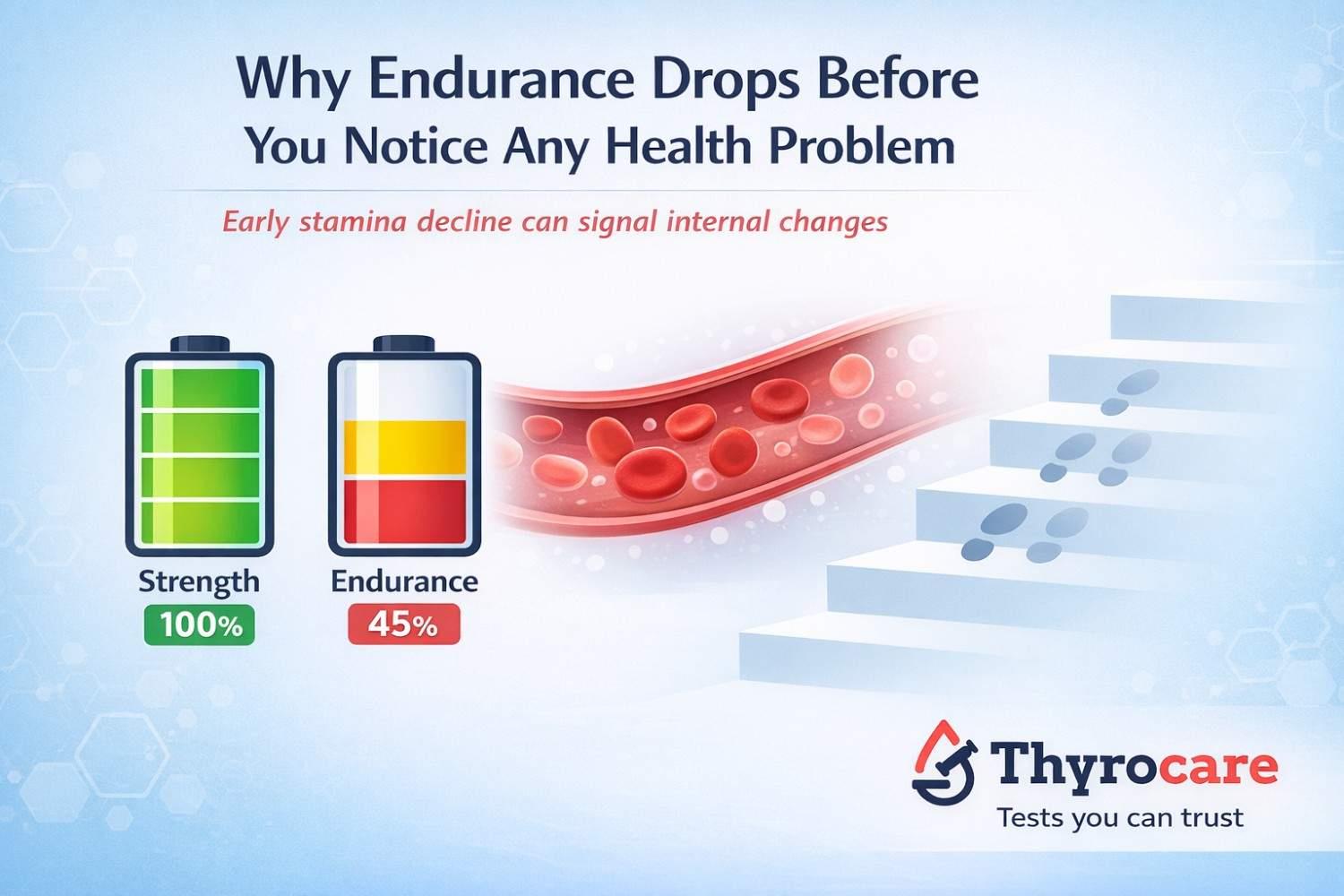
Why Endurance Drops Before You Notice Any Health Problem
Many people assume that health problems begin with pain, visible weakness, or clear symptoms. In reality, one of the earliest changes often appears in something far more subtle—endurance. When stamina declines without an obvious reason, it may reflect early internal shifts long before traditional symptoms develop.
Endurance Reflects Internal Efficiency
Endurance is not just about fitness levels. It depends on how efficiently the heart, lungs, blood, and metabolic systems work together to supply energy during activity. When this coordination becomes slightly less efficient, stamina is often the first area to change.
You may still feel “healthy,” but notice that:
- Climbing stairs feels more tiring
- Walking long distances requires more breaks
- Recovery after activity takes longer
These subtle shifts often precede noticeable health concerns.
Cardiopulmonary Efficiency Matters
The heart and lungs work together to deliver oxygen to muscles. Even small changes in circulation or oxygen exchange can reduce stamina. Because the body compensates effectively, strength may remain normal while endurance quietly declines.
Energy Pathways Influence Stamina
Sustained activity depends on efficient energy production inside cells. When metabolic pathways slow or become less effective, the body reaches fatigue sooner. This doesn’t necessarily impact short bursts of effort but becomes noticeable during prolonged activity.
Why Early Declines Are Often Ignored
Most people attribute reduced stamina to ageing, stress, or reduced activity. While these factors can play a role, persistent endurance decline without lifestyle changes may signal internal inefficiencies rather than simple deconditioning.
The Body Compensates Before Symptoms Appear
Just like other health systems, the body compensates for early strain. You may subconsciously slow your pace or reduce activity without recognising that internal adjustments are occurring. Blood markers often reflect these early changes before overt symptoms develop.
How Blood Tests Add Context
Markers related to oxygen transport, cardiopulmonary support, and metabolic balance help explain why endurance drops early. These indicators provide insight into how efficiently the body sustains activity and recovers from exertion.
Preventive Testing with Thyrocare
Thyrocare offers comprehensive blood tests that assess parameters linked to oxygen delivery and metabolic efficiency. When you book a Thyrocare blood test through BookMyTest, samples are collected at home and digital reports are delivered within 24 to 48 hours, supporting early awareness of changes that may affect stamina.
Conclusion
Endurance is often the body’s early warning system. A gradual decline in stamina may reflect internal changes in cardiopulmonary efficiency or energy pathways long before noticeable health problems arise. Recognising this subtle signal encourages proactive health monitoring rather than waiting for stronger symptoms to appear.
FAQs
Why does my stamina decrease even though I feel healthy?
Endurance depends on oxygen delivery and metabolic efficiency, which can shift before noticeable symptoms appear.
Can blood tests explain reduced endurance?
Yes. A Thyrocare blood test can assess markers related to oxygen transport and metabolic balance.
Is Thyrocare home sample collection available for preventive testing?
Yes. Thyrocare home sample collection is available when booking through BookMyTest.
Does reduced endurance always mean poor fitness?
Not necessarily. It may reflect subtle internal changes rather than visible strength loss.
How soon will I receive my Thyrocare blood test reports?
Most Thyrocare blood test reports are delivered digitally within 24 to 48 hours.