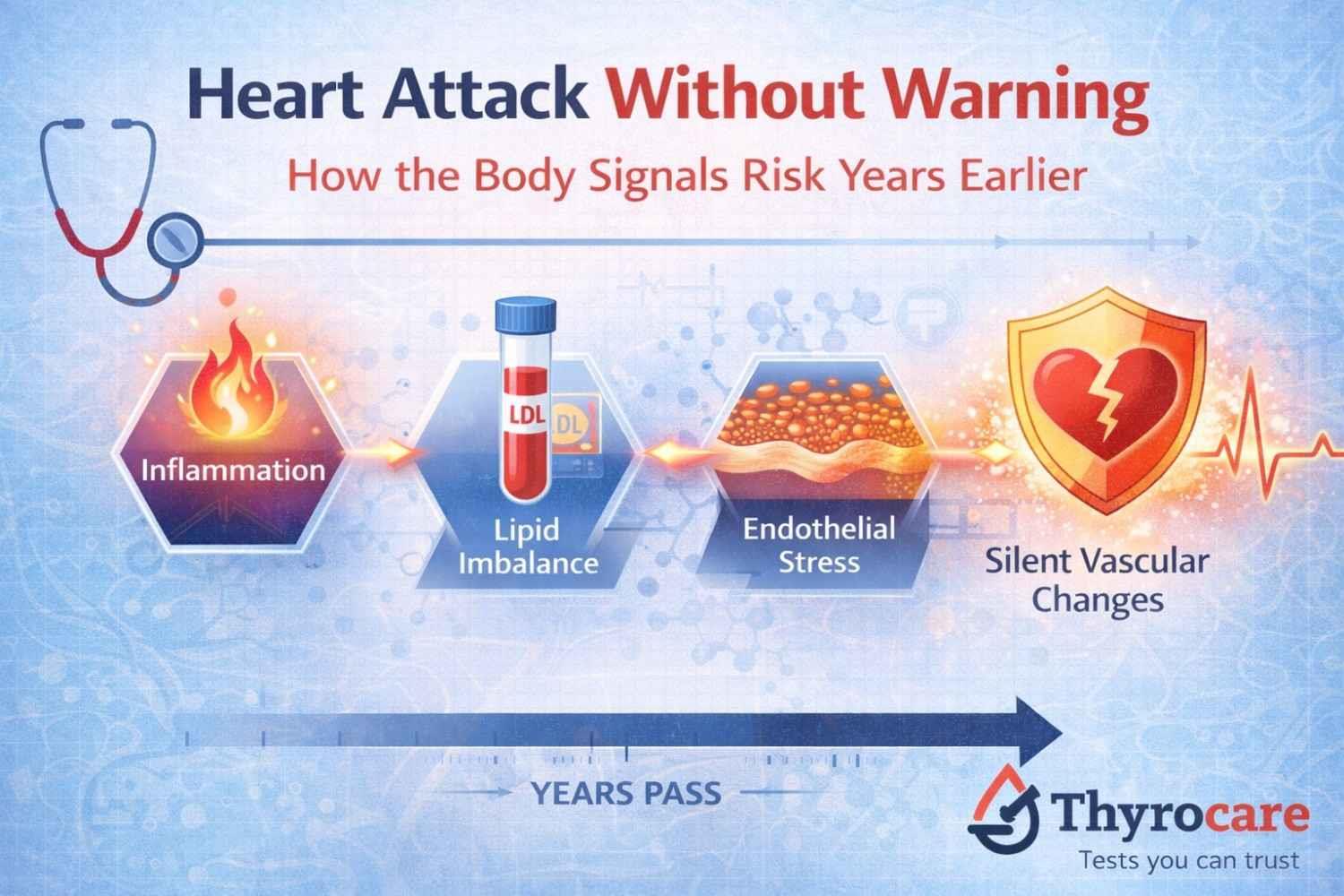
Heart Attack Without Warning: How the Body Signals Risk Years Earlier
Heart attacks are often described as sudden events. A person may appear healthy, active, and symptom-free—until a critical moment changes everything. But biologically, heart attacks rarely happen without warning. Long before chest pain or breathlessness occurs, the body may show silent vascular changes that signal increased cardiovascular risk.
Understanding these early indicators shifts the focus from emergency response to prevention.
Heart Attacks Develop Gradually, Not Instantly
A heart attack occurs when blood flow to part of the heart muscle becomes blocked. However, the processes that lead to this blockage typically develop over years. Subtle changes in blood vessel walls, lipid patterns, and inflammatory responses slowly alter arterial health.
Because these changes are internal and painless, they often go unnoticed.
Inflammation: The Hidden Contributor
Chronic low-grade inflammation plays a major role in cardiovascular risk. When inflammatory markers remain elevated over time, blood vessels experience repeated stress. This stress affects the lining of the arteries, making them more vulnerable to plaque buildup.
Inflammation doesn’t cause symptoms in early stages, but blood markers can reflect this silent activity.
Lipid Patterns Matter More Than Just Total Cholesterol
Many people focus only on total cholesterol levels. However, cardiovascular risk is influenced by patterns within lipid profiles—such as LDL quality, HDL balance, and triglyceride levels.
Even when total cholesterol appears acceptable, imbalances in these components can signal developing vascular strain.
Endothelial Stress and Vessel Health
The endothelium is the inner lining of blood vessels. It regulates circulation and prevents abnormal clot formation. When exposed to metabolic stress, inflammation, or lipid imbalance, endothelial function can gradually decline.
This dysfunction may precede structural blockage and often remains silent for years.
Why Symptoms Appear Late
The body compensates remarkably well. Arteries can narrow gradually while circulation adjusts. Symptoms usually appear only when blood flow becomes critically restricted. By that stage, underlying vascular stress has often existed for a long time.
This is why relying only on symptoms can delay early detection.
How Blood Tests Support Early Awareness
Routine blood tests provide insight into lipid patterns, inflammatory markers, and metabolic balance—factors closely linked to long-term cardiovascular risk.
Preventive screening does not diagnose a heart attack; instead, it helps identify silent risk factors early enough to support informed medical decisions.
Preventive Heart Risk Monitoring with Thyrocare
Thyrocare offers comprehensive preventive blood testing that supports cardiovascular risk awareness. When you book a Thyrocare blood test through BookMyTest, professional home sample collection ensures convenience, and digital reports are delivered within 24 to 48 hours for timely review.
Early insight allows discussions with healthcare providers before silent vascular changes progress.
Conclusion
Heart attacks may feel sudden, but the biological groundwork often develops quietly over years. Inflammation, lipid imbalances, and endothelial stress can signal increased risk long before symptoms arise. Recognizing these silent markers through preventive testing supports proactive heart health rather than reactive care.
FAQs
Can a heart attack occur without prior symptoms?
Yes. Silent vascular changes can progress for years before noticeable symptoms appear.
What blood markers are linked to heart attack risk?
Lipid profiles, inflammatory markers, and metabolic indicators in a Thyrocare blood test can reflect cardiovascular risk patterns.
Is Thyrocare home sample collection available for heart health screening?
Yes. Thyrocare home sample collection is available when booking preventive cardiovascular tests through BookMyTest.
Does normal cholesterol guarantee low heart attack risk?
Not always. Lipid patterns and inflammation levels also influence risk.
How soon are Thyrocare blood test reports delivered?
Most Thyrocare blood test reports are delivered digitally within 24 to 48 hours.