Migraine Is More Than a Headache: What Happens Inside the Nervous System
Migraine Is More Than a Headache: What Happens Inside the Nervous System
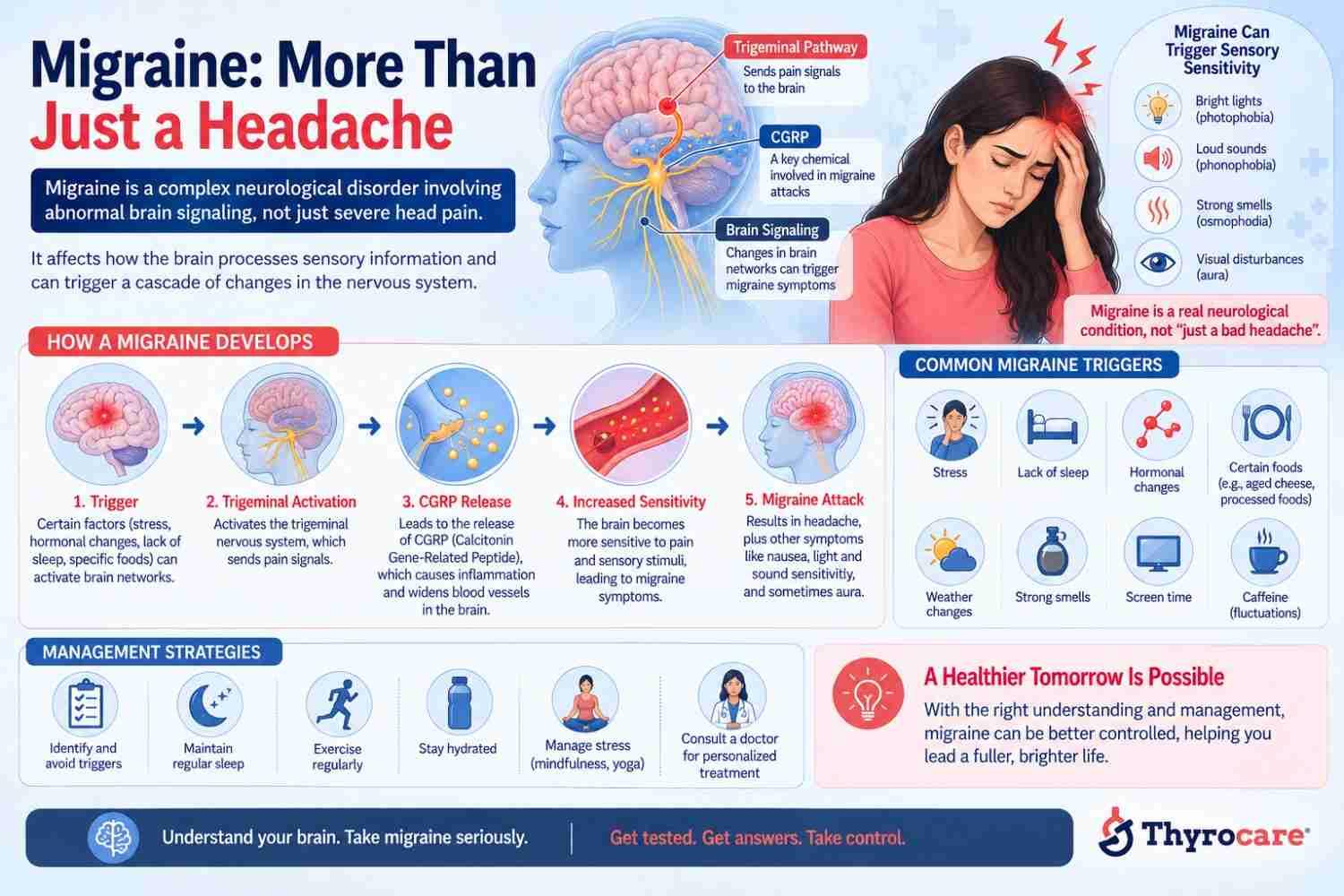
Migraine is often described as a severe headache, but it is actually a complex neurological disorder involving changes in brain signaling, sensory processing, and pain pathways. A migraine attack may cause throbbing head pain, nausea, sensitivity to light or sound, and sometimes visual or sensory disturbances known as aura.Understanding what happens inside the nervous system helps explain why migraine can affect much more than the head.
What Happens in the Brain During a Migraine?
During a migraine attack, networks in the brain involved in pain and sensory processing become unusually active. Changes in communication between nerve cells can contribute to the different phases and symptoms of migraine.
This neurological activity helps explain why some people experience fatigue, difficulty concentrating, or sensory sensitivity before or during an attack.
The Trigeminal Nerve and Migraine Pain
The trigeminal nerve is an important pathway involved in sensation around the face and head. During migraine, activation of the trigeminal system contributes to pain signaling and the release of substances involved in inflammation and pain transmission.One important molecule involved in this process is calcitonin gene-related peptide (CGRP).
Why Light and Sound Can Feel Uncomfortable
Migraine can temporarily alter the way the nervous system processes sensory information. Normal light, sounds, smells, or movement may therefore feel unusually intense during an attack.This is why migraine is more accurately understood as a neurological condition rather than simply head pain.
What Is Migraine Aura?
Some people experience aura before or during migraine. Aura can include flashing lights, zigzag patterns, blind spots, tingling, or temporary difficulty with speech.These symptoms are associated with temporary changes in brain activity and usually develop gradually.
Can Blood Tests Diagnose Migraine?
There is no routine blood test that confirms migraine. Diagnosis is generally based on symptoms and medical history. However, blood tests may sometimes be recommended to investigate other conditions that could contribute to headaches or similar symptoms.
Preventive Monitoring with Thyrocare
Thyrocare offers blood tests for health markers such as thyroid function, vitamin B12, glucose, CBC, and other parameters when clinically appropriate. Booking a Thyrocare blood test through BookMyTest provides convenient home sample collection for monitoring relevant health factors.
Conclusion
Migraine is a neurological disorder, not simply a severe headache.
It involves complex changes in brain signaling and pain pathways.
The trigeminal system and CGRP play important roles in migraine biology.
Sensory changes can explain sensitivity to light, sound, and other stimuli.
New, severe, or significantly changing headaches should be medically evaluated.
FAQs
1. Is migraine just a type of headache?
No. Migraine is a neurological disorder that can cause headache along with nausea, sensory sensitivity, aura, and other symptoms.
2. What happens to the nervous system during migraine?
Changes occur in brain networks and pain pathways, including activation of the trigeminal system and CGRP-related signaling.
3. Why does light make migraine worse?
Migraine can increase sensitivity in brain pathways responsible for processing sensory information, making normal light feel uncomfortable.
4. Can migraine occur without a headache?
Yes. Some people can experience migraine aura or other migraine symptoms without significant headache.
5. Can a Thyrocare blood test diagnose migraine?
No. Blood tests do not diagnose migraine. Thyrocare blood tests through BookMyTest may be useful when a healthcare professional wants to investigate other health factors associated with headache symptoms.