Kidney Health Basics: How Early Changes Go Unnoticed
Kidney Health Basics: How Early Changes Go Unnoticed
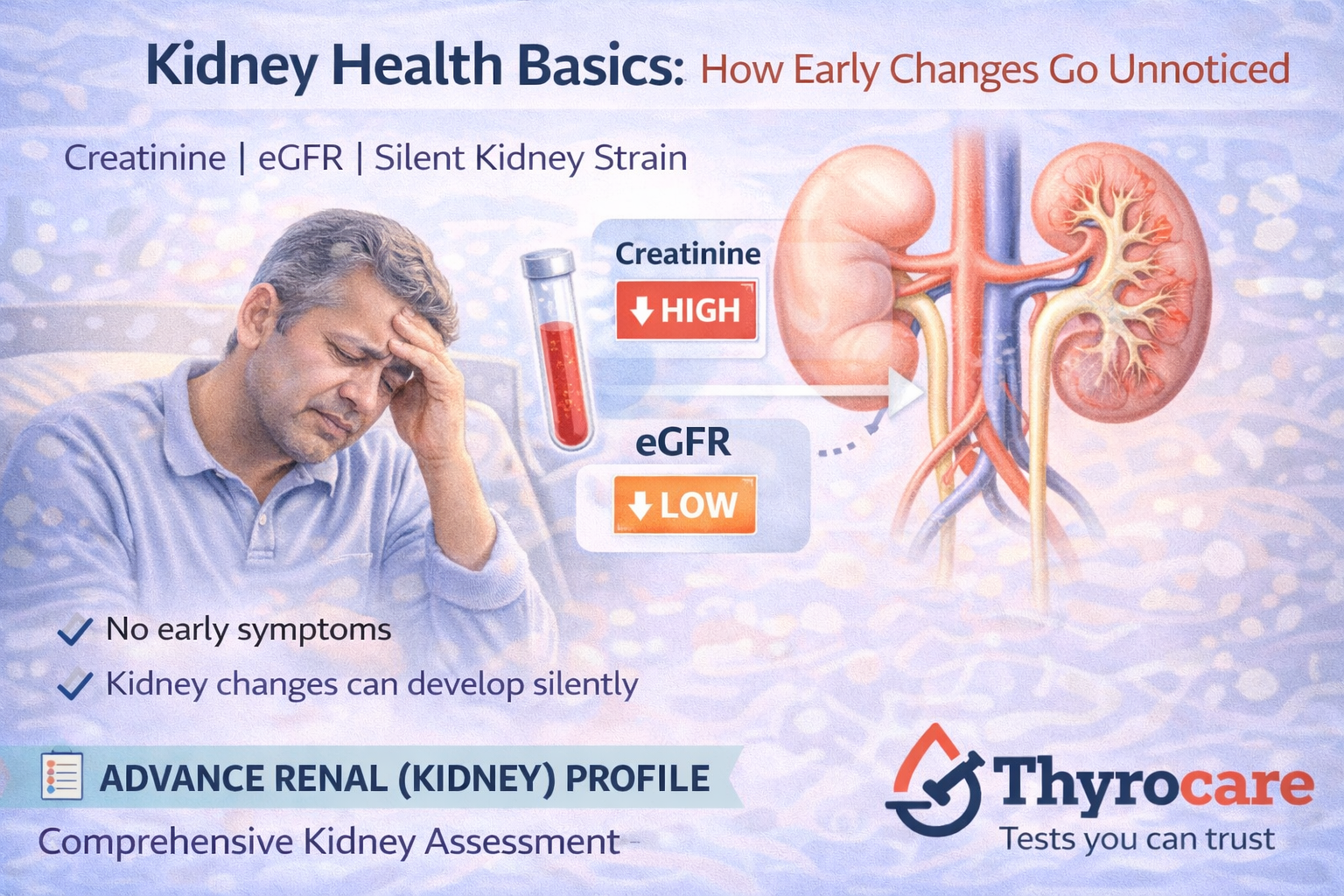
The kidneys work quietly around the clock, filtering waste, balancing fluids, and maintaining essential minerals in the body. Despite their critical role, kidney-related changes often develop without obvious symptoms. By the time discomfort appears, kidney function may already be under strain. This is why understanding early kidney markers and monitoring them in time is key to long-term health.
Why Kidney Problems Often Stay Silent
In the early stages of kidney strain, the body adapts efficiently. The kidneys continue filtering blood even when their efficiency starts to decline. As a result, there is usually no pain, no warning sign, and no visible symptom. Many people feel completely normal while subtle internal changes progress quietly.
Understanding Creatinine and eGFR
Two of the most important indicators of kidney health are creatinine and eGFR (estimated Glomerular Filtration Rate). Creatinine is a waste product generated by muscle activity and removed from the body by the kidneys. When kidney function slows down, creatinine levels may rise in the blood.
eGFR, on the other hand, estimates how efficiently the kidneys are filtering waste. A lower eGFR value indicates reduced filtering capacity. Together, creatinine and eGFR provide valuable insight into how well the kidneys are functioning—often before symptoms appear.
What Is Silent Kidney Strain?
Silent kidney strain refers to gradual stress on the kidneys that develops over time without noticeable discomfort. Factors such as long-standing metabolic imbalances, dehydration, medication use, or age-related changes can influence kidney function slowly. Because these shifts are internal, they are easy to miss without blood testing.
Why Symptoms Appear Late
Unlike organs that signal distress early through pain, the kidneys tend to show symptoms only when damage becomes more advanced. Fatigue, swelling, or changes in urination usually occur later, which is why relying on symptoms alone can delay awareness and care.
The Role of Regular Kidney Testing
Blood tests that measure creatinine, eGFR, and related kidney markers help detect early trends in kidney function. Regular testing supports early understanding, allowing individuals and doctors to track changes over time rather than reacting to late-stage symptoms.
Advance Renal (Kidney) Profile for Deeper Insight
Thyrocare offers the Advance Renal (Kidney) Profile, designed to provide a comprehensive assessment of kidney health. This profile includes key parameters such as creatinine, eGFR, and other renal markers that help identify early kidney strain and support informed medical discussions.
When you book the Advance Renal (Kidney) Profile through BookMyTest, blood sample collection is done conveniently at home by trained professionals, and reports are delivered digitally within 24 to 48 hours. This makes regular kidney health monitoring simple, accessible, and stress-free.
Conclusion
Kidney health changes rarely announce themselves early. Markers like creatinine and eGFR offer valuable insight into kidney function long before symptoms develop. Understanding these silent shifts and monitoring them through comprehensive testing like the Advance Renal (Kidney) Profile supports early awareness and better long-term kidney health decisions.
FAQs
Can kidney problems be detected without symptoms?
Yes. Blood tests measuring creatinine and eGFR can identify early kidney changes even when symptoms are absent.
Is home sample collection available for the Advance Renal Profile?
Yes. When booked through BookMyTest, free home sample collection is included.
Is fasting required for kidney blood tests?
Most kidney tests do not require fasting. Instructions are shared during booking if needed.
When will I receive my test reports?
Most Thyrocare reports are delivered digitally within 24 to 48 hours.