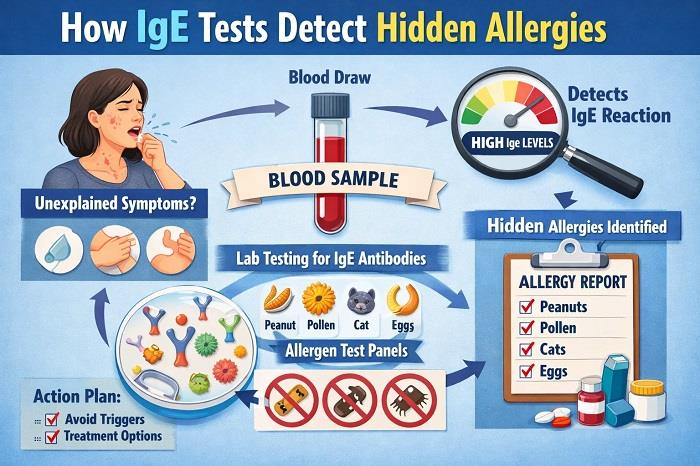
How IgE Tests Detect Hidden Allergies
Food allergies are not always obvious. While some reactions happen instantly—like swelling, itching, or difficulty breathing—others can be subtle and easily overlooked. You might experience bloating, skin rashes, fatigue, or digestive discomfort without realizing that a specific food is triggering these symptoms. This is where the IgE Test plays a crucial role in identifying hidden allergies and helping you take control of your health.
What Is an IgE Test?
The IgE Test measures the level of Immunoglobulin E (IgE) antibodies in your blood. These antibodies are produced by the immune system in response to allergens such as certain foods, pollen, dust, or pet dander.
When your body identifies a harmless substance—like milk, peanuts, or eggs—as a threat, it produces IgE antibodies. These antibodies trigger the release of chemicals like histamine, leading to allergic reactions. The test can be done as:
- Total IgE Test – Measures overall IgE levels in the blood
- Specific IgE Test – Identifies reactions to particular allergens (e.g., dairy, nuts, wheat)
How IgE Tests Detect Hidden Food Allergies
Food allergies linked to IgE antibodies are typically immediate, but in many cases, symptoms may not be clearly connected to a specific food. That’s why they’re often called “hidden allergies.”
The IgE Test works by detecting whether your immune system has produced antibodies against certain food proteins. If specific IgE antibodies are present, it indicates that your body is sensitized to that allergen. This helps doctors:
- Identify trigger foods accurately
- Confirm suspected allergies
- Rule out non-allergic food sensitivities
Common Symptoms That May Indicate Food Allergies
You might consider testing if you experience:
- Skin reactions like hives, itching, or eczema
- Digestive issues such as bloating, cramps, or diarrhea
- Respiratory symptoms like sneezing or wheezing
- Swelling of lips, face, or throat
- Unexplained fatigue after eating certain foods
In severe cases, food allergies can lead to anaphylaxis, a life-threatening reaction that requires immediate medical attention.
Who Should Consider an IgE Test?
The IgE Test is recommended for:
- Individuals with recurring allergic symptoms
- Children with suspected food allergies
- People with asthma or eczema linked to allergens
- Those with a family history of allergies
- Anyone experiencing unexplained reactions after meals
Early testing can help prevent complications and improve quality of life.
Benefits of IgE Food Allergy Testing
- Accurate identification of allergy triggers
- Helps create a personalized diet plan
- Reduces risk of severe allergic reactions
- Improves digestive and skin health
- Supports long-term allergy management
Instead of guessing which foods to avoid, testing gives you clear answers.
IgE Test vs Food Intolerance: Know the Difference
It’s important to understand that food allergies and food intolerances are not the same.
- Food Allergy (IgE-mediated): Involves the immune system and can be severe
- Food Intolerance: Usually related to digestion (e.g., lactose intolerance) and less dangerous
The IgE Test specifically detects immune-related allergic reactions, not intolerances.
While highly useful, IgE tests are not perfect. A positive result indicates sensitivity but does not always confirm a clinical allergy. Doctors often interpret results alongside medical history and may recommend additional tests or elimination diets.
Hidden food allergies can quietly affect your daily life—causing discomfort, fatigue, and recurring health issues without a clear cause. The IgE Test provides a reliable way to uncover these triggers and take control of your diet and health.