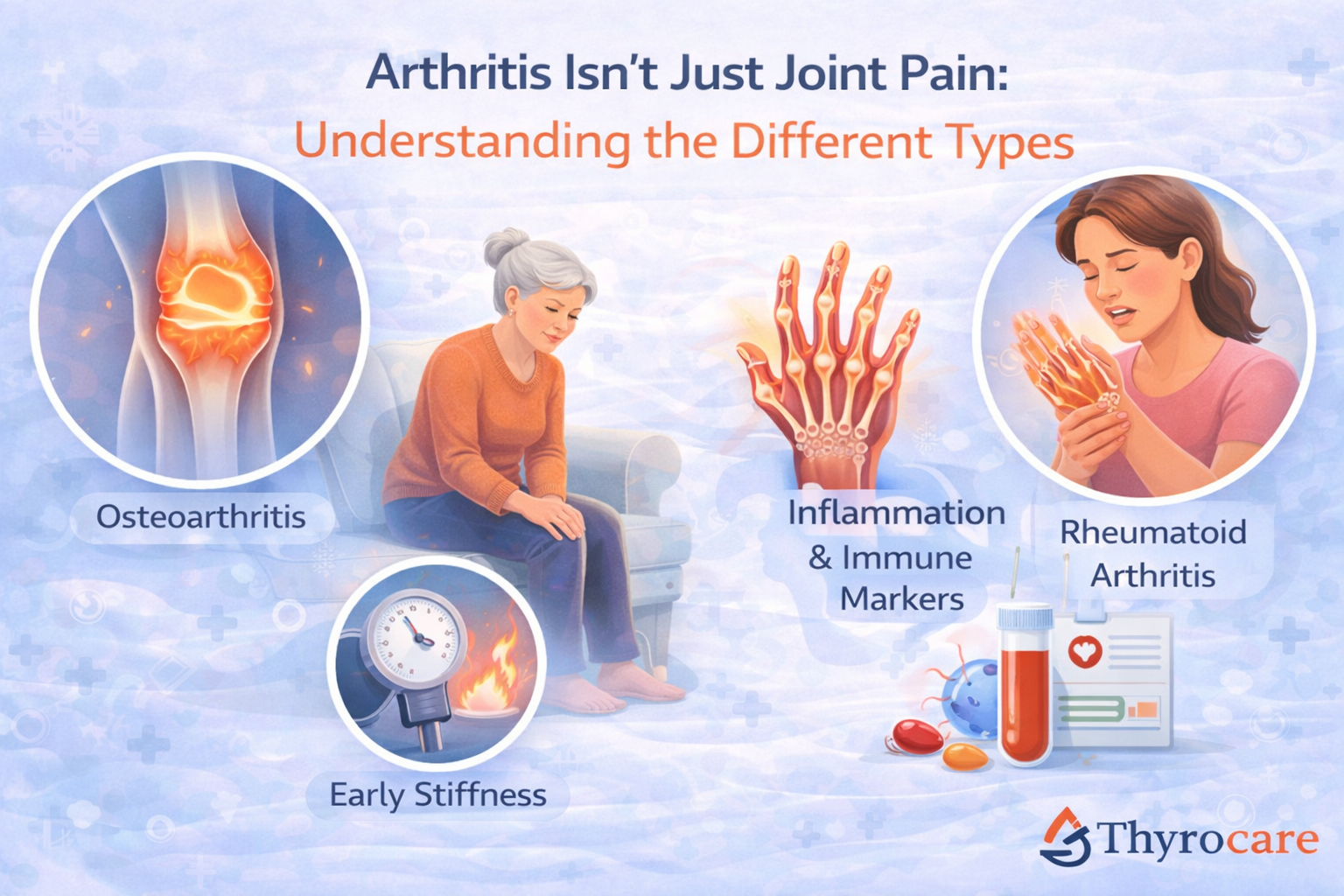
Arthritis Isn’t Just Joint Pain: Understanding the Different Types
Arthritis is often spoken about as joint pain, but the condition is more complex than discomfort alone. Many people associate arthritis with ageing or occasional stiffness, yet it includes a range of conditions that affect joints, movement, and internal inflammatory processes. Understanding the different types of arthritis helps explain why symptoms vary so widely from person to person.
What Is Arthritis?
Arthritis is a broad term used for conditions that cause joint inflammation, stiffness, or reduced mobility. It does not refer to a single disease. Instead, it includes multiple types that affect joints in different ways and progress at different speeds.
Some forms develop slowly over years, while others involve immune-related inflammation that can affect joints more actively.
Osteoarthritis: Wear, Movement, and Time
Osteoarthritis is the most common type of arthritis. It develops when the protective cartilage that cushions joints gradually wears down. This process usually happens over time and is influenced by age, long-term joint use, previous injuries, and mechanical stress.
Early osteoarthritis may cause stiffness after rest, reduced flexibility, or discomfort during movement rather than constant pain.
Rheumatoid Arthritis: Inflammation from Within
Rheumatoid arthritis is different. It is an autoimmune condition where the immune system mistakenly targets joint lining, leading to inflammation. This inflammation can affect multiple joints symmetrically and may be associated with swelling, warmth, and prolonged morning stiffness.
Because it involves immune activity, rheumatoid arthritis is not limited to joint wear and tear alone.
Why Early Stiffness Matters
Stiffness—especially in the morning or after inactivity—is often an early sign of joint changes. Many people ignore stiffness because it eases with movement. However, recurring stiffness can signal underlying inflammation or gradual joint changes that benefit from early attention.
Who Should Pay Attention to Joint Health?
Arthritis can affect adults across age groups. Long-term repetitive movements, inactivity, previous joint injuries, immune-related conditions, and genetic factors can influence risk. Because early stages may not be painful, awareness becomes important before mobility is affected.
Why Testing Supports Arthritis Awareness
Blood tests related to inflammation and immune markers help provide insight into internal processes that may influence joint health. Testing does not diagnose arthritis on its own but supports clearer conversations with doctors about symptoms and patterns.
Making Joint Health Monitoring Simple
Inflammation-related markers ARTHRITIS PROFILE BASIC and ARTHRITIS PROFILE ADVANCED help support arthritis awareness. With Thyrocare blood test at home, samples are collected conveniently, and reports are shared digitally within 24 to 48 hours, making routine monitoring accessible.
Conclusion
Arthritis is not just joint pain. Understanding the differences between osteoarthritis and rheumatoid arthritis helps shift focus from symptoms alone to informed awareness. Early attention supports better joint health over time.
FAQs
Can arthritis be detected through Thyrocare tests?
Thyrocare tests include inflammation-related markers that help support arthritis awareness, though diagnosis depends on clinical evaluation.
Is free home sample collection available for Thyrocare tests?
Yes. When you book a Thyrocare test through BookMyTest, free home sample collection is included.
Is fasting required for arthritis-related blood tests?
Most inflammation-related blood tests do not require fasting. Exact instructions are shared during Thyrocare test booking.
Who collects the blood sample at home?
An expert Thyrocare phlebotomist visits your home and collects the sample using proper hygiene practices.
When will I receive my Thyrocare test reports?
Most Thyrocare reports are delivered within 24 to 48 hours as a soft copy to your registered email ID.