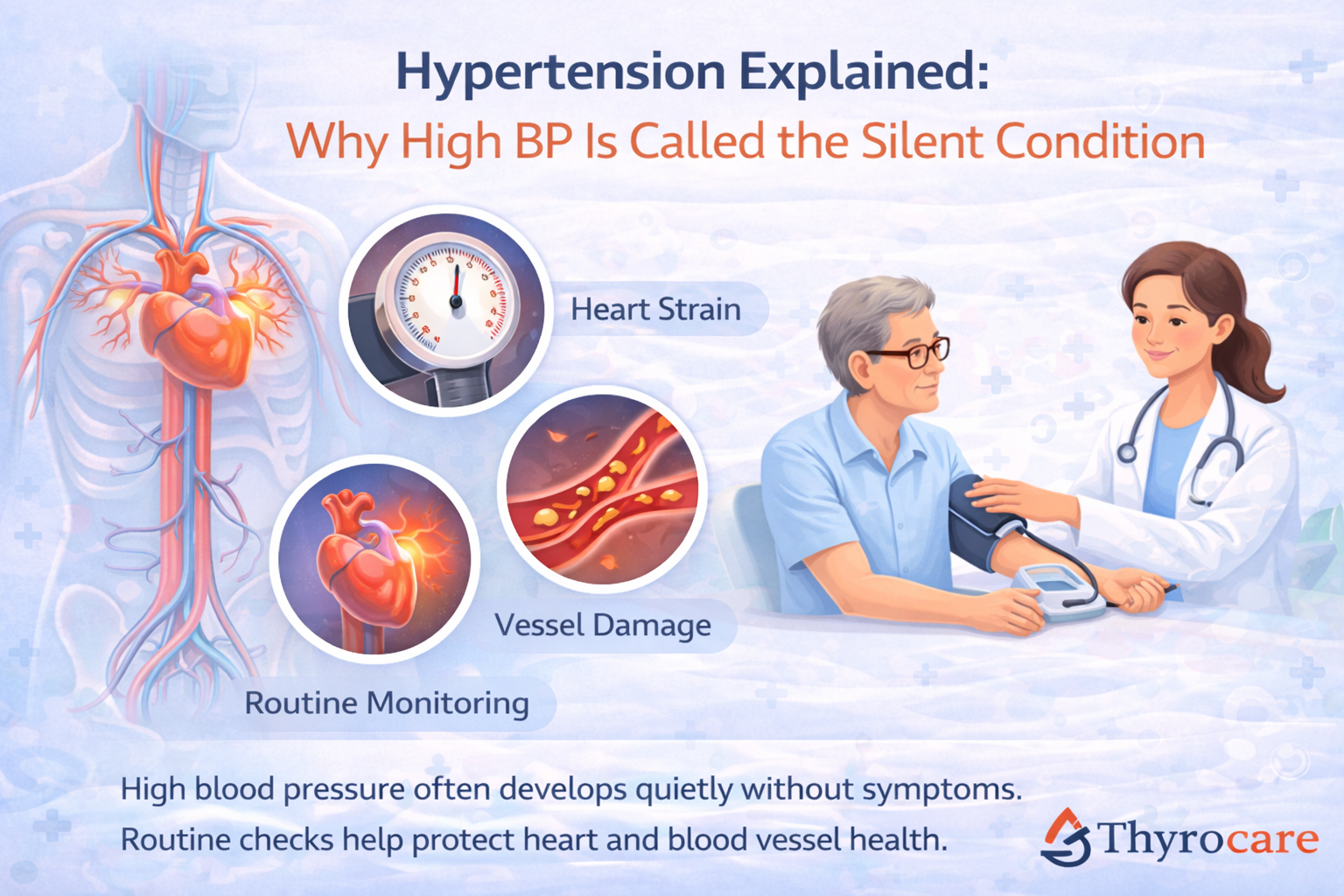
Hypertension Explained: Why High BP Is Called the Silent Condition
Hypertension, commonly known as high blood pressure, is one of the most widespread health conditions worldwide. Despite its prevalence, it often goes unnoticed for years because it may not cause visible symptoms.
This silent nature makes hypertension particularly important to understand. Regular monitoring helps identify elevated blood pressure early, before it places long-term strain on the heart and blood vessels.
What Is Hypertension?
Blood pressure measures the force with which blood pushes against artery walls. Hypertension occurs when this pressure remains consistently higher than normal over time.
Persistently elevated blood pressure increases the workload on the heart and arteries. Because this process develops gradually, many individuals remain unaware of the changes occurring inside the body.
Why High Blood Pressure Often Has No Symptoms
Unlike acute illnesses, hypertension usually does not cause pain or immediate discomfort. The body adapts to higher pressure levels, masking warning signs.
As a result, individuals may feel completely well while their cardiovascular system is under continuous strain. This is why hypertension is often detected only during routine health checks or blood testing.
How High BP Affects the Heart and Blood Vessels
Over time, high blood pressure causes arteries to become less flexible. This increases resistance to blood flow and forces the heart to pump harder to circulate blood.
Long-term heart strain may influence circulation, oxygen delivery, and overall cardiovascular efficiency. These changes typically occur silently, reinforcing the importance of regular monitoring rather than symptom-based detection.
Who Should Monitor Blood Pressure Regularly?
Blood pressure monitoring is important for adults across all age groups, especially those with family history, long-term stress exposure, or metabolic imbalances.
Age-related changes, hormonal factors, and prolonged lifestyle patterns can also influence blood pressure trends, making routine checks relevant even in the absence of symptoms.
Why Routine Testing Helps Detect Hypertension Early
Regular testing provides objective insight into blood pressure-related health markers. Blood tests help assess associated factors such as cholesterol, kidney markers, and overall cardiovascular risk patterns.
Early detection through routine testing supports better awareness and long-term monitoring, even when individuals feel healthy.
Making Blood Pressure Monitoring Simple
Thyrocare offers blood tests that can be done at home with free home sample collection. Samples are processed in certified laboratories, and reports are typically available within 24–48 hours, making routine monitoring convenient and accessible.
Conclusion
Hypertension is often called the silent condition because it develops without obvious symptoms. Regular monitoring and routine testing play a key role in understanding blood pressure trends and supporting long-term heart health awareness.
FAQs
1. What is hypertension and why is it called the silent condition?
Hypertension refers to persistently high blood pressure. It is called silent because it often shows no symptoms while affecting heart and blood vessels.
2. Can Thyrocare tests help with hypertension monitoring?
Yes, Thyrocare blood tests help assess cardiovascular-related markers linked to blood pressure health.
3. Is Thyrocare blood test at home available for BP-related health checks?
Yes, Thyrocare blood test at home is available with free home sample collection.
4. Do I need fasting for Thyrocare hypertension-related tests?
Fasting requirements depend on the selected test and are clearly mentioned at the time of booking.
5. How soon are Thyrocare blood pressure-related test reports available?
Thyrocare reports are generally available within 24–48 hours.