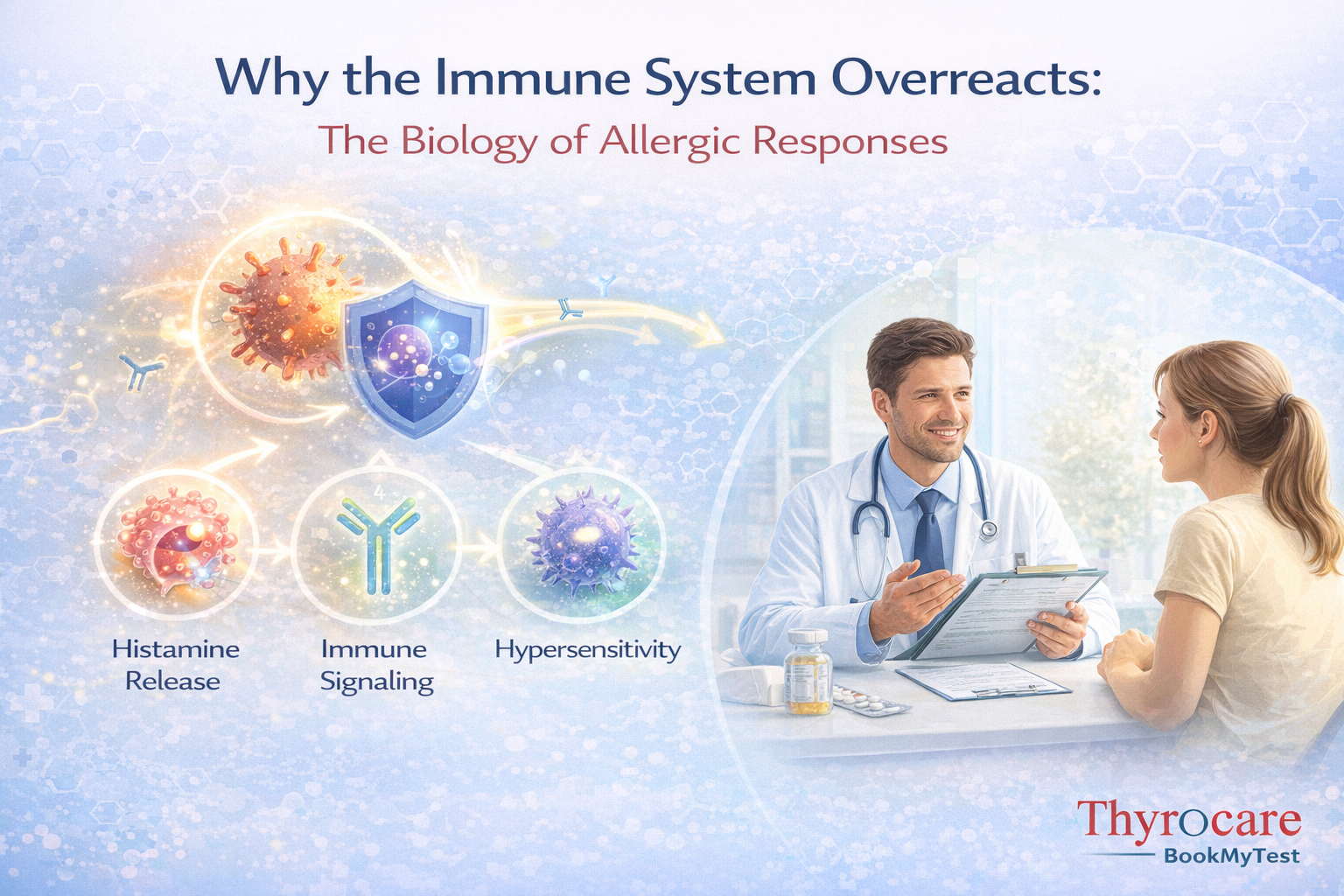
Why the Immune System Overreacts: The Biology of Allergic Responses
Allergic reactions are not caused by harmful substances, but by how the immune system perceives them. In individuals with allergies, the immune system identifies harmless substances—such as pollen, dust, or certain foods—as threats. This leads to an overactive immune response, which is the basis of all allergic reactions.
Understanding this biological process helps explain why allergies occur in the first place.
How the Immune System Identifies Threats
The immune system is designed to protect the body from harmful invaders such as bacteria and viruses. It does this by recognizing foreign substances and triggering defensive responses.
In allergies, this system misidentifies harmless substances as dangerous.
Histamine Release and Symptoms
When the immune system detects an allergen, it releases chemicals such as histamine. Histamine plays a key role in producing common allergy symptoms, including:
- Sneezing
- Itching
- Swelling
- Irritation
These symptoms are part of the body’s defense mechanism.
Hypersensitivity Reactions
Allergies are often referred to as hypersensitivity reactions. This means the immune system responds more strongly than necessary to a harmless trigger.
This heightened response leads to the symptoms associated with allergies.
Immune Signaling and Amplification
Once the immune system is activated, signaling pathways amplify the response. This can increase the intensity of symptoms, even when the trigger itself is not harmful.
Why Some People Are More Sensitive
Genetics, environmental exposure, and immune regulation all influence how sensitive an individual is to allergens. Some immune systems are more reactive than others.
Preventive Monitoring with Thyrocare
Thyrocare offers diagnostic testing that evaluates immune and metabolic markers. When you book a Thyrocare blood test through BookMyTest, convenient home collection and quick reports support health monitoring.
Conclusion
Allergic reactions occur when the immune system overreacts to harmless substances. Histamine release, immune signaling, and hypersensitivity responses all contribute to allergy symptoms. Understanding this biology helps build awareness and supports preventive care.
FAQs
What causes allergic reactions?
Allergic reactions occur when the immune system overreacts to harmless substances.
What is histamine?
Histamine is a chemical released by the immune system that causes allergy symptoms.
Why are some people more prone to allergies?
Genetics and immune sensitivity influence allergic responses.
Can a Thyrocare blood test help monitor immune health?
A Thyrocare blood test can evaluate markers related to immune balance.
Is Thyrocare home sample collection available?
Yes. Thyrocare home sample collection allows convenient testing at home.