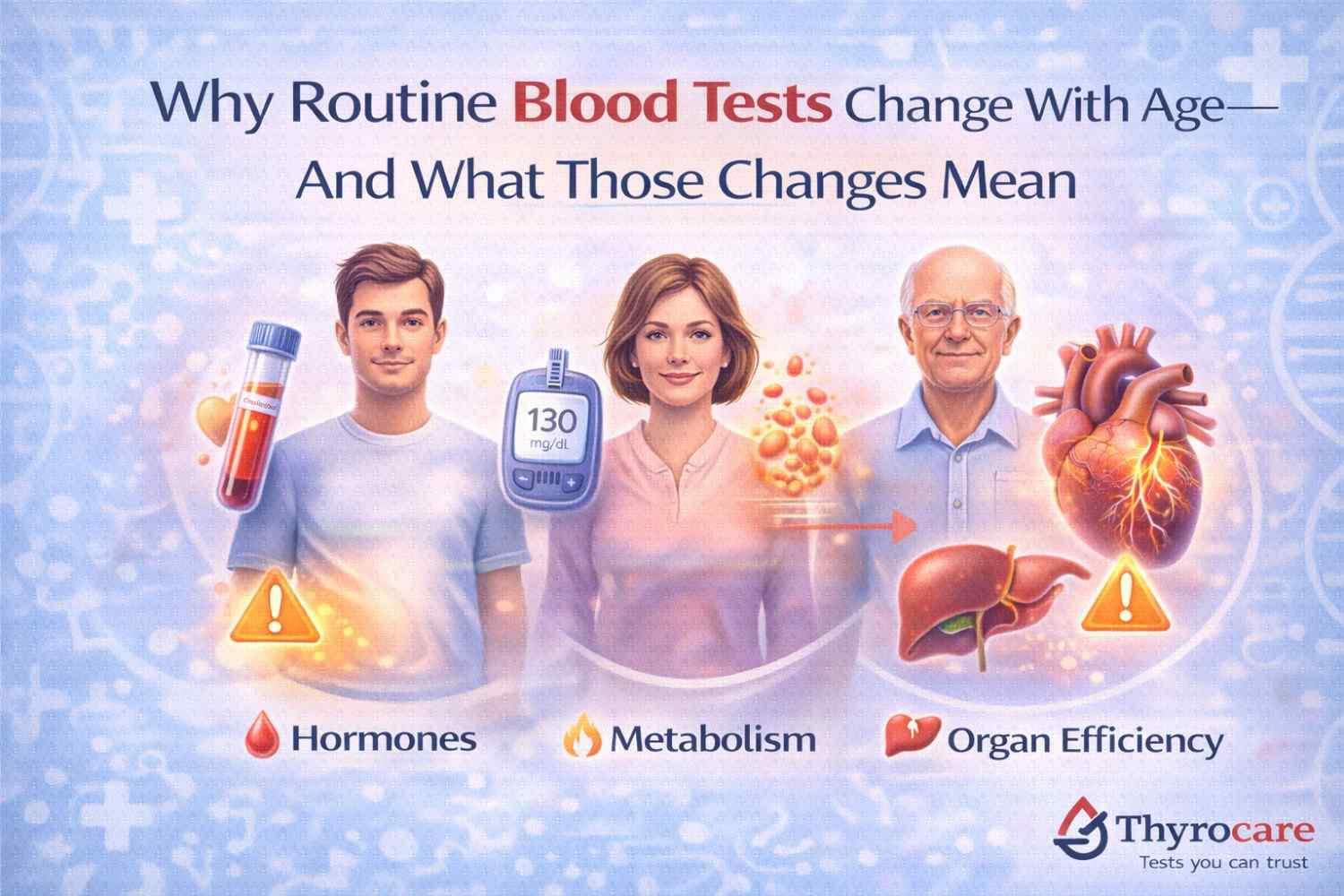
Why Routine Blood Tests Change With Age—And What Those Changes Mean
Routine blood tests often look slightly different as the years go by. Numbers that once sat comfortably in the middle of the normal range may gradually shift closer to the upper or lower limits. For many people, this raises an important question: are these changes a normal part of aging, or do they indicate developing health concerns?
The truth is that aging naturally influences metabolism, hormone balance, and organ efficiency. These internal changes can affect blood test results over time. Understanding this relationship helps interpret reports more accurately.
How Aging Influences Metabolism
Metabolism refers to how the body processes energy, nutrients, and biochemical reactions. As people age, metabolic activity tends to slow slightly.
This gradual shift can influence markers such as glucose levels, lipid profiles, and energy metabolism. For example, the body may process carbohydrates less efficiently, leading to small increases in fasting glucose or triglycerides.
These changes do not necessarily indicate disease, but they can reflect how the body’s energy regulation evolves with time.
Hormonal Shifts Over the Years
Hormones play a central role in regulating metabolism, muscle maintenance, bone health, and many internal processes. With age, certain hormone levels gradually decline or change in balance.
Examples include:
- Alterations in thyroid hormone activity
- Changes in insulin sensitivity
- Shifts in reproductive hormone levels
These hormonal changes may subtly influence blood test markers, affecting lipid levels, metabolic indicators, and overall biochemical balance.
Organ Efficiency and Functional Reserve
Many organs have built-in reserve capacity, allowing them to function effectively even as efficiency changes slightly with age.
For example:
- The kidneys may filter waste slightly less efficiently
- Liver metabolism may adjust gradually
- Blood vessel elasticity may reduce over time
These shifts may appear in blood tests as mild changes in creatinine, liver enzymes, or lipid markers. Often, they reflect normal biological adaptation rather than disease.
Why Trends Matter More Than Single Results
A single blood test provides a snapshot of health at a specific moment. However, comparing results over time provides a clearer picture of how the body is changing.
Gradual changes may simply reflect aging physiology. But consistent upward or downward trends may indicate developing metabolic imbalance.
Monitoring trends helps distinguish natural aging patterns from early disease signals.
Preventive Monitoring with Thyrocare
Thyrocare offers comprehensive preventive blood testing that evaluates metabolic markers, lipid profiles, hormonal indicators, and organ function parameters. When you book a Thyrocare blood test through BookMyTest, professional home sample collection ensures convenience, and digital reports are delivered within 24 to 48 hours, making regular health monitoring simple and accessible.
Routine testing helps track how the body changes with age and supports informed health decisions.
Conclusion
Blood test results naturally evolve as the body ages. Hormonal shifts, metabolic adjustments, and changes in organ efficiency can all influence laboratory values. Understanding these patterns helps differentiate between normal aging and early signs of health concerns. Regular monitoring allows individuals to observe trends, maintain awareness, and support long-term wellness.
FAQs
Do blood test results normally change with age?
Yes. Metabolism, hormones, and organ function can gradually change with age, which may influence routine blood markers.
Should routine blood tests be monitored regularly?
Yes. A Thyrocare blood test helps track metabolic, hormonal, and organ health markers over time.
Is Thyrocare home sample collection available for preventive health tests?
Yes. Thyrocare home sample collection is available when booking routine health screening through BookMyTest.
Can slight changes in blood reports indicate aging rather than disease?
Yes. Mild variations may reflect normal biological aging rather than illness.
How soon are Thyrocare blood test reports delivered?
Most Thyrocare blood test reports are delivered digitally within 24 to 48 hours.