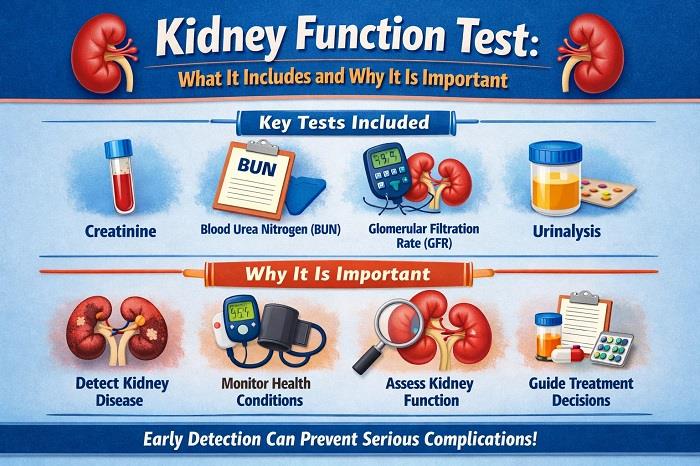
Kidney Function Test: What It Includes and Why It Is Important
The kidneys play a vital role in maintaining overall health by filtering waste, balancing fluids, and regulating essential minerals in the body. However, kidney problems often develop silently and may not show noticeable symptoms in the early stages. This makes regular health screening extremely important. A kidney function test (KFT) is a group of blood tests that helps evaluate how well your kidneys are working and detect any potential issues at an early stage.
What Is a Kidney Function Test?
A kidney function test is a comprehensive set of blood tests that assess the performance of your kidneys. It measures different substances in the blood, including waste products, electrolytes, proteins, and minerals, to determine whether your kidneys are functioning properly.
In many cases, this test also provides insights into related aspects such as calcium levels and liver function, offering a broader picture of your overall health. It is often recommended as part of routine health checkups or when symptoms suggest kidney-related problems.
What Does a Kidney Function Test Include?
A kidney function test includes several important parameters that help evaluate kidney health:
- Creatinine: A waste product filtered by the kidneys; high levels may indicate kidney dysfunction
- Blood Urea Nitrogen (BUN): Measures the amount of urea nitrogen in the blood
- Uric Acid: Elevated levels may be linked to kidney issues or metabolic disorders
- Electrolytes: Includes sodium, potassium, and chloride, which help maintain fluid balance
- Calcium: Assesses mineral balance and bone health
- Proteins: Helps evaluate overall metabolic function
- Blood Sugar Levels: Provides additional insight into metabolic health
These parameters collectively help doctors assess kidney performance and detect abnormalities.
Why Is the Kidney Function Test Important?
Kidney diseases can progress without obvious symptoms, making early detection essential. A kidney function test helps identify problems before they become severe.
- Early Detection of Kidney Disease: Helps diagnose issues before symptoms worsen
- Monitoring Existing Conditions: Tracks kidney health in patients with diabetes or hypertension
- Assessing Overall Health: Provides insights into electrolyte balance and metabolic function
- Preventing Complications: Reduces the risk of chronic kidney disease and related issues
Regular testing can help you take timely action and avoid long-term health complications.
Symptoms That Indicate You May Need a Test
Doctors often recommend a kidney function test if you experience symptoms such as:
- Nausea or vomiting
- Persistent itching
- Abdominal pain
- Swelling in feet or ankles
- Fatigue or weakness
- Changes in urination patterns
These symptoms may indicate underlying kidney issues and should not be ignored.
Who Should Get a Kidney Function Test?
A kidney function test is recommended for:
- Individuals with diabetes or high blood pressure
- People with a family history of kidney disease
- Older adults
- Individuals with unhealthy lifestyle habits
- Anyone experiencing symptoms related to kidney problems
Routine screening is also beneficial for maintaining overall health and preventing disease.
How is the Test Performed?
The kidney function test is a simple blood test that requires a small sample collected from a vein. In some cases, urine tests may also be recommended for a more detailed evaluation.
No major preparation is usually required, although your doctor may advise fasting in certain situations. The procedure is quick, safe, and minimally invasive.
Benefits of Regular Kidney Testing
Regular kidney function testing offers several advantages:
- Timely diagnosis of health issues
- Better management of chronic conditions
- Improved treatment outcomes
- Enhanced awareness of overall health
Early detection allows for lifestyle changes and medical intervention, which can significantly improve quality of life.
The kidney function test is an essential diagnostic tool that helps assess kidney health and detect potential problems early. Since kidney diseases often develop without noticeable symptoms, regular testing is crucial for maintaining overall well-being.
If you experience symptoms like nausea, swelling, or fatigue, or if you are at risk of kidney disease, consider getting tested. Preventive health checkups and timely diagnosis can make a significant difference in protecting your kidney health and ensuring a healthier future.