Why Some People Develop Food Sensitivities Later in Life
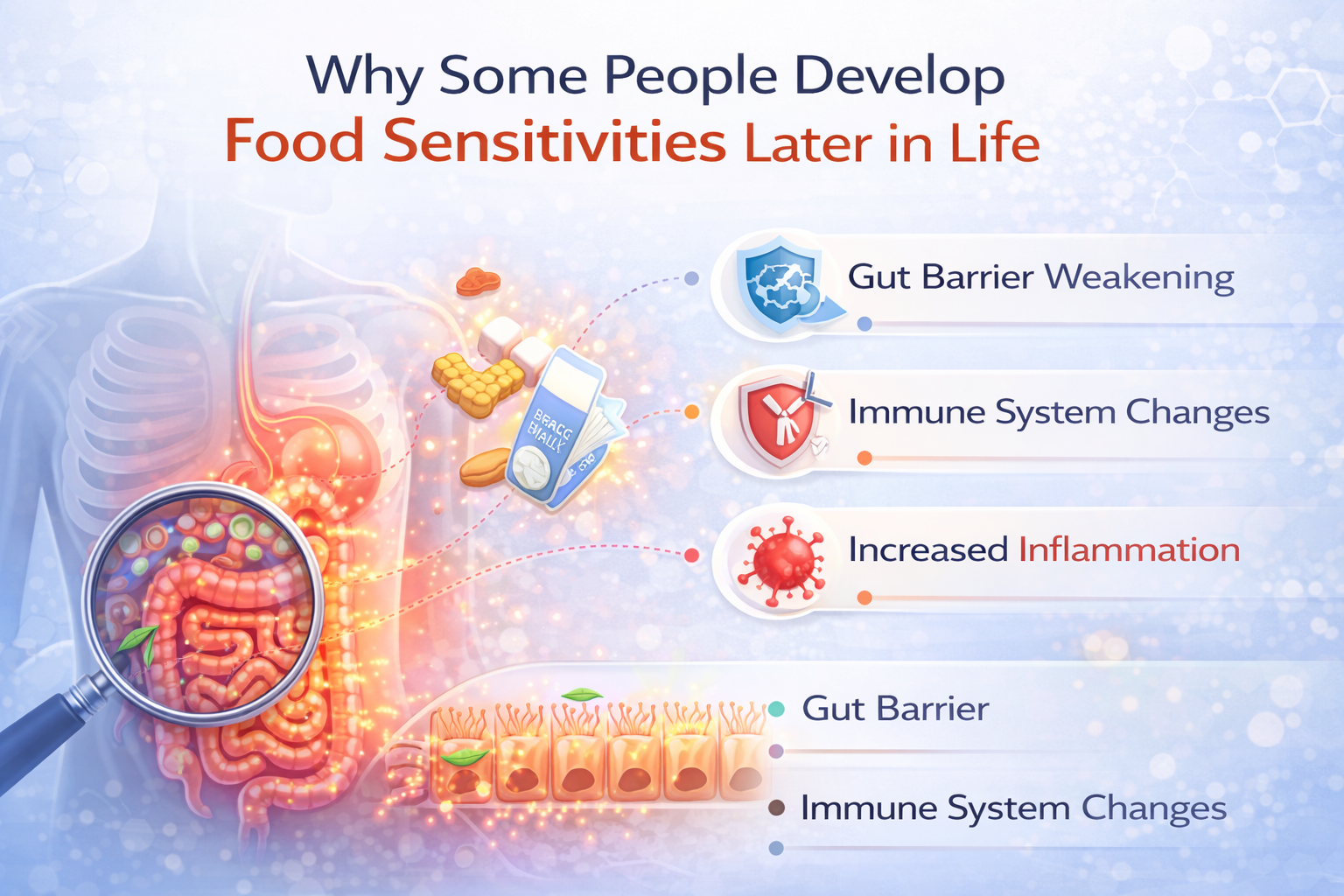
For many people, certain foods are a normal part of their diet for years—until one day, the same foods begin causing discomfort. This shift often feels sudden, but the underlying changes usually develop gradually. Food sensitivities that appear later in life are often linked to changes in immune response, gut barrier function, and low-grade inflammation.
Understanding this process helps explain why the body’s relationship with food can evolve over time.
The Role of the Gut Barrier
The digestive system is lined with a protective barrier that controls what enters the bloodstream. This gut barrier allows nutrients to pass through while keeping harmful substances out.
Over time, changes in gut health may affect this barrier’s efficiency. When this happens, certain food particles may trigger immune responses that were previously absent.
Immune System Adaptation
The immune system is dynamic and constantly adapting. It learns to recognize different substances and respond accordingly. In some cases, repeated exposure to certain foods or environmental changes may alter how the immune system reacts.
This shift can lead to increased sensitivity toward specific foods.
Inflammation and Food Response
Low-grade inflammation may influence how the body processes food. When inflammation is present, the immune system may respond more actively to substances that were once tolerated.
This does not happen overnight—it develops gradually, often without noticeable symptoms at first.
Why Monitoring Health Matters
Since food sensitivities can be linked to internal changes, monitoring metabolic and inflammatory markers helps provide insight into overall health patterns.
Preventive Monitoring with Thyrocare
Thyrocare offers comprehensive blood tests that evaluate metabolic and inflammatory markers. When you book a Thyrocare blood test through BookMyTest, convenient home sample collection and quick digital reports make routine monitoring easy.
Conclusion
Food sensitivities that develop later in life are often the result of gradual changes in gut health, immune response, and inflammation. Understanding these internal shifts highlights the importance of monitoring overall health and maintaining metabolic balance.
FAQs
Why do food sensitivities develop later in life?
Changes in gut health and immune response can alter how the body reacts to certain foods over time.
Can inflammation affect food tolerance?
Yes. Low-grade inflammation may influence how the immune system responds to food.
How can health markers related to food sensitivity be monitored?
A Thyrocare blood test can evaluate metabolic and inflammatory indicators.
Is Thyrocare home sample collection available?
Yes. Thyrocare home sample collection allows convenient testing from home.
How soon are Thyrocare reports delivered?
Most Thyrocare blood test reports are delivered within 24–48 hours.