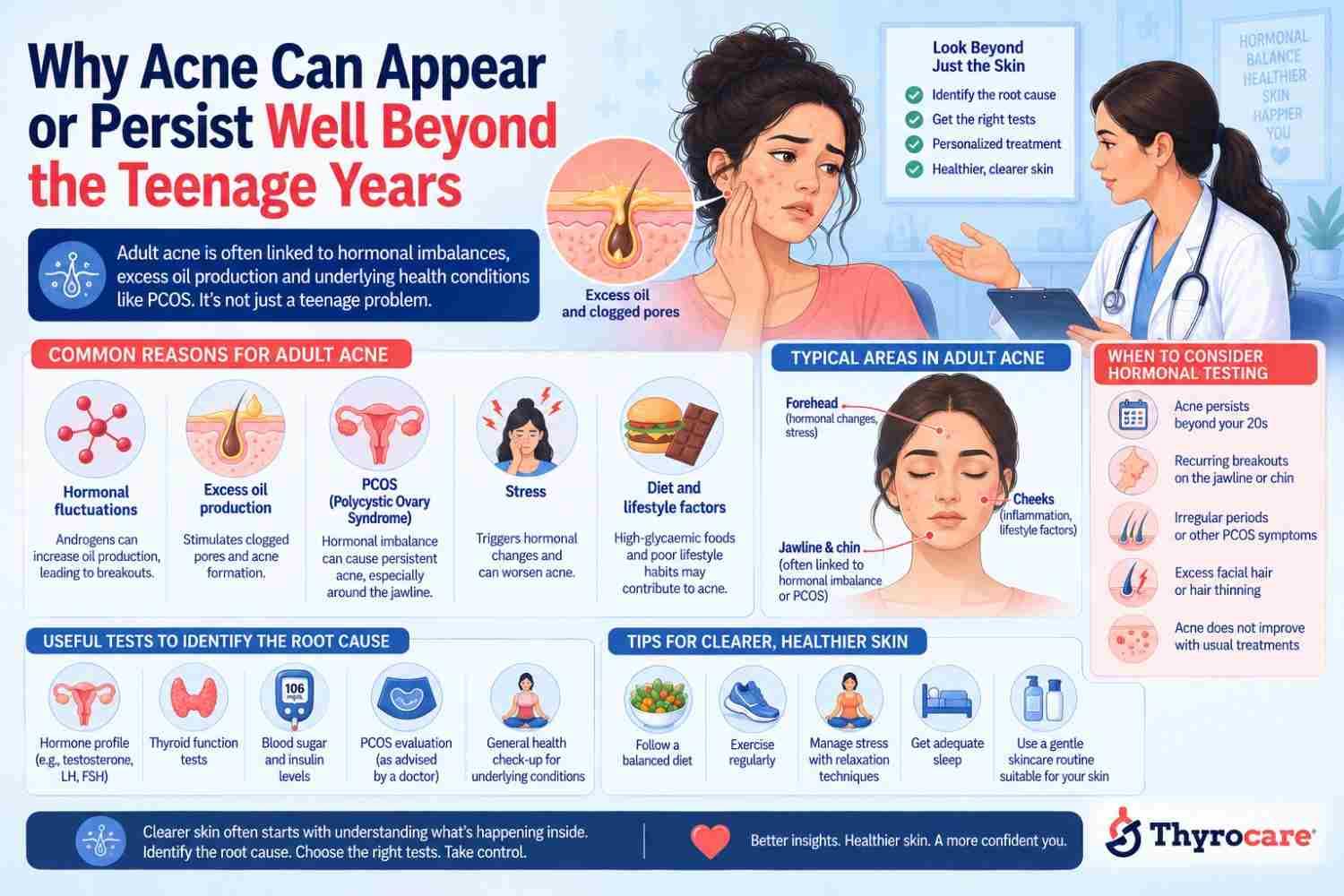
Adult Acne: When Breakouts May Be Linked to Hormonal Changes
Acne is often considered a teenage problem, but breakouts can continue—or even appear for the first time—during adulthood. While skincare products, stress, and lifestyle factors can influence acne, persistent adult acne may sometimes be associated with hormonal changes.
Hormones can influence oil production, inflammation, and activity within the hair follicles. Understanding this connection can help explain why some breakouts persist despite a consistent skincare routine.
How Hormones Influence the Skin
Sebaceous glands in the skin produce sebum, an oily substance that helps protect the skin. Hormones known as androgens, including testosterone, can stimulate these glands.
When androgen activity increases, excess sebum combined with blocked pores and inflammation can contribute to acne formation.
Why Adult Acne Is Common in Women
Hormonal fluctuations during the menstrual cycle can influence the skin. Some women notice breakouts appearing predictably around their periods, particularly along the jawline, chin, or lower face.
Hormonal changes associated with pregnancy, stopping or changing hormonal contraception, and perimenopause may also influence acne.
PCOS and Persistent Acne
Polycystic Ovary Syndrome (PCOS) is one condition that can be associated with increased androgen activity and acne.
Acne alone does not mean someone has PCOS. However, persistent acne occurring alongside irregular menstrual cycles, increased facial or body hair, or other symptoms may warrant medical evaluation.
Can Hormone Tests Help?
Adult acne is generally diagnosed clinically, and not everyone with acne needs hormone testing. When symptoms suggest an underlying hormonal condition, a healthcare professional may recommend targeted investigations.
Depending on the individual, these may include testosterone and other androgen-related tests, along with additional hormonal or metabolic markers.
Why the Cause Matters
Adult acne can have several contributing factors, including genetics, cosmetics, medications, stress, and hormonal changes. Identifying relevant triggers helps guide appropriate management rather than assuming every breakout has the same cause.
Preventive Monitoring with Thyrocare
Thyrocare offers hormonal and metabolic blood tests that may be useful when clinically indicated. Relevant Thyrocare blood tests can be booked through BookMyTest with convenient home sample collection.
Conclusion
Adult acne can sometimes reflect changes occurring beyond the surface of the skin.
Androgen activity can influence oil production and acne development.
Hormonal fluctuations may contribute to recurring breakouts in some adults.
Persistent acne with menstrual or other hormonal symptoms may require further evaluation.
Appropriate testing should be based on symptoms and guidance from a healthcare professional.
FAQs
1. Can hormonal changes cause adult acne?
Yes. Hormonal fluctuations and increased androgen activity can contribute to acne in some adults.
2. Where does hormonal acne commonly appear?
Hormonal acne is often noticed around the chin, jawline, and lower face, although acne can occur elsewhere.
3. Is adult acne always caused by PCOS?
No. PCOS is only one possible cause. Adult acne can occur for many hormonal and non-hormonal reasons.
4. Which blood tests may be considered for hormonal acne?
When clinically appropriate, a doctor may recommend testosterone or other androgen-related tests and additional hormonal or metabolic investigations based on symptoms.
5. Can I book hormone tests through BookMyTest?
Yes. Relevant Thyrocare hormone blood tests can be booked through BookMyTest with home sample collection where available.