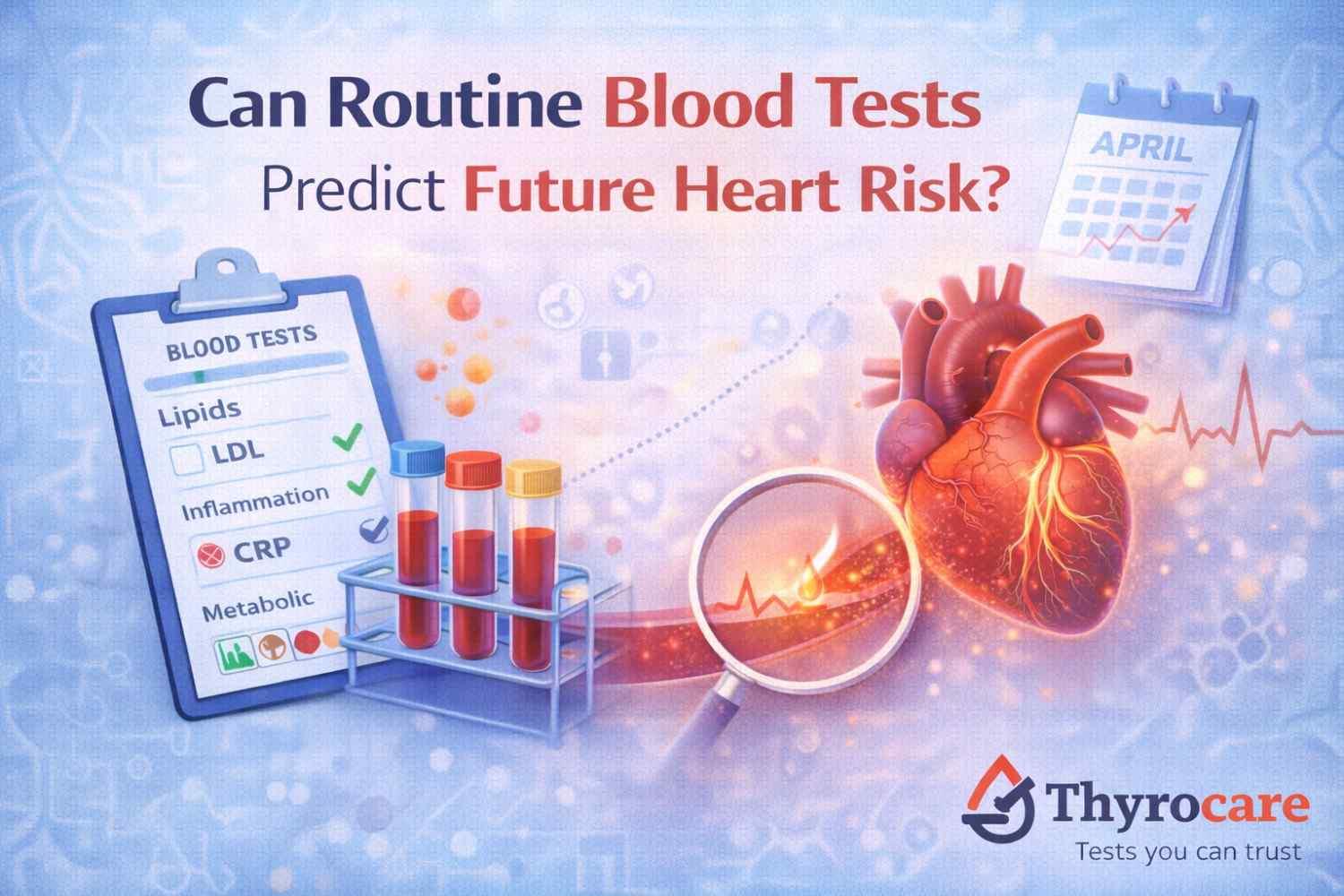
Can Routine Blood Tests Predict Future Heart Risk?
Heart attacks often appear sudden, but cardiovascular risk usually builds gradually over years. The encouraging part is that long before symptoms appear, subtle biological signals begin to shift. Routine blood tests cannot predict the exact timing of a heart attack, but they can reveal patterns that indicate elevated long-term cardiovascular risk.
Understanding these predictive markers turns testing into a preventive tool rather than a reactive measure.
Heart Risk Is a Pattern, Not a Single Number
Many people focus on one value—often total cholesterol. However, heart risk is rarely defined by a single parameter. Instead, it emerges from a combination of lipid balance, inflammatory activity, metabolic efficiency, and vascular health.
Routine blood testing helps identify these patterns early.
Lipids: More Than Just Cholesterol
Lipid profiles provide important information about cardiovascular risk. LDL, HDL, triglycerides, and their ratios offer insight into how fats are being transported and managed in the bloodstream.
Imbalanced lipid patterns over time increase the likelihood of plaque formation inside arteries. Monitoring these values regularly helps detect gradual shifts before they become severe.
Inflammation as a Risk Indicator
Chronic low-grade inflammation plays a significant role in vascular damage. Inflammatory markers such as C-reactive protein (CRP) reflect systemic inflammatory activity that may affect arterial stability.
Inflammation can accelerate plaque progression and increase the likelihood of plaque rupture, which often triggers heart attacks.
Metabolic Patterns and Cardiovascular Risk
Blood sugar regulation and insulin sensitivity are closely linked to heart health. Subtle metabolic imbalances may increase vascular strain even before diabetes is diagnosed.
Markers related to glucose control, lipid metabolism, and systemic balance provide valuable insight into long-term cardiovascular vulnerability.
The Power of Trend Monitoring
One test provides a snapshot. Repeated routine testing reveals trends. Gradual upward shifts in triglycerides, persistent inflammatory elevation, or worsening glucose regulation over time signal increasing cardiovascular risk.
Predictive value lies in patterns, not isolated readings.
Preventive Screening Supports Early Action
Routine blood testing does not diagnose a future heart attack. Instead, it highlights biological environments that increase risk. Identifying these patterns early allows informed lifestyle discussions and medical evaluation before structural damage occurs.
Preventive awareness transforms heart care from emergency management to long-term risk reduction.
Heart Risk Monitoring with Thyrocare
Thyrocare offers comprehensive preventive blood testing that evaluates lipid profiles, inflammatory markers, and metabolic indicators linked to cardiovascular risk. When you book a Thyrocare blood test through BookMyTest, professional home sample collection ensures convenience, and digital reports are delivered within 24 to 48 hours, making routine heart risk monitoring simple and accessible.
Early insight into predictive markers supports proactive heart health management.
Conclusion
Routine blood tests cannot forecast the exact moment of a heart attack, but they can identify the biological patterns that increase future risk. Lipid imbalance, chronic inflammation, and metabolic strain develop quietly over time. Monitoring these markers regularly empowers individuals to act early—before symptoms demand urgent attention.
FAQs
Can blood tests predict a future heart attack?
They cannot predict timing, but a Thyrocare blood test can reveal patterns that indicate increased cardiovascular risk.
Which markers are important for heart risk screening?
Lipid profiles, inflammatory markers, and metabolic indicators are key components of preventive heart assessment.
Is Thyrocare home sample collection available for heart screening?
Yes. Thyrocare home sample collection is available when booking preventive heart tests through BookMyTest.
How often should routine heart risk testing be done?
The frequency depends on individual risk factors and medical advice.
How quickly are Thyrocare blood test reports delivered?
Most Thyrocare blood test reports are delivered digitally within 24 to 48 hours.