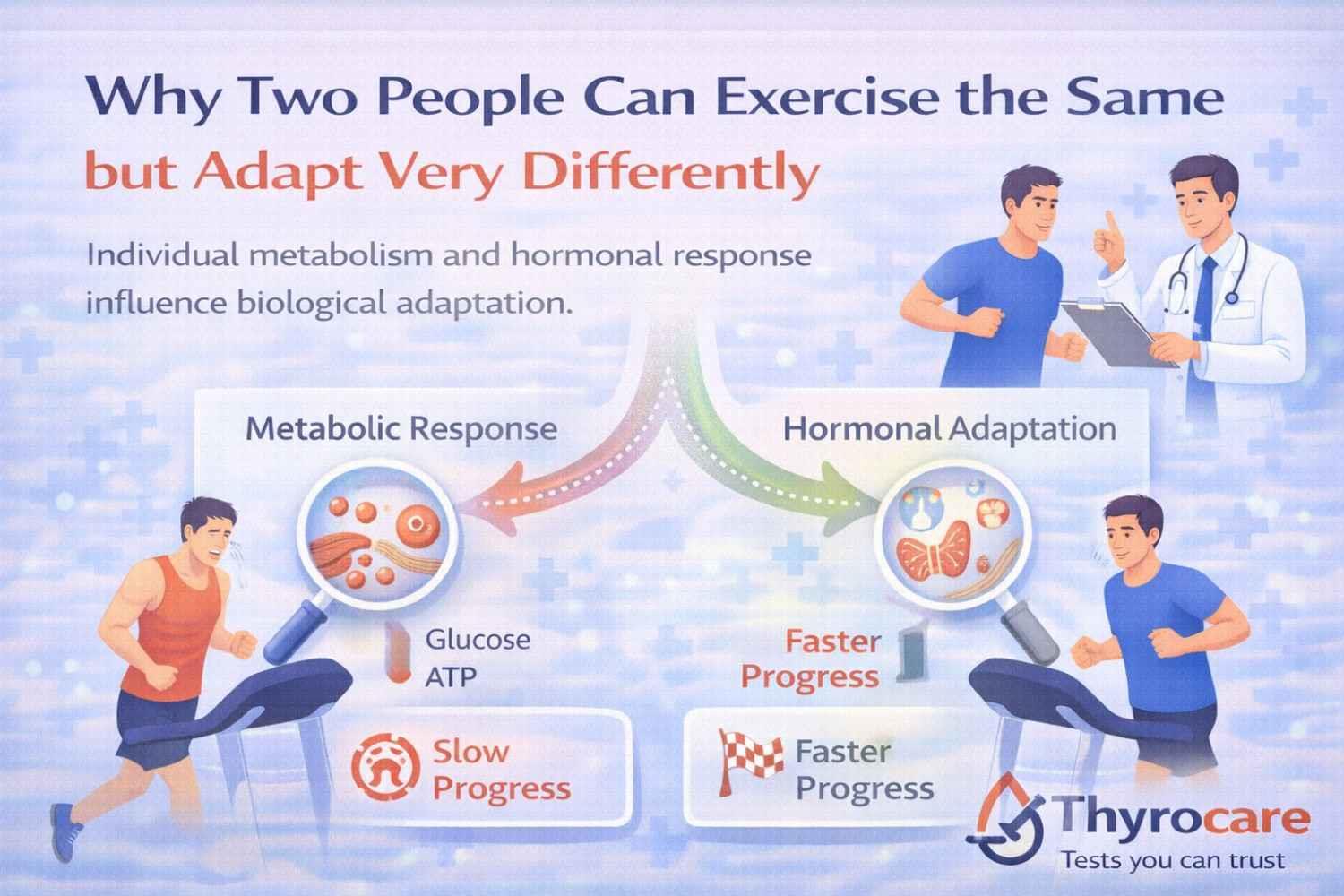
Why Two People Can Exercise the Same but Adapt Very Differently
It’s common to see two people follow the same workout routine, train for the same duration, and maintain similar discipline—yet experience very different results. One improves stamina quickly, while the other feels stuck despite consistent effort. This difference is not about motivation or commitment. It reflects how individual biology determines adaptation to exercise.
Exercise Response Is Internally Personal
Exercise places stress on the body, and adaptation depends on how efficiently the body responds to that stress. While routines may look identical on the outside, internal systems—such as metabolism, hormone signalling, and energy utilisation—respond uniquely in each individual. These differences shape how the body adapts over time.
Metabolic Response Varies Between Individuals
During physical activity, the body must convert nutrients into usable energy. Some bodies adapt quickly, improving energy efficiency and endurance. Others take longer to optimise these pathways. These metabolic differences influence how soon improvements are felt, even when effort levels are the same.
Hormonal Adaptation Influences Progress
Hormones play a key role in recovery, muscle repair, and energy balance. The timing and intensity of hormonal responses to exercise differ from person to person. When hormonal adaptation is slower or less efficient, physical progress may lag despite consistent training.
Why Visible Effort Doesn’t Equal Internal Adaptation
Sweat, fatigue, and soreness are visible signs of effort—but adaptation happens internally. Improved oxygen usage, better energy regulation, and efficient recovery are less visible but more important. Two people may feel equally tired after a workout, yet their bodies may process and recover from that stress very differently.
Recovery Signals Shape Long-Term Adaptation
Adaptation doesn’t occur during exercise—it happens during recovery. The speed and quality of recovery signals determine how effectively the body strengthens itself. If recovery processes are slower, adaptation is delayed even if workouts are well-structured.
Why Comparisons Can Be Misleading
Comparing progress with others often leads to frustration because it ignores biological individuality. The body’s internal response—not external routine—defines how quickly adaptation occurs. Understanding this difference helps shift focus from comparison to awareness.
How Blood Tests Add Context to Exercise Response
Blood markers related to metabolism, hormone balance, and oxygen delivery help explain why adaptation varies. These internal indicators provide insight into how efficiently the body responds to physical stress, offering clarity beyond what performance alone can show.
Understanding Exercise Adaptation with Thyrocare
Thyrocare offers blood tests that help assess internal markers linked to metabolic response and hormonal balance. When you book a Thyrocare blood test through BookMyTest, samples are collected at home and digital reports are delivered within 24 to 48 hours, supporting informed understanding of individual exercise adaptation.
Conclusion
Exercise effort may look the same, but adaptation is deeply individual. Differences in metabolism, hormonal response, and recovery explain why progress varies between people following identical routines. Recognising this biological individuality helps replace comparison with insight and supports smarter, personalised health awareness.
FAQs
Why do people respond differently to the same exercise routine?
Because internal factors like metabolism and hormonal response vary between individuals.
Can blood tests explain differences in exercise adaptation?
Yes. A Thyrocare blood test can provide insight into metabolic and hormonal markers that influence adaptation.
Is Thyrocare home sample collection available for exercise-related testing?
Yes. Thyrocare home sample collection is available when booked through BookMyTest.
Does slower adaptation mean poor fitness?
Not necessarily. It often reflects individual biological response rather than effort or discipline.
How soon are Thyrocare blood test reports available?
Most Thyrocare blood test reports are delivered digitally within 24 to 48 hours.