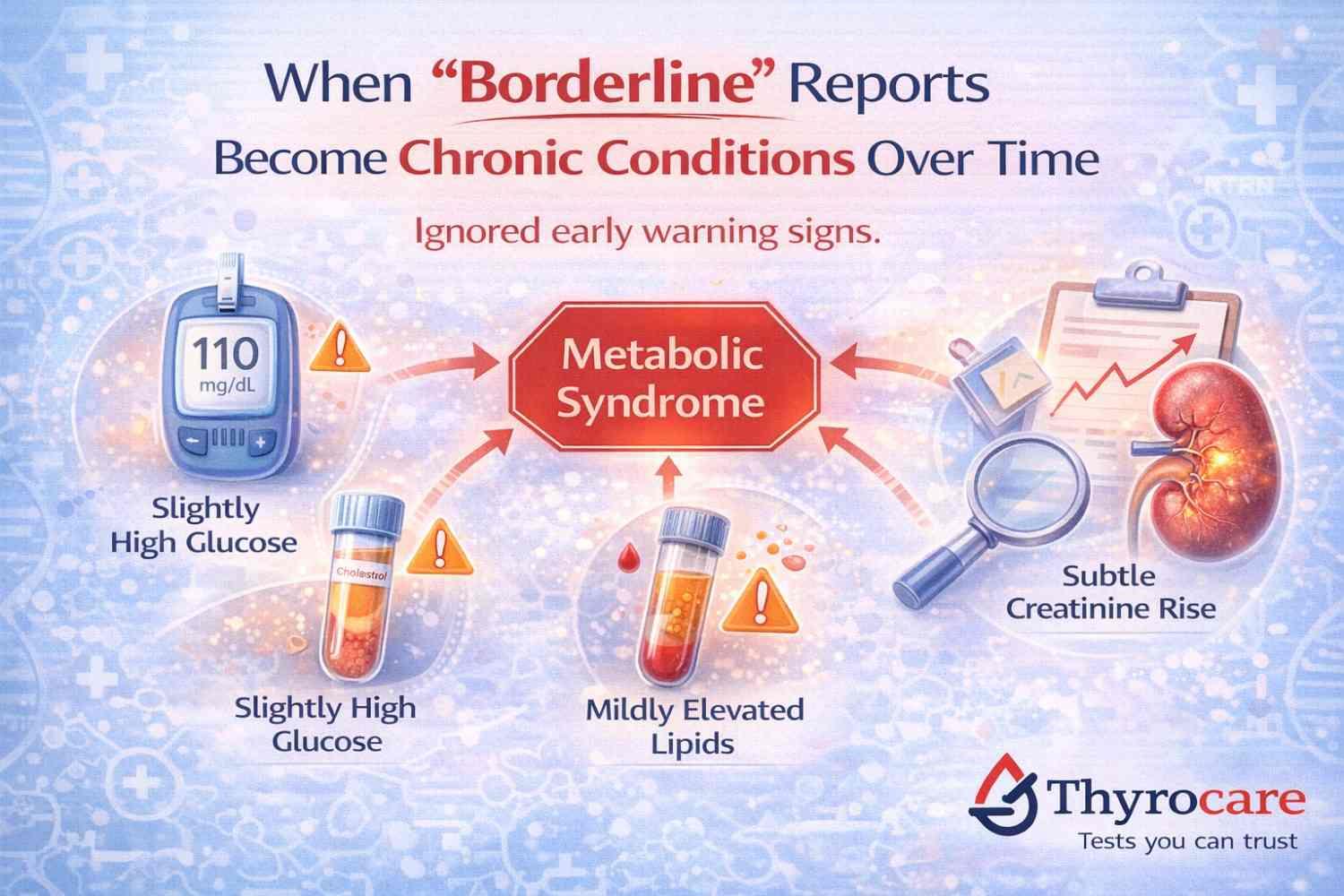
When “Borderline” Reports Become Chronic Conditions Over Time
A routine blood test often comes with reassuring phrases like “borderline,” “slightly elevated,” or “just above normal.” Because these results don’t immediately signal disease, many people tend to ignore them. Life continues as usual, and the numbers are quickly forgotten.
However, in many cases, chronic diseases do not begin with dramatic abnormalities. They begin quietly—with subtle shifts in blood markers that gradually move further away from healthy balance.
Those small changes can be the body’s earliest warning signs.
What “Borderline” Really Means
When a test result is labeled borderline, it usually falls near the upper or lower limits of the normal range. It may not meet the criteria for a diagnosis, but it suggests that the body is beginning to move toward imbalance.
These values often represent early physiological changes, not random variations.
Ignoring them means missing an opportunity for early intervention.
Slightly High Glucose: The First Metabolic Signal
Blood sugar does not suddenly jump from normal to diabetic levels overnight. In many individuals, fasting glucose begins to rise gradually due to insulin resistance.
At first, this increase may appear minor—just slightly above optimal levels. But over time, persistent elevation can indicate metabolic strain and increased risk of developing type 2 diabetes.
Early monitoring allows these trends to be identified before glucose levels become significantly abnormal.
Mild Lipid Elevation and Vascular Risk
A modest increase in cholesterol or triglycerides may seem harmless at first glance. Yet lipid patterns often change slowly as metabolism shifts.
Even mild elevations can signal early vascular stress. Over time, persistent lipid imbalance may contribute to plaque formation within arteries, gradually increasing cardiovascular risk.
Tracking lipid trends over time helps detect these changes early.
Subtle Creatinine Changes and Kidney Health
Kidney function markers such as creatinine may also shift gradually. A slight increase may still fall within the acceptable range, yet it could reflect early changes in filtration efficiency.
Because the kidneys have large reserve capacity, noticeable symptoms often appear late. Blood test trends therefore become essential indicators of early kidney strain.
Why Trends Matter More Than Single Numbers
One isolated borderline result may not indicate a serious issue. However, repeated borderline readings over time often reveal a pattern.
Gradual upward or downward shifts can indicate evolving metabolic or organ stress long before symptoms appear.
Monitoring trends helps distinguish between temporary variation and meaningful change.
The Role of Preventive Testing
Routine blood testing provides insight into metabolic patterns and organ function. Identifying early deviations in glucose, lipid levels, and kidney markers allows healthcare providers to evaluate potential risks before chronic disease develops.
Preventive awareness enables action during the earliest stages—when intervention is most effective.
Preventive Monitoring with Thyrocare
Thyrocare offers comprehensive preventive blood testing that evaluates glucose markers, lipid profiles, kidney parameters, and metabolic indicators. When you book a Thyrocare blood test through BookMyTest, professional home sample collection ensures convenience, and digital reports are delivered within 24 to 48 hours, making regular monitoring simple and accessible.
Tracking health markers over time supports early awareness and better long-term outcomes.
Conclusion
Borderline reports should not be dismissed as insignificant numbers. They often represent the earliest stage of biological change. Slightly elevated glucose, modest lipid imbalance, or subtle kidney marker shifts can signal developing metabolic stress. Recognizing these patterns early allows timely action and helps prevent small deviations from evolving into chronic disease.
FAQs
What does a borderline blood test result mean?
A borderline result indicates that a marker is near the edge of the normal range and may signal early metabolic or organ stress.
Should borderline glucose levels be monitored?
Yes. A Thyrocare blood test can help track glucose trends and detect early metabolic changes.
Can borderline cholesterol levels lead to heart disease?
Persistent lipid imbalance over time may increase cardiovascular risk.
Is Thyrocare home sample collection available for preventive testing?
Yes. Thyrocare home sample collection is available when booking routine health screening through BookMyTest.
How soon are Thyrocare blood test reports delivered?
Most Thyrocare blood test reports are delivered digitally within 24 to 48 hours.